
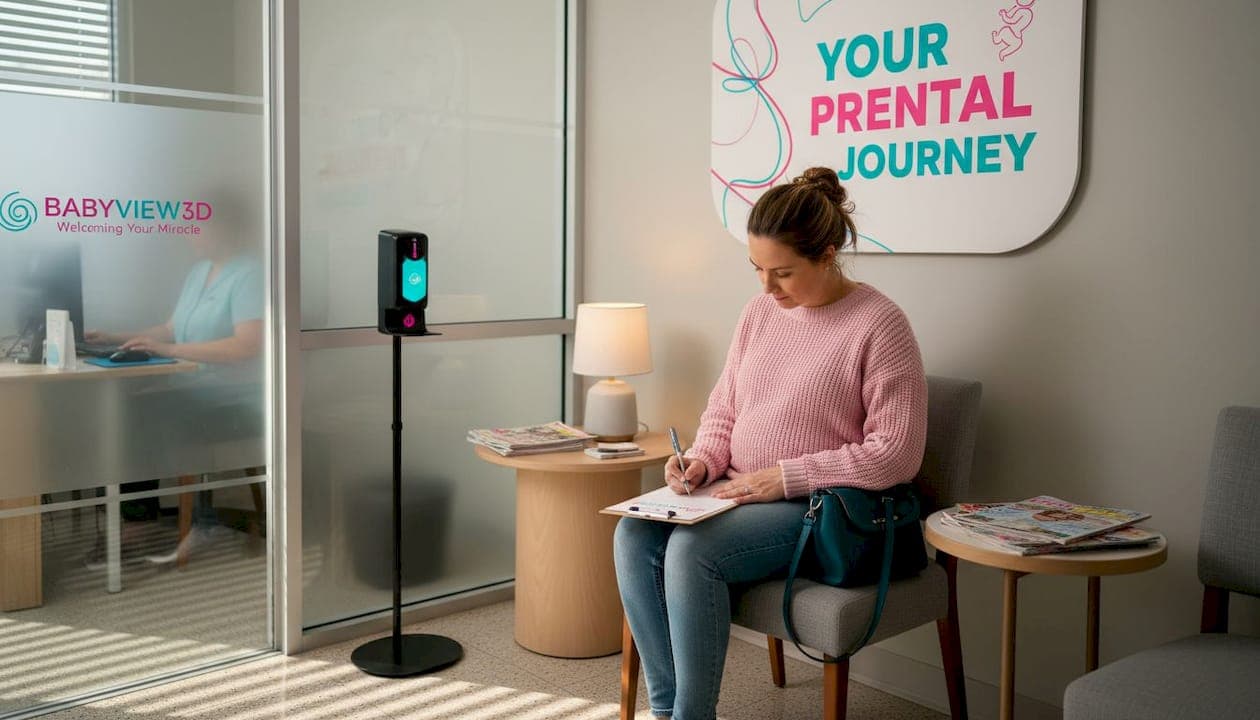
Choosing an ultrasound experience during pregnancy feels like a surprisingly big decision. You want to see your baby, make real memories, and know you're doing everything safely. But with options ranging from flat black-and-white scans to stunning real-time motion video, the differences between 2D, 3D, and 4D ultrasound images can feel overwhelming. This guide breaks down each type clearly, so you can walk into your next appointment, or your first keepsake session, knowing exactly what you're getting and why it matters.
Table of Contents
- What to consider when selecting a baby ultrasound
- 2D ultrasound: The standard medical view
- 3D ultrasound: Creating lifelike memories
- 4D ultrasound: Experience your baby in motion
- Comparing ultrasound types: Which is right for you?
- Our take: The memory and the medicine are not in competition
- Experience the difference with BBview 3D
- Frequently asked questions
Key Takeaways
| Point | Details |
|---|---|
| 2D is standard diagnosis | 2D ultrasound is used for medical checks and anatomical screening during pregnancy. |
| 3D for memories and anomalies | 3D ultrasound offers clear, lifelike images for keepsakes and helps detect facial anomalies. |
| 4D brings movement to life | 4D ultrasound shows real-time movement, ideal for bonding and cardiac evaluation. |
| Safety depends on expertise | Choose certified professionals and limit scan time for all ultrasound types. |
| Match type to your goal | Consider your reason—medical, bonding, or both—to pick the best ultrasound experience. |
What to consider when selecting a baby ultrasound
To make the right choice, it helps to first know what really matters when considering ultrasound experiences.
Not all ultrasound sessions serve the same purpose. Some are strictly medical tools your OB uses to track fetal development and check for complications. Others are designed around the emotional experience of bonding with your baby before birth. Understanding the difference shapes everything else about your decision.
Here are the core factors every expectant parent should weigh:
- Safety and professional oversight. All ultrasound types use high-frequency sound waves that bounce off tissue rather than ionizing radiation, and major organizations including the FDA, AIUM, and ACOG consider them safe when performed by trained professionals following the ALARA principle (As Low As Reasonably Achievable).
- Medical necessity vs. memory-making. Diagnostic ultrasounds are prescribed by your provider for clinical reasons. Keepsake sessions are elective and exist to create lasting emotional connections.
- Certified sonographers. Always verify that your studio or clinic employs RDMS (Registered Diagnostic Medical Sonographer) credentialed professionals.
- Session length. Most guidelines suggest keeping any single ultrasound session under 30 minutes to minimize cumulative exposure.
- The setting. Medical clinics follow strict protocols by design. Boutique studios vary significantly, so your due diligence matters.
"The goal of any prenatal imaging session should balance emotional joy with responsible practice. The experience is meaningful, but the safeguards around it are what make it truly worth it."
Pro Tip: Before booking any session, ask the studio directly whether their sonographers hold RDMS certification and whether they follow the ALARA principle. A reputable provider will answer confidently without hesitation.
Exploring ultrasound imaging techniques used in modern prenatal care can help you understand what separates a high-quality experience from one that's simply selling you a package.
2D ultrasound: The standard medical view
With foundational criteria in mind, it's time to look at your main options, starting with the traditional approach.
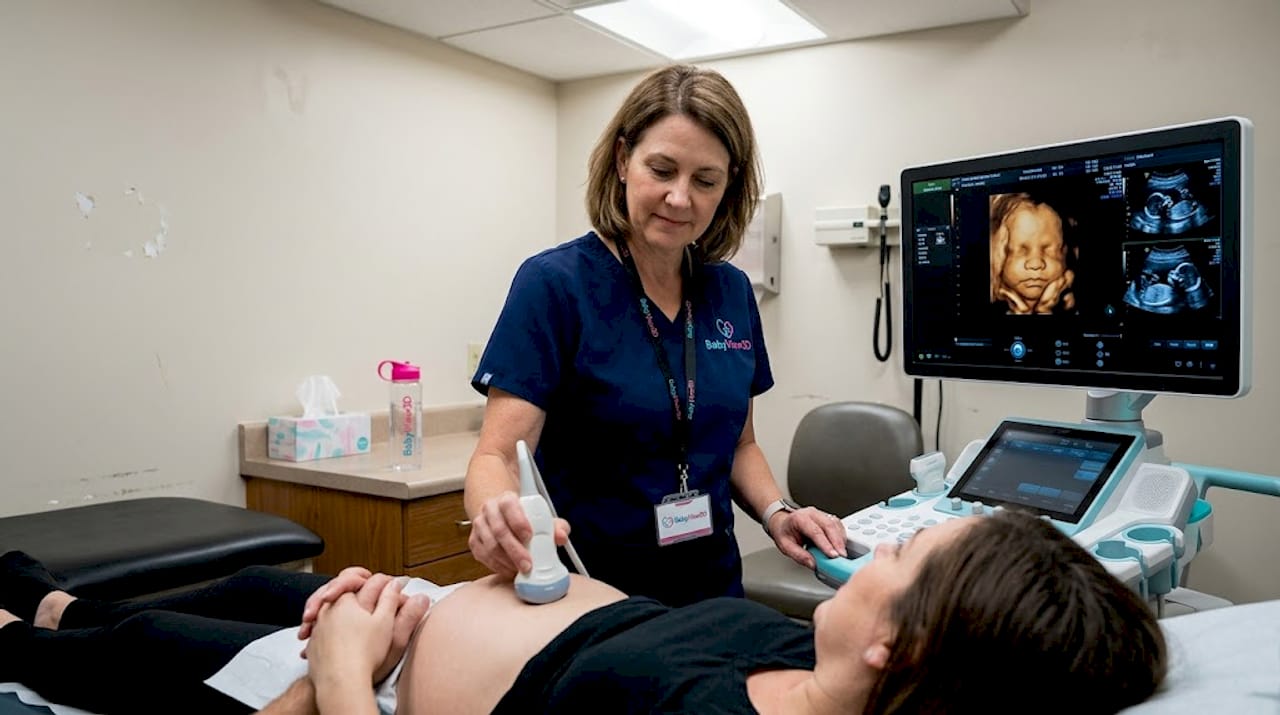
The 2D ultrasound is the one most people picture when they think of prenatal imaging. It produces flat, black-and-white cross-section images that look like shadows moving across a screen. This is not the most visually striking experience, but it remains the gold standard for clinical prenatal care, and for good reason.
Your OB or midwife uses 2D imaging to:
- Confirm pregnancy and estimate gestational age
- Measure fetal growth and check position
- Examine placental location and amniotic fluid levels
- Screen for anatomical abnormalities during the anatomy scan (typically around 18 to 20 weeks)
- Monitor the fetal heartbeat
Because standard prenatal diagnostics rely on the same basic sound wave technology, safety is well established across all ultrasound formats, including 2D. The image quality is more than sufficient for the measurements and structural assessments clinicians need to make important decisions about your pregnancy.
"2D ultrasound is like reading a technical blueprint of your baby. It won't win a beauty contest, but it tells you exactly what you need to know."
One major practical advantage: 2D ultrasounds are generally covered by insurance when medically indicated. If your provider orders one, you likely won't pay out of pocket. That makes the first-trimester dating scan, the nuchal translucency screening, and the anatomy scan accessible to virtually every pregnant person receiving prenatal care in the U.S.
The limitation is equally obvious. You're looking at flat, shadowy slices of a growing human being. Many parents find 2D images hard to interpret without a sonographer explaining what they're seeing. The emotional connection can feel distant. That's exactly where 3D and 4D imaging step in.
You can read more about ultrasound basics and how these technologies have evolved over decades of prenatal care innovation.
3D ultrasound: Creating lifelike memories
After understanding 2D's medical focus, let's see how 3D images enrich the experience for both parents and clinicians.
Think of 3D ultrasound as the difference between a floor plan and a scale model of a house. The data captured is similar, but the presentation is completely different. Instead of flat cross-sections, 3D imaging uses multiple angled 2D slices processed together to render a three-dimensional, surface-level image of your baby.
Here's how the 3D experience typically unfolds:
- The transducer sweeps across the abdomen, capturing hundreds of 2D image slices in rapid succession.
- Software processes and reconstructs those slices into a volumetric image in real time.
- The rendered image appears on screen as a lifelike, detailed portrait of your baby's face, hands, or feet.
- The sonographer adjusts angles to capture your baby at their most photogenic position.
- Images are captured and saved as photos, prints, or digital files for you to keep.
One of the most meaningful applications of 3D imaging is its ability to detect certain structural anomalies that flat 2D views can miss. Research shows that 3D/4D imaging is superior for identifying specific issues like cleft palate and certain heart defects that are difficult to visualize in standard cross-section views. This makes 3D not just a keepsake tool but a genuine clinical complement to traditional imaging.
That said, 3D ultrasound produces static images, not video. You might catch your baby mid-yawn or with a tiny fist near their cheek, frozen in one beautiful moment. But if your baby is moving actively, the images can look blurry or distorted, so positioning and timing within the pregnancy matter significantly.
Pro Tip: The ideal window for 3D keepsake imaging is between 26 and 32 weeks. Before 26 weeks, there isn't enough fat under the skin to give features definition. After 32 weeks, your baby may be too large and positioned too low for clear facial views.
For parents who want to frame a photo before their child is born, 3D ultrasound services offer the clearest, most emotionally resonant snapshot of your baby's face you can get before delivery day.
4D ultrasound: Experience your baby in motion
If 3D brought depth to static images, 4D brings your baby's world to life and introduces new considerations worth knowing.
The fourth dimension is time. A 4D ultrasound is essentially a live 3D video feed. Instead of a single rendered image, you're watching a continuously updated, real-time stream of your baby's movements. You might see them smile, suck their thumb, kick, or stretch. It's the closest thing to meeting your baby before they arrive.
Key things that make 4D imaging unique:
- Real-time motion capture allows parents to watch facial expressions and body movements as they happen.
- Dynamic cardiac assessment is one of the strongest clinical applications. Research on 4D-STIC ultrasound (a specialized cardiac technique) shows 91% sensitivity and 98% specificity for detecting congenital heart defects, with exceptional performance in dynamic evaluation.
- Timing and baby factors affect quality. Accuracy can drop for babies weighing under 2,500 grams or over 4,000 grams, and image clarity varies by fetal position and maternal tissue density.
- Non-medical use requires caution. Organizations including ACOG and the FDA caution against elective ultrasound sessions purely for bonding purposes, citing unknown long-term effects of extended exposure, even though no proven harm has been established.
"Watching your baby move in real time on a 4D screen is one of the most emotionally powerful moments many parents describe during pregnancy. The key is making sure that moment is created responsibly."
Pro Tip: Schedule your 4D session after a light snack. Elevated blood sugar can encourage your baby to be more active, giving you better movement and more dynamic footage during the session.
The debate between benefits of 4D ultrasound for bonding versus the cautions from medical organizations is real, but it doesn't have to be paralyzing. The answer lies in choosing a studio that takes safety as seriously as you do.
Comparing ultrasound types: Which is right for you?
After understanding each type, a side-by-side comparison can clarify your decision.
Here's a straightforward breakdown of how the three main ultrasound types compare across the factors that matter most to expectant parents:
| Feature | 2D Ultrasound | 3D Ultrasound | 4D Ultrasound |
|---|---|---|---|
| Image type | Flat, black and white | Static, lifelike 3D photo | Real-time 3D video |
| Primary purpose | Medical diagnostics | Keepsakes and some anomaly detection | Bonding, motion, and cardiac assessment |
| Insurance coverage | Usually covered | Rarely covered | Rarely covered |
| Best timing | Any trimester | 26 to 32 weeks | 26 to 32 weeks |
| Safety | Well established | Well established | Well established with proper protocols |
| Emotional impact | Low to moderate | High | Very high |
| Requires certification | Yes | Yes | Yes |
And here's a quick-reference guide for matching your needs to the right type:
| Your priority | Best choice |
|---|---|
| Medical screening and diagnostics | 2D |
| Facial keepsake photos | 3D |
| Watching baby move in real time | 4D |
| Advanced heart anomaly detection | 4D (clinical STIC protocol) |
| Budget-conscious option | 2D (insurance covered) |
| Memory-making gift for family | 3D or 4D session package |
According to guidance for US expectant parents seeking 3D and 4D experiences, the most important factors are prioritizing certified RDMS sonographers, maintaining medical oversight, and keeping sessions under 30 minutes. These experiences complement your standard 2D prenatal care rather than replacing it.
The bottom line is that none of these options is universally better than the others. They serve different purposes beautifully. If you're making a medical decision, trust your provider and the 2D images they rely on. If you're making a memory, choose 3D or 4D with a studio that takes its responsibility to your baby seriously.
Our take: The memory and the medicine are not in competition
Here's a perspective you won't hear often enough: the fear that elective 3D and 4D ultrasounds are somehow opposed to responsible prenatal care is largely a false conflict.
We've spent over 15 years watching families walk out of our studios clutching images of their babies with tears in their eyes. We've also seen what happens when parents don't understand the difference between a medical scan and a memory-making session. They confuse the two, skip their OB-ordered anatomy scan because they "already had an ultrasound," or choose studios that cut corners on safety because they prioritize aesthetics over professionalism.
The real issue isn't whether you should get a 4D session. It's whether you understand that a keepsake session is an addition to your prenatal care, not a replacement for it. These two things coexist beautifully when approached correctly.
What we believe firmly: parents who see their baby's face before birth are more emotionally bonded, more likely to make healthy choices during pregnancy, and more prepared for the emotional reality of parenthood. That's not sentiment, it's something we observe consistently. The session itself has value beyond the images it produces.
We also believe that the ultrasound industry has a responsibility to earn parent trust through transparency and credentialing, not just pretty pictures. A beautiful image captured irresponsibly is not a gift. It's a missed opportunity to do this the right way.
Experience the difference with BBview 3D
If you're ready to turn your pregnancy journey into something truly unforgettable, we'd love to be part of that moment. At BBview 3D, our certified sonographers use advanced HD Live technology to deliver stunning 3D, 4D, and 8K resolution images that capture your baby in breathtaking detail.
Our studio locations across the United States are designed with families in mind, combining clinical professionalism with a warm, welcoming experience. We offer flexible session packages including photo prints, digital keepsakes, and visual summaries you can share with your whole family. First-time visitors can take advantage of our limited introductory discount. Book your session at bbview3d.com and see your baby like never before.
Frequently asked questions
Are 3D and 4D ultrasounds safe for my baby?
Yes, when performed by trained professionals following FDA, AIUM, and ACOG safety guidelines and the ALARA principle, 3D and 4D ultrasounds are considered safe and involve no ionizing radiation.
When is the best time in pregnancy to get a 3D or 4D ultrasound?
The ideal window is between 26 and 32 weeks, when your baby has enough facial fat for defined features but still has sufficient amniotic fluid surrounding them for a clear image.
Will insurance cover 3D or 4D ultrasound sessions?
Insurance typically only covers ultrasounds that are medically necessary and ordered by your provider; elective keepsake sessions at boutique studios are almost always an out-of-pocket expense.
What's the difference between 3D and 4D ultrasound images?
3D produces a static, lifelike portrait of your baby, while 4D adds live motion so you can watch your baby's expressions, movements, and behaviors in real time like a video.
Are boutique ultrasound studios safe for non-medical imaging?
Boutique studios can absolutely be safe when they employ certified RDMS sonographers, maintain medical oversight, and keep sessions under 30 minutes; always verify credentials before you book.