
There is a moment that no parent ever forgets: the first time you see your baby yawn, stretch, or even smile before they are born. A 4D ultrasound session makes that moment possible, giving you a real-time, moving look at the little person growing inside you. But getting the most out of that experience depends entirely on how you prepare, when you book, and what you know before you walk through the door. This guide walks you through every step so your session is smooth, emotionally rich, and something your family will treasure forever.
Table of Contents
- What makes a 4D ultrasound session special
- Choosing the best time and preparing to book
- Step-by-step guide to booking your session
- What to expect during and after your 4D ultrasound
- The reality behind 4D ultrasound bookings: What most guides miss
- Explore more with BabyView3D
- Frequently asked questions
Key Takeaways
| Point | Details |
|---|---|
| Best booking window | Schedule your 4D ultrasound between 26 and 32 weeks for optimal images. |
| Book in advance | Secure your ideal session by booking 2 to 3 weeks before your desired date. |
| Session duration & cost | Expect sessions of 15-40 minutes and packages between $99 and $300. |
| Not covered by insurance | 4D ultrasound sessions are elective and not reimbursed by insurance. |
| Keepsakes and bonding | Most packages include photos, videos, and special items to enhance your prenatal experience. |
What makes a 4D ultrasound session special
A standard prenatal ultrasound gives your doctor the clinical information they need. A 4D ultrasound gives you something entirely different. It gives you your baby, in motion, in detail, before you ever hold them in your arms.
The technology behind 4D imaging captures a continuous stream of three-dimensional images, creating a live video effect. You can watch your baby open and close their mouth, feel around with tiny hands, or kick their feet. These are not still snapshots. They are real moments unfolding in front of you in real time, and the emotional weight of that experience is genuinely hard to describe until you have lived it.
One of the biggest advantages of booking an elective 4D session is the quality of the environment itself. Unlike a clinical appointment, these sessions are designed around your comfort and your family's experience. You sit in a welcoming room, often with dimmable lighting and a large screen, with room for partners, grandparents, and siblings to share the moment together. The focus is entirely on connection and memory making.
The ultrasound bonding benefits for expecting parents go well beyond the visual. Research consistently shows that seeing a baby's face and movements during pregnancy strengthens emotional attachment before birth, which can also support postpartum bonding and reduce prenatal anxiety.
Here is what most 4D ultrasound packages typically include:
- High-resolution printed photos of your baby
- Digital image files you can share immediately
- A recorded video of the full session
- A USB drive with all media included
- Keepsakes such as heartbeat bears that play your baby's actual heartbeat
- On-screen gender reveal options for families who want them
"Sessions last 15 to 40 minutes; packages range $99 to $300 and include photos, videos, USB drives, and heartbeat bears; these sessions are not covered by insurance as they are considered elective."
It is worth noting the cost upfront. Because 4D ultrasound sessions are elective, meaning they are not medically required, insurance does not cover them. You are paying out of pocket for a personal, memory-focused experience rather than a diagnostic one. For most families, that trade-off is completely worth it. The pregnancy visual insights you walk away with are priceless compared to the session cost.
Choosing the best time and preparing to book
Timing is genuinely one of the most important decisions you will make when planning your 4D session. Book too early and your baby's features are not yet fully formed. Book too late and the baby is so large that there is less amniotic fluid for clear imaging, and movement becomes more restricted.
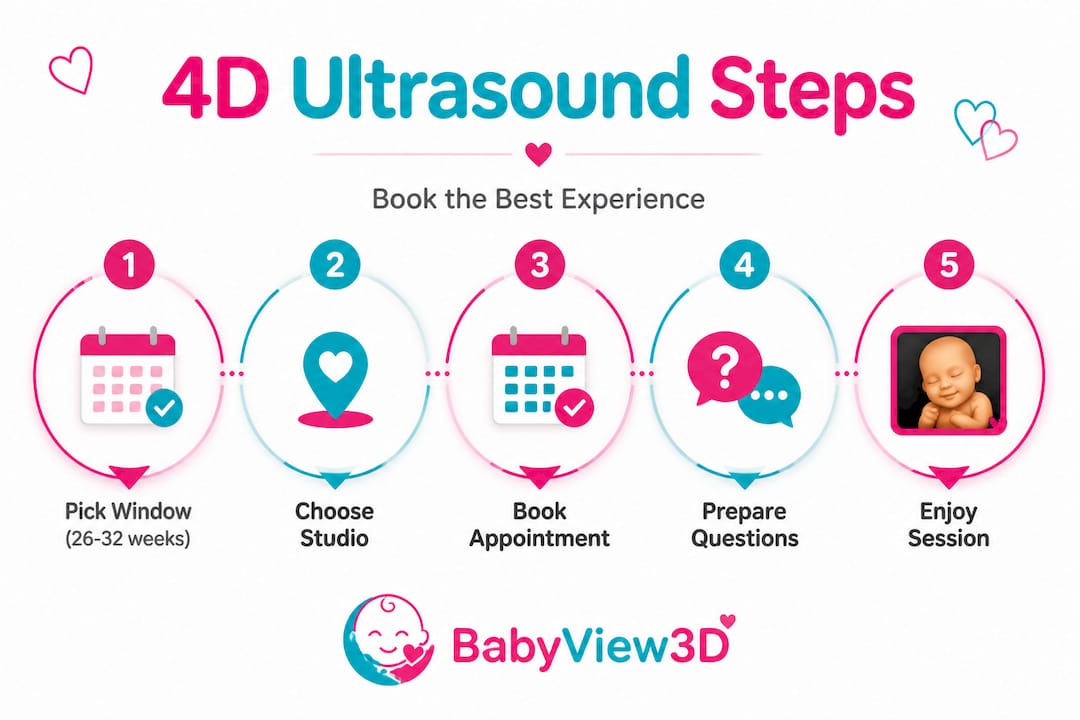
The sweet spot, according to prenatal imaging experts, is weeks 26 through 32 of gestation. During this window, your baby has enough fat under their skin to show soft, rounded facial features, they are still moving freely, and there is typically plenty of amniotic fluid to create clear images. Waiting until week 33 or later increases the risk of the baby being in a less favorable position and reduces overall image clarity.
| Gestational window | Image quality | Baby activity level | Recommendation |
|---|---|---|---|
| Under 24 weeks | Low | High but features undeveloped | Too early for best results |
| 26 to 32 weeks | Optimal | Active with defined features | Strongly recommended |
| 33 to 36 weeks | Moderate | Reduced, less space to move | Acceptable if necessary |
| Over 36 weeks | Lower | Very limited movement | Not ideal |
Beyond timing your pregnancy correctly, here are the key preparation steps to follow before your appointment:
- Drink plenty of water in the 48 hours leading up to your session. Good hydration increases amniotic fluid levels, which directly improves image quality and clarity.
- Eat a light snack about an hour before your appointment. A small amount of sugar or carbohydrates can encourage your baby to be more active during the session.
- Wear comfortable, two-piece clothing so the sonographer can easily access your belly without you having to undress.
- Plan for your guests ahead of time. Most studios allow partners and family members to attend, but confirm the guest policy when you book so there are no surprises.
- Check the provider's cancellation and rescheduling policy. Babies do not always cooperate, and if your baby is in an unfavorable position, a reputable studio will often offer a free rescan.
Pro Tip: Book your appointment during your baby's most active window. Pay attention to when your baby typically kicks or moves throughout the day in the weeks before your session, then schedule your appointment during that timeframe. Babies tend to follow patterns, and arriving when yours is naturally active gives you a much better chance of seeing their face clearly.
Securing your spot early is also critical. Popular time slots, especially weekend appointments, fill up fast. The optimal timing guidance at most elective ultrasound studios suggests booking 2 to 3 weeks in advance to ensure you get the date and time that works best for your pregnancy stage and your schedule.
Step-by-step guide to booking your session
Booking a 4D ultrasound session does not need to feel overwhelming. Once you break it into clear steps, the process is straightforward and actually enjoyable.
-
Research local providers. Start by searching for elective ultrasound studios in your area. Look for certified sonographers with dedicated experience in 4D and HD Live imaging, not just general diagnostic ultrasound techs. Read reviews from other parents and look for studios that emphasize comfort and the overall family experience.
-
Review package options. Most studios offer several tiers of ultrasound package options, ranging from a basic session with printed photos to premium packages that include extended session time, heartbeat bears, digital downloads, and video recordings. Write down what matters most to you before you compare.
-
Compare pricing and inclusions. Do not make decisions based on price alone. A cheaper session that does not include a rescan guarantee or digital files may cost you more in disappointment later.
| Package level | Typical price range | What is usually included |
|---|---|---|
| Basic | $99 to $130 | Photos, brief session time |
| Standard | $140 to $200 | Photos, video, digital files |
| Premium | $200 to $300 | All media, heartbeat bear, extended time, rescan option |
-
Schedule within your ideal gestational window. Based on the timing guidance above, calculate when weeks 26 through 32 fall in your calendar and book accordingly.
-
Confirm all details before your appointment day. Verify the session duration, which typically runs 15 to 40 minutes depending on your package, and ask specifically about preparation requirements, what keepsakes are included, and whether additional guests are welcome.
Pro Tip: Ask the studio directly whether they use HD Live technology. HD Live is a significant upgrade over standard 4D imaging. It uses a virtual light source to add depth and shadow to images, making your baby look strikingly lifelike rather than flat. Studios equipped with HD Live consistently produce images that look more like photographs than ultrasounds.
What to expect during and after your 4D ultrasound
Walking into your session knowing what to expect removes the anxiety and lets you stay fully present in the moment. Here is a clear picture of how a typical session unfolds.
When you arrive, the sonographer will guide you to a comfortable room and apply warm gel to your belly. The session begins almost immediately, with images appearing on a large display screen. You will see your baby's face, body, and movements in real time. The sonographer will point out features, help you understand what you are seeing, and capture the best images throughout your time together.
Common things you might see during your session:
- Your baby opening and closing their eyes
- Facial expressions including yawning, smiling, or frowning
- Hands near the face or mouth
- Kicking and stretching movements
- Sucking on a thumb or fingers
"The emotional impact of seeing your baby's personality emerge before birth is something that stays with parents long after the session ends. Many families describe it as the moment pregnancy became completely real."
After the session, you will typically receive your photos and video within minutes. Most studios have printing on-site, and digital files are often transferred immediately via USB or email. If your package includes a heartbeat bear, the sonographer records your baby's heartbeat directly and loads it into the bear before you leave.
A few common mistakes to avoid:
- Booking before 24 weeks. The images will lack the facial definition that makes 4D ultrasounds so memorable.
- Arriving dehydrated. Low amniotic fluid means blurry, unclear images. Hydrate consistently in the days before your appointment.
- Forgetting to ask about rescan policies. Babies sometimes turn away or sleep through sessions. A good studio will offer a complimentary rescan if images are not satisfactory.
- Overlooking the preparing for ultrasound steps provided by your studio. Small details like skipping the snack beforehand can mean the difference between an active baby and one who sleeps the whole time.
The total package cost of $99 to $300 covers a wide range of inclusions, and the keepsakes you walk away with become physical anchors for one of the most emotional experiences of your pregnancy.
The reality behind 4D ultrasound bookings: What most guides miss
Here is something most articles will not tell you directly: booking early does not guarantee perfect images. Gestational age matters less than baby's position on the day of your session. A baby who is face-down, pressed against the placenta, or sleeping deeply will produce limited images regardless of whether you are at the perfect 28-week mark or not.
This is why flexibility and communication with your provider are far more important than any specific date on the calendar. Parents who go into a session with rigid expectations often leave disappointed, not because the technology failed them, but because they expected a guarantee that does not exist in prenatal imaging.
The visual insights from pregnancy that matter most are not about technical perfection. A slightly blurry image of your baby's hand or a brief glimpse of a yawn carries emotional weight that no high-resolution still photo can replicate. The movement, the context, and the shared experience in that room with your family are what you will remember.
We have also seen a pattern with parents who spend the whole session focused on getting "the perfect shot" for social media. They leave with great content but admit they were not fully present during the experience itself. The most meaningful sessions happen when you put the phone down, look at that big screen, and simply watch your baby.
Choose a provider who communicates honestly about what results are possible, who offers rescans without making you feel guilty for asking, and who creates an environment where the experience itself is the priority, not the transaction.
Explore more with BabyView3D
If this guide has you ready to take the next step, BabyView3D is here to make your session exceptional.
Browse the full range of ultrasound services to find the package that fits your pregnancy stage and what you want to take home. Whether you are looking for a simple keepsake session or a premium experience with HD Live technology, there is an option designed for you. You can also explore the heartbeat bear keepsakes in the store, which make a deeply personal gift for new parents, grandparents, and siblings. And before you book, take a look at the ultrasound image gallery to see real examples of what BabyView3D sessions produce. These are real babies, real moments, and real families. Seeing them will tell you everything you need to know.
Frequently asked questions
How early can I book a 4D ultrasound session?
Most providers recommend booking 2 to 3 weeks in advance to secure prime slots, especially for sessions planned during weeks 26 to 32 of pregnancy. Weekend and evening appointments fill up fastest, so earlier reservation gives you more scheduling flexibility.
Are 4D ultrasound sessions covered by insurance?
No, 4D ultrasound sessions are considered elective and not covered by insurance because they are not medically necessary. You pay out of pocket, and costs typically range from $99 to $300 depending on the package.
What can I expect to receive after a 4D ultrasound session?
Most packages include photos, videos, and USB drives with all digital media, and premium packages often add heartbeat bears loaded with your baby's recorded heartbeat. You usually receive your keepsakes before leaving the studio.
Is there a recommended gestation period for the best 4D images?
The optimal window is weeks 26 through 32 of gestation, when your baby's facial features are well-developed, amniotic fluid levels are ideal, and movement is still active enough for a dynamic session.