

You finally have the appointment on the calendar, the nursery is half-painted, and now you want to see your baby's face before the due date. But when you start searching for a 3D/4D ultrasound studio, the options feel endless and the differences between them are anything but obvious. Some studios look stunning on Instagram but have almost no reviews. Others seem affordable until you realize the package barely includes anything worth keeping. This guide walks you through four clear checkpoints—technology, reputation, ambiance, and pricing—so you can book with confidence and walk away with images you'll treasure for a lifetime.
Table of Contents
- Understand your needs and studio types
- Check technology and image quality
- Read reviews and assess reputation
- Consider ambiance, location, and value
- The overlooked factors that make or break your experience
- Choose your studio with confidence
- Frequently asked questions
Key Takeaways
| Point | Details |
|---|---|
| Clarify your goals | Identify whether you want bonding, keepsakes, or just curiosity fulfilled before choosing a studio. |
| Prioritize image quality | Ask about equipment models and review recent client images to ensure the best results. |
| Trust reviews, not ads | Rely on high-rated studios with plenty of positive, consistent client feedback. |
| Check for rescan policies | Confirm that your studio offers a fair rescan policy in case conditions are not ideal. |
| Weigh value over price | Balance the session's cost with extras like ambiance, location, and included digital or print keepsakes. |
Understand your needs and studio types
Before you compare studios side by side, it helps to get honest with yourself about what you actually want from the experience. Are you hoping to find out the gender in a fun, celebratory setting? Do you want a heartbeat bear for the nursery? Or are you simply curious to see your baby's features before birth? Your answer shapes everything from the package you choose to the studio type that fits best.
There are two broad categories of ultrasound providers in the United States. Medical ultrasound clinics operate under a physician's supervision and use imaging for diagnostic purposes. Boutique or elective 3D/4D studios exist purely for bonding, keepsakes, and the emotional experience of seeing your baby in stunning detail. These studios are not a replacement for your prenatal care. As a general rule, no diagnostic info is provided at elective studios, so always refer any health concerns to your OB/GYN.
Here's a quick breakdown of what each studio type offers:
- Elective/boutique studios: 3D, 4D, and HD Live imaging; gender reveals; heartbeat keepsakes; family-friendly viewing rooms
- Medical clinics: Diagnostic imaging; anatomy scans; performed by licensed sonographers under physician oversight
- Hospital-based ultrasound: Strictly diagnostic; not designed for bonding or keepsake experiences
- Hybrid studios: Offer both elective and some medically supervised services in select states
The table below summarizes the key differences at a glance:
| Feature | Boutique/Elective Studio | Medical Clinic |
|---|---|---|
| Purpose | Bonding and keepsakes | Diagnosis and monitoring |
| Image style | 3D, 4D, HD Live | 2D diagnostic |
| Medical interpretation | No | Yes |
| Family in the room | Yes, often encouraged | Limited |
| Keepsake products | Yes | Rarely |
| Insurance coverage | No | Sometimes |
Once you've confirmed that a boutique studio fits your goals, the next step is finding one near you. Checking ultrasound studio locations ahead of time saves you from booking somewhere inconvenient, especially in the third trimester when travel feels like a workout.
Pro Tip: Book your elective session between 26 and 32 weeks. Baby has enough fat under the skin to show facial features clearly, but there's still room to move and get a great angle.
Check technology and image quality
Once you're clear on your needs, the next critical step is understanding what technology separates average studios from exceptional ones. Not all ultrasound machines are created equal, and the difference between a blurry, flat image and a breathtaking, lifelike portrait often comes down to the equipment in the room.
High-end machines like GE Voluson E8/E10, Samsung HS series, or Alpinion systems produce superior 3D/4D image quality compared to entry-level machines. These units support HD Live rendering, which adds realistic lighting and shadow effects to make your baby look almost photographic. The difference is visible immediately when you compare sample images side by side.
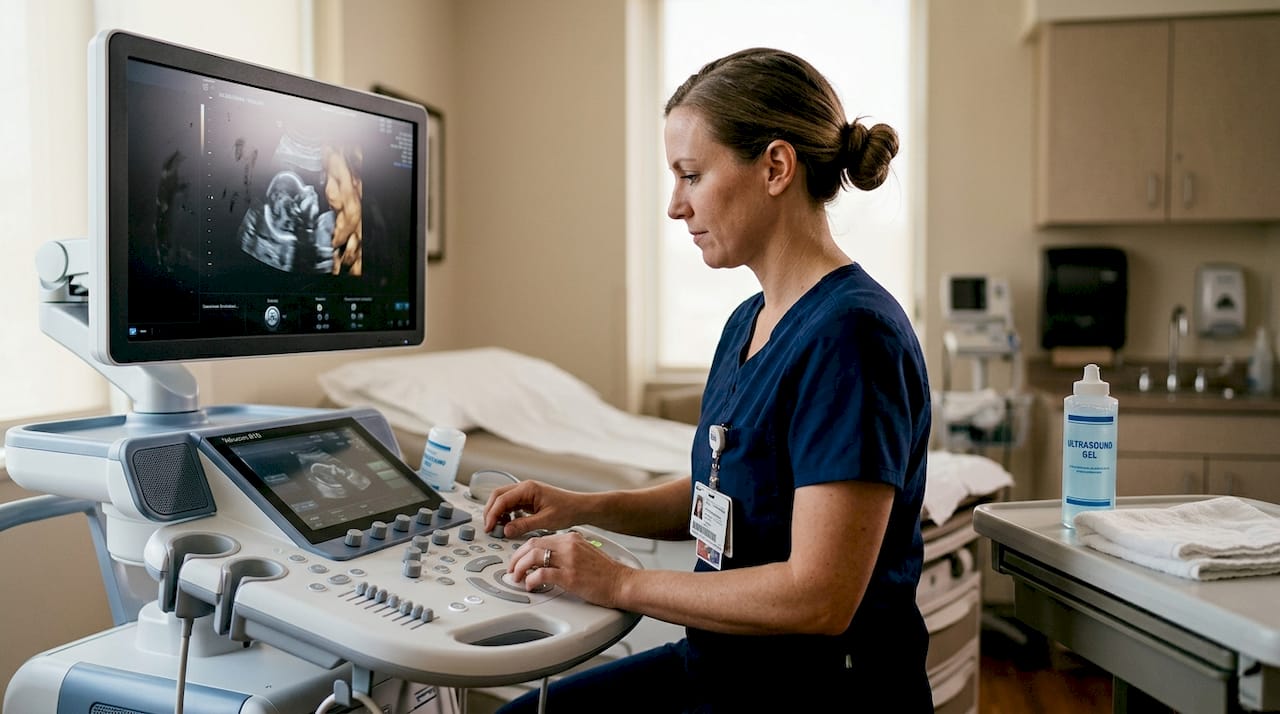
Here's a comparison of what different technology tiers typically deliver:
| Technology tier | Image quality | 4D video | HD Live rendering |
|---|---|---|---|
| Entry-level machine | Basic, lower resolution | Choppy | No |
| Mid-range machine | Good, moderate detail | Smooth | Limited |
| Premium machine (GE Voluson, Samsung HS) | Exceptional, lifelike | Fluid | Yes |
When you're evaluating a studio, ask to see recent image samples taken at that specific location, not stock photos from the machine manufacturer's website. A studio's social media page or gallery is a reliable place to check real output. You can also read more about the latest ultrasound technology to understand what features to ask about before you commit.
Keep in mind that even the best machine has limits. If your baby is facing away, has a hand covering the face, or if amniotic fluid levels are low, image quality can drop noticeably. This is normal and not a reflection of the studio's skill. A good studio will explain this upfront and offer options.
Pro Tip: Ask the studio which specific machine model they use. If they can't answer or seem vague, that's a red flag. Reputable studios are proud of their studio technology overview and will tell you exactly what you're getting.
Read reviews and assess reputation
After you've checked the technology, the next checkpoint is understanding what real clients experience at the studio you're considering. Online reviews are one of the most reliable signals you have, and knowing how to read them makes a big difference.
Start with Google and Yelp. Look at three things: the overall star rating, the total number of reviews, and the level of detail in individual comments. A studio with 4.8 to 5.0 stars and 300 to 1,200 reviews is a strong signal of consistent quality. A studio with 4.9 stars but only 12 reviews tells you almost nothing.
The most trustworthy reviews mention specific details. Look for comments about:
- Image quality: Did the reviewer rave about how clear and detailed the photos were?
- Staff friendliness: Were the sonographers warm, patient, and communicative?
- Cleanliness: Was the space tidy, comfortable, and welcoming?
- Wait times and scheduling: Did appointments run on time?
- Keepsake products: Were the prints, USB drives, or heartbeat bears delivered as promised?
Studios with high ratings of 4.8 or more stars combined with positive feedback on image quality, service, and cleanliness are the ones worth booking. What you want to avoid are studios where reviews are sparse, recent in a suspicious cluster, or where negative comments about image quality go unaddressed by management.
Consistency matters more than a single glowing review. If 200 parents in a row say the sonographer made them feel at ease and the images were stunning, that's a pattern you can trust. One perfect five-star review from three years ago is not.
Browsing a studio's studio photo gallery alongside its reviews gives you a fuller picture. You see both what the studio says it delivers and what real clients actually received.
Consider ambiance, location, and value
Trust isn't just about reviews. It's also about how the entire experience feels and what's included for the price. A technically capable studio that feels cold, rushed, or unwelcoming can still leave you disappointed.
Here's what to evaluate before you book:
- Ambiance: Does the studio feel spa-like, with soft lighting and a comfortable setting? Is there a large screen so the whole family can watch together?
- Family-friendly policies: Can your partner, kids, or parents join the session? How many guests are allowed?
- Unique offerings: Does the studio offer gender reveals, heartbeat bears, or themed sessions?
- Location convenience: Is the studio close to your home or your OB/GYN's office? Proximity matters when you're 30 weeks pregnant.
- Session pricing: Pricing typically runs $100 to $300 per session across the U.S. What matters is what's included, not just the base number.
- Rescan policy: What happens if the baby isn't cooperating and images come out unclear?
"The value of your session isn't measured in minutes on the table. It's measured in what you take home and how you felt while you were there."
Always ask for a full breakdown of what's included in each package. Some studios advertise a low price but charge separately for printed photos, digital files, or video clips. Others bundle everything into one flat rate. Reviewing studio service options before booking helps you compare apples to apples.
Pro Tip: If a studio doesn't have a clear rescan policy posted on its website, ask directly before you pay. A confident, customer-focused studio will have a straightforward answer.
For parents who want to take the experience further, browsing ultrasound keepsake products ahead of time lets you plan add-ons that make the visit even more special.
The overlooked factors that make or break your experience
Having covered the essentials, let's step back for a hard-won lesson from behind the scenes. Most expectant parents spend hours comparing prices and machine brands, but the factor that actually determines whether they leave happy is something far simpler: how well the studio communicates before, during, and after the session.
Studios that set realistic expectations upfront build trust. They tell you honestly that image quality can suffer if the baby is in a tricky position or if conditions aren't ideal, and they explain the rescan policy before you ever hand over your credit card. That transparency is worth more than any machine upgrade.
Industry marketing tends to lean heavily on emotional language, and while the bonding experience is genuinely meaningful, it's worth knowing that medical organizations like the FDA and ACOG caution against unnecessary ultrasound exposure. A studio that acknowledges this honestly, rather than ignoring it, is one that respects your intelligence as a parent.
The studios that earn the most loyal clients are not always the ones with the flashiest equipment. They're the ones where the sonographer takes time to explain what's happening on screen, answers your questions without rushing you, and makes the whole room feel like it's celebrating alongside you.
Choose your studio with confidence
You now have a clear framework: check the technology, read the reviews carefully, evaluate the ambiance and pricing, and pay close attention to how a studio communicates. Use these questions as your checklist before you book anywhere.
At BabyView3D, we've spent over 15 years helping families across the United States experience those first unforgettable moments with their baby. Our certified sonographers use premium HD Live technology to deliver images that go far beyond what most parents expect. Explore ultrasound packages that fit your budget and goals, view real session images from families just like yours, and shop keepsake products to make the memory last. Your first appointment includes a special introductory offer, because every family deserves to start this journey right.
Frequently asked questions
Can I use ultrasound photos from a boutique studio for medical purposes?
No, boutique 3D/4D studios do not provide diagnostic images; always consult your OB/GYN for any medical assessments or concerns.
What should I do if the images aren't clear or my baby isn't in a good position?
Ask about the studio's rescan policy before booking, since rescan policies mitigate poor image results caused by baby positioning or other factors.
Is 3D/4D ultrasound safe for my pregnancy?
Non-medical ultrasounds are considered safe when performed by trained professionals, but the FDA and ACOG recommend limiting unnecessary exposure as a precaution.
How much does a 3D/4D ultrasound session usually cost?
Most sessions in the U.S. cost between $100 and $300; always confirm what deliverables are included before comparing prices across studios.