

The moment you first see your baby's face on a screen is one you will never forget. But getting to that moment takes more than just showing up. Many parents feel a mix of excitement and uncertainty before a 4D ultrasound session, wondering how to make sure everything goes smoothly and the images come out beautiful. This guide walks you through every practical step, from what to bring and wear, to how to emotionally prepare, so your session becomes the deeply personal milestone you have been imagining since the day you found out you were expecting.
Table of Contents
- What is a 4D ultrasound and why choose it?
- What you need before your 4D ultrasound
- Step-by-step guide: Preparing for your session
- Common mistakes and how to avoid them
- A fresh perspective: Making your 4D ultrasound a meaningful experience
- Discover the best 4D ultrasound services with BabyView3D
- Frequently asked questions
Key Takeaways
| Point | Details |
|---|---|
| Elective and safe | 4D ultrasounds are elective procedures and safe when performed by trained professionals. |
| Preparation matters | Proper hydration, comfortable clothing, and arriving on time help ensure clear images and a positive experience. |
| Emotional focus | The primary purpose is bonding and creating memorable moments, not medical diagnosis. |
| Avoid common mistakes | Skip disappointment by following preparation steps and communicating your preferences before the scan. |
What is a 4D ultrasound and why choose it?
Understanding what a 4D ultrasound actually is will help you walk into your session with realistic and positive expectations.
A traditional 2D ultrasound produces flat, grainy outlines of your baby. A 3D ultrasound adds depth, creating still, three-dimensional images. A 4D ultrasound takes that one step further by adding the element of time, meaning you see live, moving footage of your baby in real time. You can watch your little one yawn, stretch, suck their thumb, or even appear to smile. It is a live window into the womb.
Key differences between ultrasound types
| Type | Image quality | Movement | Primary use |
|---|---|---|---|
| 2D | Flat, grayscale | Yes | Medical diagnosis |
| 3D | Three-dimensional, still | No | Detailed anatomy |
| 4D | Three-dimensional, live motion | Yes | Bonding and keepsakes |
| HD Live / 8K | Ultra-high definition, lifelike | Yes | Premium bonding experience |
The benefits for parents go well beyond what any table can capture. Research consistently shows that seeing a baby's face and movements in high detail can strengthen the emotional bond between parents and their unborn child. Many parents describe the moment as transformative, a shift from "pregnancy" as an abstract concept to an immediate, breathing, very real little person.
It is important to understand that 4D ultrasounds are elective, meaning they are not medical procedures and are not used to diagnose conditions. They are safe when performed by trained professionals who follow the ALARA principle, which stands for "As Low As Reasonably Achievable" and refers to minimizing ultrasound exposure while still producing excellent images. This safety standard is one reason why choosing a certified, experienced provider matters so much.
Here is a quick summary of the emotional and practical benefits parents cite most often:
- Seeing facial features before birth, including the nose, lips, and eye shape
- Sharing the moment with partners, grandparents, or older siblings in real time
- Creating keepsakes such as printed photos, video recordings, and digital galleries
- Bonding earlier and more deeply with a baby who suddenly feels much more real
- Reducing anxiety by seeing a healthy, active baby moving on screen
To better understand what happens during an actual visit, reading about the 4D ultrasound process can help you prepare mentally and emotionally before the day arrives.
One thing to keep firmly in mind: a 4D session at an elective imaging center is not a replacement for your scheduled prenatal medical scans. Your OB or midwife will still handle all clinical evaluations. Think of your 4D session as a celebration of pregnancy, a chance to connect with your baby in a way that medical appointments simply cannot provide.
What you need before your 4D ultrasound
With a clear understanding of what a 4D ultrasound is, let's look at what you need to bring and prepare before you walk through the door.
Preparation is what separates a stunning session from a frustrating one. Babies are unpredictable, but your level of readiness is entirely within your control. Most of what you need to do is simple, but skipping even one step can affect image quality significantly.
Essential items to bring
| Item | Why it matters |
|---|---|
| Photo ID | Required for intake at most centers |
| Prenatal records or OB referral | Confirms gestational age and health status |
| Snack or juice box | Encourages baby movement during the scan |
| Water bottle | Hydration supports amniotic fluid levels |
| Comfortable clothing | Easy access to your abdomen during the scan |
| Payment or booking confirmation | Avoids any administrative delays at check-in |
Hydration is one of the most important and most overlooked parts of preparation. Drinking plenty of water in the days leading up to your session improves amniotic fluid clarity, which directly affects how sharp and detailed your images will be. Amniotic fluid acts as the medium through which the ultrasound waves travel, so the clearer the fluid, the crisper the picture.
Many providers who specialize in ultrasound session services recommend drinking at least 64 ounces of water daily for two to three days before your appointment. This is especially helpful if you are scheduling your session in your third trimester, when fluid levels can naturally fluctuate.
Meal timing also matters. Having a light snack or glass of juice about 30 minutes before your session can give your baby a small energy boost, which often encourages movement and more expressive poses on screen. Avoid a heavy meal right before, as that can make you feel uncomfortable lying on your back.
Dress code is simple but important. Wear a two-piece outfit so you can easily expose your belly without discomfort. Avoid dresses or jumpsuits that require significant undressing.
For more ultrasound preparation tips tailored to different stages of pregnancy, reviewing what other parents have found helpful can give you added confidence going in.
Pro Tip: Arrive with a comfortably full bladder, not bursting but full. In the earlier weeks of pregnancy especially, a fuller bladder can help lift the uterus and provide a clearer imaging window.
Think about who you want in the room with you. Most elective imaging centers welcome family members and close friends. Bringing your partner, a parent, or a sibling can make the experience feel like a true celebration. However, keep the group to a manageable size so the atmosphere stays calm and intimate rather than chaotic.
Step-by-step guide: Preparing for your session
With your checklist in hand, here is how to put it all together in the days and hours leading up to your appointment.
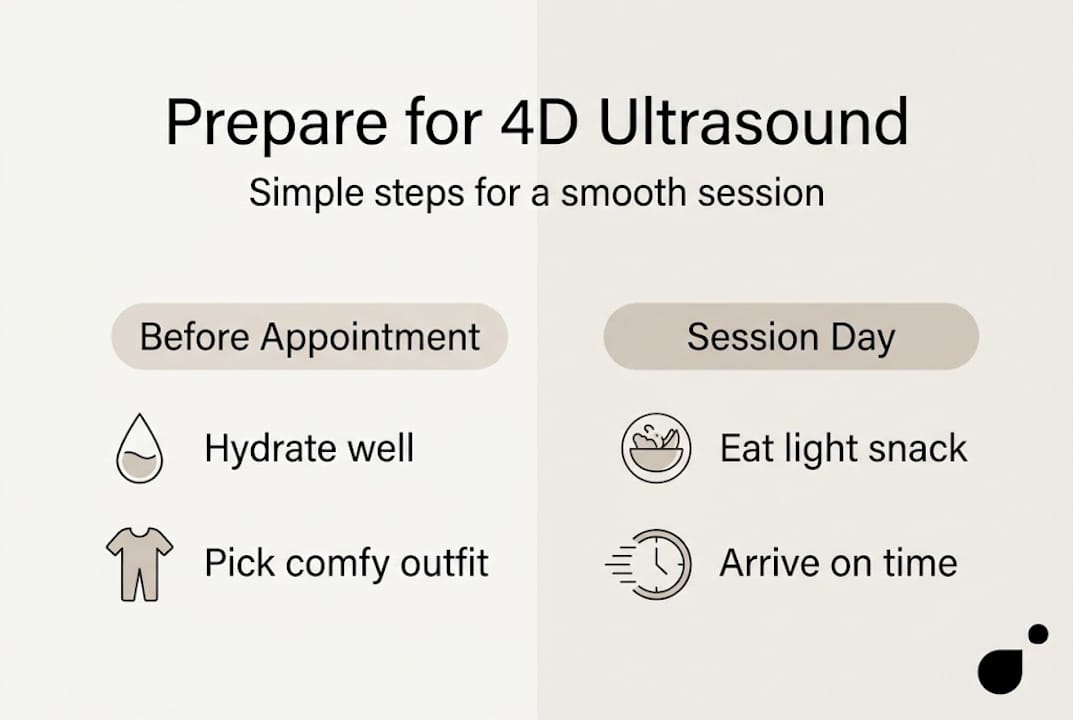
Step 1: Book and confirm your appointment
Schedule your session during the optimal window for 4D imaging: between 26 and 32 weeks of pregnancy. During this period, your baby has developed distinct facial features and has enough subcutaneous fat to create those detailed, soft, lifelike images you have seen in galleries. Earlier than 26 weeks, the features may appear less defined. After 32 weeks, the baby's position and reduced amniotic fluid space can make imaging more challenging.
Confirm your appointment at least 24 to 48 hours in advance. Double-check the address, parking situation, and how long the session is expected to last so you can plan your day without added stress.
Step 2: Hydrate consistently in the days before
As mentioned earlier, drinking enough water is not just advice, it is essential. Mark it on your calendar and treat it like a daily task. Well-hydrated amniotic fluid creates a clearer, more vivid image environment. This single step has the biggest impact on image quality outside of gestational age.
Step 3: Eat a light snack 30 minutes before your session
A small juice box, a piece of fruit, or a few crackers can wake your baby up gently. Active babies produce more engaging, expressive footage. Avoid heavy, greasy, or very sugary foods that could make you feel nauseous while lying down.
Step 4: Choose the right outfit
Wear comfortable, two-piece clothing. A stretchy top that pulls up easily and soft maternity pants or leggings work perfectly. You want to be relaxed and not fidgeting during the scan.

Step 5: Decide who will attend
Coordinate with whoever you want in the room and communicate arrival times. Make sure everyone knows the location and understands the nature of the session so they can be emotionally present rather than distracted.
Step 6: Prepare a short list of questions for your sonographer
Think about what matters most to you. Do you want specific angles captured? Are you hoping to see the baby's hands or feet in detail? Would you like a particular song playing in the background? Most certified sonographers are happy to accommodate reasonable requests when you communicate them clearly.
Before your visit, exploring the ultrasound session overview on the provider's website can help you understand what packages are available and what keepsakes you can expect to take home.
Pro Tip: Schedule your session for a time of day when your baby is typically most active. Many parents notice patterns of movement, such as mid-morning or early evening activity. Booking during those windows increases the chance of capturing your baby at their liveliest.
Common mistakes and how to avoid them
To ensure your session is smooth, recognize these pitfalls and learn how to sidestep them before they cause disappointment.
Even well-prepared parents sometimes make simple mistakes that affect their experience. None of these are difficult to avoid once you know what to watch for.
Most common mistakes parents make
- Skipping hydration in the days before: One glass of water the morning of your session is not enough. Consistent hydration over two to three days is what actually makes a difference in image clarity.
- Arriving late or rushed: Stress affects your body, and a rushed arrival can make it harder to settle into the experience emotionally. Plan to arrive at least 10 to 15 minutes early.
- Wearing the wrong clothing: A tight dress or complicated outfit creates unnecessary delay and discomfort during setup.
- Overpacking the guest list: Bringing too many people into the room can feel overwhelming rather than celebratory. Keep it intimate and intentional.
- Expecting a medical diagnosis: This is one of the most important mindset shifts to make ahead of time. As confirmed by elective ultrasound guidance, 4D sessions are for bonding and memory creation, not for clinical evaluation. If you walk in expecting your sonographer to assess your baby's health in detail, you will misunderstand the purpose of the experience.
"The most meaningful part of a 4D session is not the technology. It is the emotional shift that happens when you see your baby as a real, individual person for the first time. That moment cannot be replicated in any other setting."
Avoiding disappointment often comes down to setting the right expectations. Some babies will not cooperate no matter how well you prepare. A hand covering the face, an unusual position, or a sleeping baby can limit what you see. This is normal, and most reputable providers will offer a rescheduled session or additional scan time in these situations. Asking about this policy before your appointment is smart planning.
For more on what to expect and how to navigate common mistakes during prenatal imaging sessions, parents who have shared their experiences can offer genuinely useful, real-world insight.
Pro Tip: Before your scan begins, tell the sonographer your preferences clearly. If you want close-ups of the face or footage of the baby's hands, say so at the start. Certified sonographers appreciate specific requests because they help guide the session more efficiently.
A fresh perspective: Making your 4D ultrasound a meaningful experience
Here is what most preparation guides get wrong about 4D ultrasounds: they focus almost entirely on technical readiness and forget that the real value of the experience is emotional.
You can drink all the water, wear the perfect outfit, and arrive exactly on time, and still walk out feeling like you missed something. That something is presence. Being emotionally present during your session means putting your phone down, letting go of the need for a "perfect" shot, and simply watching your baby move with wonder rather than with a checklist in hand.
Babies in the womb are unpredictable. Your baby might sleep through most of the session or turn away from the transducer. That unpredictability is not a failure. It is a preview of parenthood. The moment you stop managing the experience and start living it, the session becomes something more than footage. It becomes a memory.
We have worked with thousands of families over more than 15 years, and the sessions that parents describe most warmly are not always the ones with the clearest images. They are the ones where the whole family laughed when baby yawned, or cried when they saw the nose that looked exactly like dad's. Those moments live in the room. You can create the conditions for them by sharing memorable moments that other parents have experienced and letting yourself be surprised.
Discover the best 4D ultrasound services with BabyView3D
If you are ready to create a lasting memory of your pregnancy, BabyView3D offers exactly the kind of experience this article has been preparing you for.
With over 15 years of experience, certified sonographers, and advanced HD Live and 8K imaging technology, BabyView3D delivers breathtaking detail in every session. You can explore service options including keepsake packages, video highlights, and printed galleries designed to become family treasures. Before you book, take a moment to see sample images from real sessions and get a feel for the quality you can expect. When you are ready, schedule a session and take advantage of a special first-appointment offer available for a limited time.
Frequently asked questions
Is a 4D ultrasound safe for my baby?
Yes, 4D ultrasounds are safe when performed by trained professionals who follow safety principles like ALARA, which minimizes exposure while maintaining excellent image quality.
When is the best time during pregnancy for a 4D ultrasound?
Between 26 and 32 weeks of gestation is generally ideal, as your baby has developed clear facial features and enough fat for detailed, lifelike images.
What should I wear to my 4D ultrasound session?
Wear comfortable, two-piece clothing so your abdomen is easily accessible for the scan without requiring complicated undressing or repositioning.
Will a 4D ultrasound replace standard medical scans?
No, 4D ultrasounds are elective experiences focused on bonding and creating memories rather than medical diagnosis, so your scheduled prenatal appointments remain essential.
Can my family join me during the 4D ultrasound session?
Most facilities warmly welcome family and friends, but it is always smart to confirm your provider's specific guest policy and any room capacity limits when you book.