

Choosing a prenatal ultrasound package feels exciting until you realize how many options are out there, each claiming to offer the "best" or "most advanced" experience. Parents-to-be often walk away from their research more confused than when they started, unsure whether they need 3D, 4D, HD Live, or some combination of all three. The truth is, meaningful baby bonding through ultrasound comes down to specific technical features, skilled staff, and honest expectations — not just the fanciest label on a brochure. This guide breaks down exactly what separates a genuinely premium experience from an average one.
Table of Contents
- What makes an ultrasound 'premium'?
- Top features to look for in premium ultrasound packages
- Comparing premium ultrasound features: What truly makes a difference?
- Factors that affect image quality in your session
- Safety considerations: Why premium also means prudent
- Why choosing the right ultrasound features matters more than the label
- Book your premium ultrasound: Lasting memories start here
- Frequently asked questions
Key Takeaways
| Point | Details |
|---|---|
| 3D and 4D imaging | Premium ultrasounds provide multi-angle images and real-time fetal movement for deeper family connection. |
| Advanced image rendering | HD and specialized enhancements show lifelike skin tones, details, and create memorable keepsakes. |
| Consistency and expertise | Premium studios use high-end equipment and skilled staff to ensure clearer, more reliable images. |
| Family-centered safety | Technicians follow proven safety protocols and minimize exposure time for peace of mind. |
| Expect realistic results | Baby’s position and other unique factors play a big role—perfect photos are not always guaranteed. |
What makes an ultrasound 'premium'?
To understand what you're paying for, let's break down what "premium" really means in the world of ultrasounds.
Most parents have heard the terms 3D, 4D, and HD, but few know what they actually deliver in practice. A 3D ultrasound produces still, three-dimensional images of your baby by capturing multiple 2D slices and reconstructing them into a single volumetric picture. You see shape, depth, and facial features in ways a flat 2D scan simply cannot show. 4D ultrasound adds the element of time — essentially a 3D image in motion, so you watch your baby yawn, stretch, or wave in real time. HD Live (sometimes called HDlive) takes the experience a step further by applying simulated lighting and texture rendering to produce images that look remarkably lifelike, almost like a photograph rather than a medical scan.
Premium 3D/4D/HD imaging uses advanced volumetric and real-time technology to produce those lifelike results that families love. The difference between a standard scan and a premium one is not just visual — it is emotional. When you can clearly see your baby's nose, lips, and expressions, the bond forms in a way that a blurry 2D image simply cannot replicate.
Here is what premium ultrasound packages actually deliver:
- Detailed 3D stills captured from multiple angles, giving you a complete picture of your baby's face and body
- Real-time 4D video that records your baby's movement so you can revisit the moment later
- HD rendering with simulated light sources that create depth, shadow, and skin-tone realism
- High frame rates that reduce motion blur during active periods
- Digital keepsakes including USB drives, printed photos, and shareable video files
"The emotional impact of seeing your baby's face clearly before birth is something no standard scan can match. Premium technology bridges the gap between imagination and reality."
You can explore our premium ultrasound services to see exactly which technologies are available at each package level, or review a detailed 3D vs 4D ultrasound comparison if you want a side-by-side breakdown before making a decision.
Top features to look for in premium ultrasound packages
Once you know what "premium" can mean, focus on the specific features to look for when evaluating packages.
Not all premium claims are equal. Some studios invest heavily in cutting-edge machinery and staff training, while others rely on marketing language to justify higher prices. Knowing which features genuinely improve your experience helps you ask the right questions before you book.
High-end ultrasound platforms focus on image quality, advanced 3D/4D options, workflow automation, and reduced variability between operators — meaning your results depend less on luck and more on consistent, reliable technology.
Here are the most important features to evaluate when comparing packages:
- High frame rate for 4D playback. A higher frame rate means smoother, clearer motion video. Low frame rates produce choppy footage that makes it harder to see details when your baby moves.
- Artifact reduction technology. Artifacts are visual distortions caused by shadowing or signal interference. Premium machines use advanced algorithms to minimize these, producing cleaner images.
- Advanced rendering modes. Look for packages that include silhouette rendering, HD Live, or glass-body modes — each highlights different features of your baby's anatomy.
- Operator experience and training. The machine matters, but so does the person using it. Certified sonographers who specialize in elective 3D and 4D scanning know how to reposition, adjust depth, and coax the best image out of a challenging session.
- Digital and physical keepsakes. The best packages include both digital files (USB, cloud access, or shareable links) and printed materials like photos or albums that become lasting family treasures.
- Flexible session duration. Premium studios allow enough time in the room to get great results, rather than rushing through to maximize bookings.
Pro Tip: Ask any studio you're considering what they do when image quality is poor due to baby position. A truly premium provider will offer strategies to improve the view or reschedule rather than just hand you subpar images and send you home.
Being prepared for your 4D ultrasound session makes a real difference, and understanding what to bring and how to time your appointment improves your chances of walking away with images you'll treasure. If you want to understand more about the emotional side of the experience, read about how you can connect with your baby through 3D imaging before birth.
Comparing premium ultrasound features: What truly makes a difference?
Now that you know the must-have features, let's see how they compare across premium offerings and which details matter the most.
The table below shows how a basic package stacks up against a mid-range and a full premium offering across the most important categories.
| Feature | Basic 2D/3D | Mid-range 3D/4D | Full premium HD/4D |
|---|---|---|---|
| Image type | Flat 2D + basic 3D stills | 3D stills + 4D video | HD Live + 4D video + silhouette |
| Frame rate | Standard | Improved | High (smooth motion) |
| Rendering modes | None | Basic 3D | HD Live, glass-body, silhouette |
| Artifact reduction | Minimal | Moderate | Advanced |
| Keepsakes | Printed photos only | Photos + basic USB | Photos + USB + shareable video |
| Session duration | 15 to 20 minutes | 25 to 30 minutes | 45 to 60 minutes |
| Operator specialization | General sonographer | Trained elective scanning | Certified elective specialist |
The differences are significant. A basic package captures a moment; a full premium experience creates a memory your family will revisit for decades.
Technology quality is not just about the machine brand. AI-assisted image quality auditing shows that image quality can be objectively assessed through computational methods and strongly aligns with expert review. Leading studios now use professional assessment protocols to ensure every session meets a consistent quality standard, not just on the best days with ideal conditions.
Key factors that differentiate truly premium technology from standard setups include:
- Real-time rendering speed: Premium machines process and display 4D images faster, reducing lag between movement and display
- Transducer (probe) quality: Higher-end probes capture finer detail, especially for facial features
- Software updates and modes: Studios that invest in regular software upgrades maintain access to the latest rendering improvements
When booking a 4D ultrasound, asking about the specific machine model and software version used is completely reasonable. A reputable studio will answer confidently and explain how their equipment benefits your session.
Factors that affect image quality in your session
While technology is vital, several additional factors play a major role in your ultrasound experience. Here's what you should know before your appointment.
Even the best machine in the world cannot guarantee perfect images every time. Image outcomes depend on fetal position, maternal factors, motion, and scan technique, even at high-end studios. Understanding this ahead of time protects you from disappointment and helps you prepare realistically.
Factors that influence your session results include:
- Baby's position: If your baby is facing toward your spine or has limbs in front of their face, getting a clear facial image is difficult regardless of technology. Patience and repositioning strategies help, but not always immediately.
- Gestational age: Most specialists recommend 26 to 32 weeks as the ideal window for 3D and 4D imaging. Early in pregnancy, there is less facial fat tissue to render clearly. Later on, the baby may be too large and cramped for good angles.
- Amniotic fluid levels: More fluid around the baby's face creates clearer imaging. Hydration before your session genuinely makes a difference.
- Maternal body characteristics: Factors like scar tissue, body composition, and the position of the placenta can affect signal clarity.
- Baby's activity level: An active baby creates motion blur. A sleeping baby stays still but may not show the expressions you were hoping for.
Pro Tip: Drink plenty of water in the 48 hours before your appointment and have a light snack 30 minutes prior. Hydration improves fluid levels around the baby, and a small sugar boost often encourages baby activity if you want to capture movement.
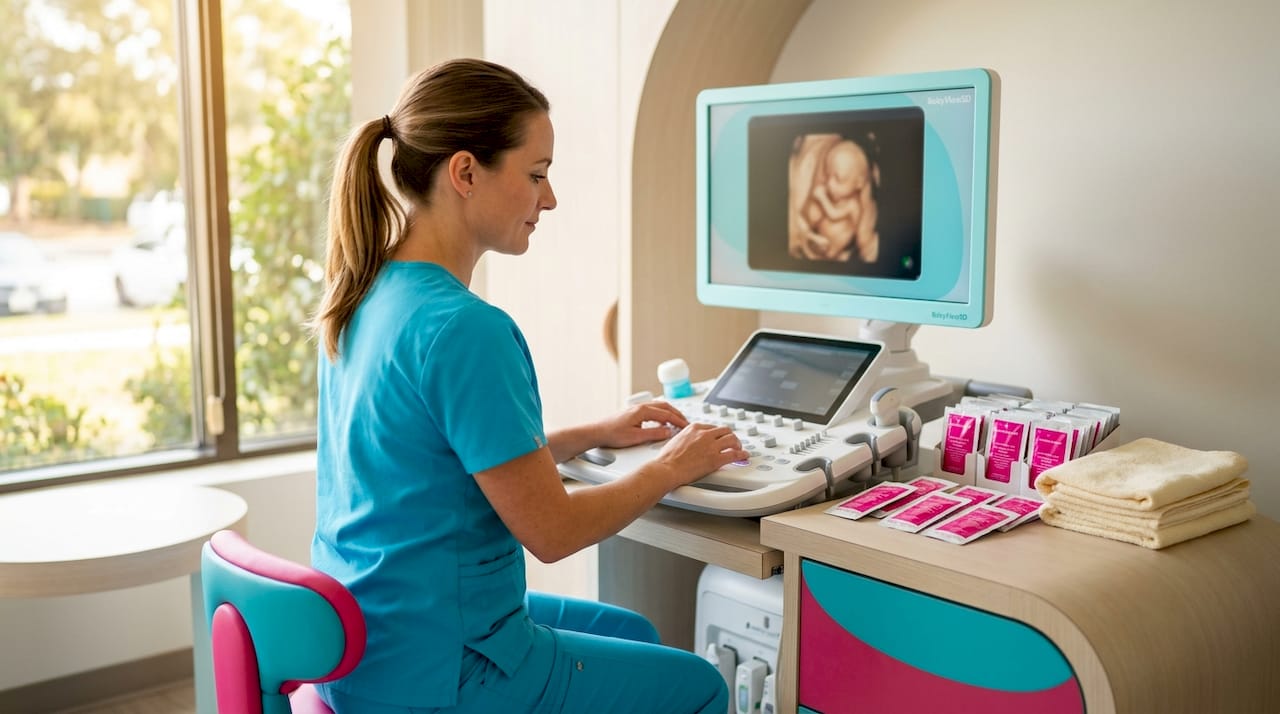
The skill of your sonographer matters enormously here. An experienced operator knows how to gently apply pressure, change your position, or wait strategically for a better angle rather than accepting a poor result. This is one area where paying for a premium studio with specialized staff pays off directly.
Safety considerations: Why premium also means prudent
Any truly premium experience should deliver both beautiful images and peace of mind — here's how safety fits in.
Some parents worry about the safety of elective ultrasound sessions, particularly extended ones. This concern is completely valid, and it is one of the clearest ways to separate responsible premium providers from those who prioritize spectacle over care.
Professional guidelines stress using the lowest output and shortest exposure necessary, following what is known as the ALARA principle. ALARA stands for "As Low As Reasonably Achievable," and it is the foundational safety standard for all ultrasound use, both medical and elective.
What to look for in a safety-conscious premium studio:
- Transparent communication about scan duration and output settings used during your session
- Visible display of Thermal Index (TI) and Mechanical Index (MI) on the screen — these are the two key safety indicators that track heat and pressure effects on tissue
- Experienced operators who actively manage exposure time and do not simply run the machine at maximum output for longer periods to get a better image
- Clear policies that limit session length and explain when a session should be paused or stopped
"A responsible premium provider will never sacrifice your baby's safety for a prettier picture. If a studio does not mention safety practices when you ask, that tells you something important."
Parents should feel empowered to ask questions. Ask how long the session will run, what output levels are used, and whether the staff hold current certifications in obstetric ultrasound. Any reputable studio welcomes these questions because they reflect the same commitment to safety that premium providers take seriously.
Why choosing the right ultrasound features matters more than the label
After exploring all the key features and differences, let's step back and consider what actually creates a valuable family experience.
Here is something the ultrasound industry does not say loudly enough: the label on the package matters far less than the team delivering it. Terms like "5D" or "8K ultrasound" are frequently used as marketing shorthand, and while some genuinely reflect technological advances, others are simply new names applied to existing capabilities. We have seen parents pay premium prices for packages with impressive names and walk away with images they could have gotten from a basic session.
What actually creates a memorable, meaningful experience comes down to three things. First, practiced hands. A sonographer who has performed thousands of elective 3D and 4D scans knows instinctively how to handle a difficult position, calm nervous parents, and find the angle that makes a mother gasp with recognition. No machine upgrade replaces that. Second, honest package design. A trustworthy studio tells you upfront what is and is not guaranteed, what happens if your baby does not cooperate, and what reschedule or reshoot policies look like. Vague promises are a red flag. Third, genuine safety culture. A studio that talks about ALARA, displays safety metrics, and limits session time is one that respects both you and your baby.
Parents who focus on discovering 3D ultrasound as a bonding experience rather than a performance tend to walk away more satisfied. When you arrive expecting a magical moment with your baby rather than a flawless product, you stay open to the wonder of what you actually see — fingers, lips, a familiar forehead. That experience does not require the most expensive label. It requires the right combination of technology, skill, and care.
The smartest approach is to ask for sample images from real sessions, not marketing materials. Ask about the specific machine model, the sonographer's credentials, and the studio's safety protocols. Ask what happens if your session yields poor images. A truly premium studio will answer every one of those questions with confidence and without hesitation.
Book your premium ultrasound: Lasting memories start here
Ready for your own keepsake moment? Here are your next steps and where to see real result samples.
At BBview 3D, our certified sonographers combine over 15 years of experience with advanced HD Live technology to give your family a genuinely memorable first meeting with your baby. We design every session with both image quality and your comfort in mind, keeping safety at the center of everything we do.
Browse our ultrasound package options to find the right fit for your stage of pregnancy and your family's goals. Want to see what real sessions look like before you commit? Our ultrasound image gallery shows authentic results from families just like yours. We also offer a special discount for your first appointment, so there is no reason to wait. Your baby is growing every day — the perfect window for stunning images will not last forever.
Frequently asked questions
What is the difference between 3D, 4D, and HD ultrasounds?
3D provides still volumetric images, 4D adds real-time motion, and HD delivers lifelike lighting and texture enhancements that make images look almost photographic.
Can everyone get a perfect 3D image during their session?
Not always. Fetal position and artifacts may prevent optimal images during some scans, which is why experienced operators and flexible session policies matter.
Is premium ultrasound safe for my baby?
Yes, when performed by trained professionals. The ALARA principle ensures minimum ultrasound exposure is used, and reputable studios actively follow these guidelines throughout your session.
How do I know if an ultrasound studio is truly 'premium'?
Look for advanced technology paired with trained staff, transparent package details, honest policies about image quality, and strong client reviews that mention both image results and staff professionalism.