
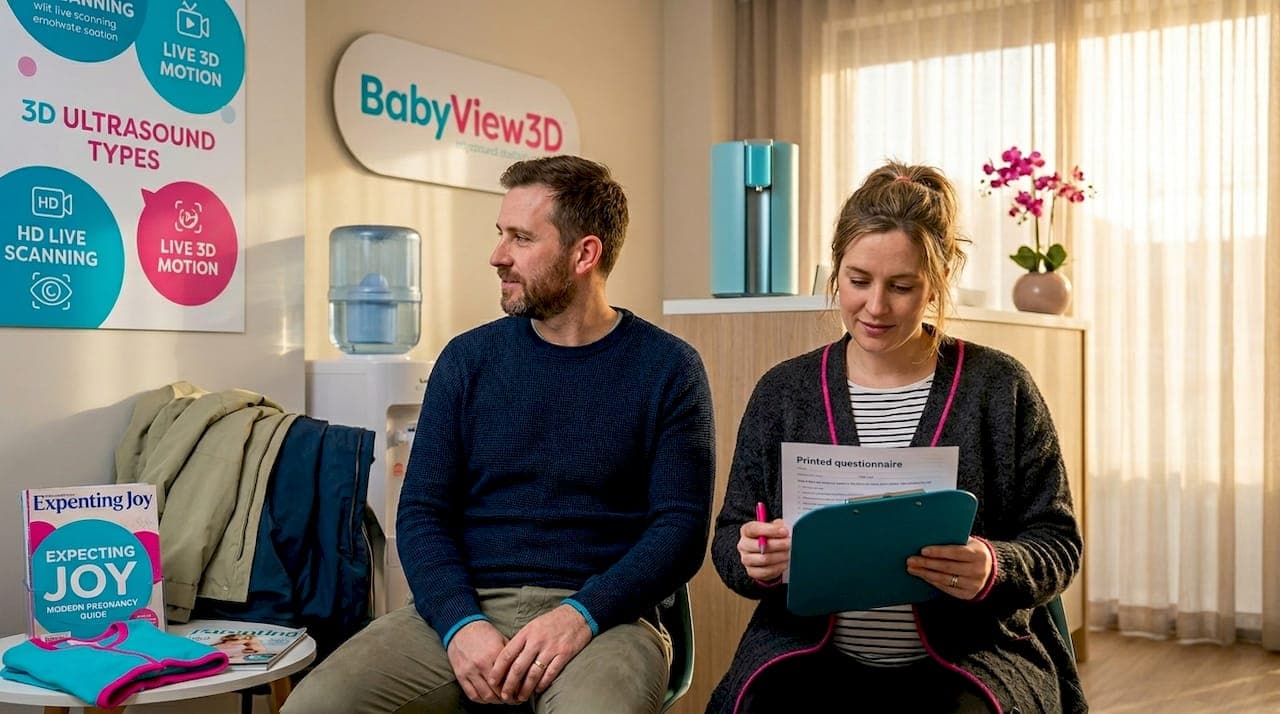
Seeing your baby for the first time on a screen is a moment most parents never forget. But the difference between a forgettable scan and a truly emotional, crystal-clear window into your baby's world often comes down to one thing: knowing what to ask. Whether you are considering a standard medical scan or a 3D/4D keepsake session, the right questions can transform the entire experience from a clinical appointment into one of the most meaningful milestones of your pregnancy journey.
Table of Contents
- Understanding ultrasound options: 2D vs. 3D vs. 4D
- Essential questions for your ultrasound session
- Comparing medical and keepsake ultrasounds
- Personalizing the experience: What to request for deeper bonding
- Our perspective: What most guides miss about ultrasound questions
- Ready to make your ultrasound unforgettable?
- Frequently asked questions
Key Takeaways
| Point | Details |
|---|---|
| Choose the right ultrasound | 2D, 3D, and 4D ultrasounds each offer different benefits for medical information and bonding. |
| Prioritize safety | Always follow the ALARA principle and consult your OB-GYN for any elective scans. |
| Ask targeted questions | Prepare questions about scan type, session duration, risks, interpreter, and keepsake options. |
| Balance bonding with medical value | Request personalized images within safe limits and remember keepsake scans are not medical diagnostics. |
Understanding ultrasound options: 2D vs. 3D vs. 4D
Before you walk into any ultrasound studio, it helps to know exactly what you are signing up for. Not all ultrasounds are the same, and each type serves a different purpose.
2D ultrasounds are the standard in medical care. They produce flat, grayscale images that show your baby's outline, organs, and basic anatomy. These scans are what your OB-GYN orders to track fetal development, check the placenta, and measure growth. They are efficient, fast, and focused on clinical data.
3D ultrasounds take multiple 2D images from different angles and combine them into a single three-dimensional image. The result is a lifelike, still image of your baby's face, hands, and features. Parents often describe this as the first time they truly "saw" their child. The level of facial detail is remarkable, especially between weeks 26 and 32 of pregnancy.
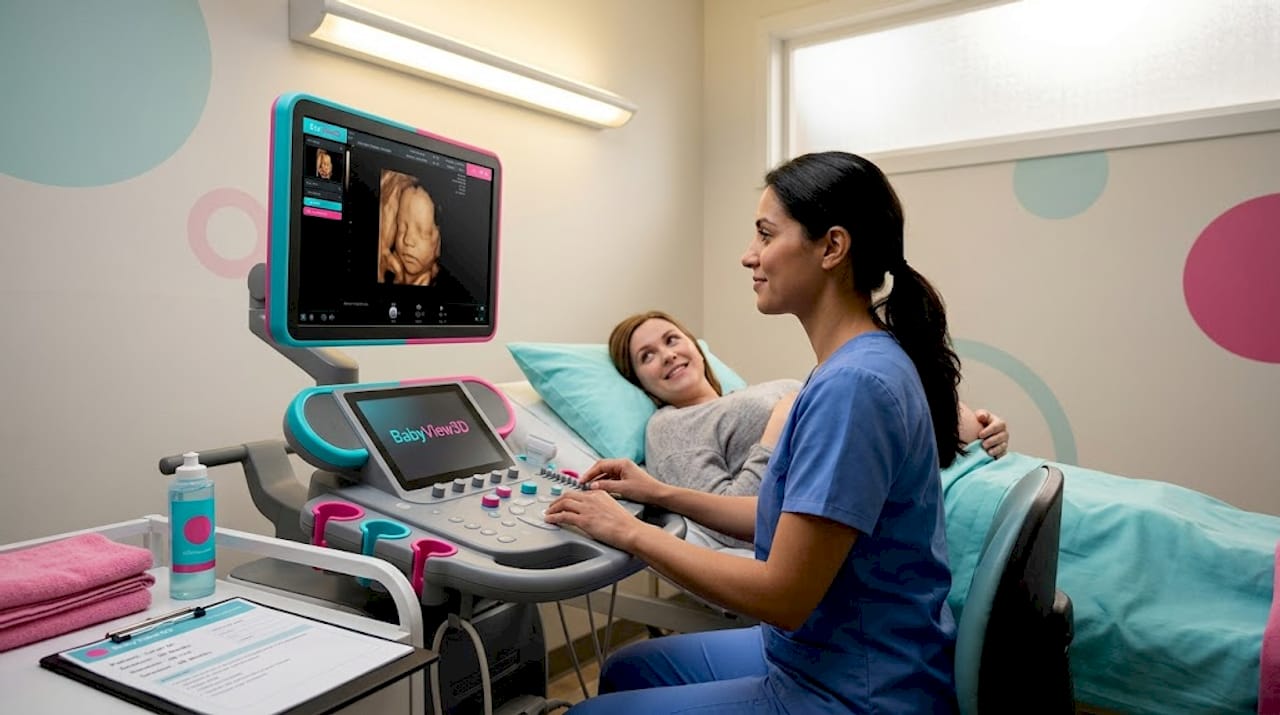
4D ultrasounds build on 3D technology by adding the dimension of time. You see your baby moving in real time. Yawning, stretching, sucking a thumb, or opening tiny eyes. This is where the bonding experience truly accelerates. Many parents report that watching their baby move in 4D felt more real than any other pregnancy moment.
Here is a quick side-by-side look at the three types:
| Feature | 2D Ultrasound | 3D Ultrasound | 4D Ultrasound |
|---|---|---|---|
| Image type | Flat, grayscale | Still, 3D photo | Live, moving footage |
| Primary purpose | Medical diagnosis | Visual keepsake | Bonding and keepsake |
| Level of detail | Anatomy focused | High facial detail | Real-time movement |
| Session length | 20 to 45 minutes | 15 to 30 minutes | 20 to 45 minutes |
| Recommended timing | Any trimester | 26 to 32 weeks | 26 to 32 weeks |
When choosing between these options, think about your goals. If you want to confirm your baby is healthy and growing on track, your OB-GYN's office handles that with 2D. But if you want to see your baby smile, wave, or yawn in vivid detail, you are looking at a 3D or 4D session.
One important point worth knowing: elective 3D/4D scans are designed for bonding, not diagnosis, and medical experts caution that non-medical use should be approached thoughtfully due to unknowns around prolonged exposure. Always loop in your OB-GYN before booking an elective session. Similarly, ACOG guidelines confirm that ultrasonography is not associated with risk when used prudently, but elective scans should follow the ALARA principle, which stands for As Low As Reasonably Achievable, meaning exposure should be kept to the minimum needed.
Key things to keep in mind when choosing your scan type:
- Talk to your OB-GYN before booking any elective session
- Consider your trimester and your baby's position
- Prioritize studios with certified sonographers and modern equipment
- Ask whether the studio follows ALARA safety standards
- Review available ultrasound blog resources to understand what each scan produces
Essential questions for your ultrasound session
Once you understand what type of scan you want, the next step is knowing what to ask. Most parents show up to ultrasound appointments without a single question prepared. That is a missed opportunity. The questions you ask before, during, and after your session shape how much you get out of it.
Here is a numbered list of the most important questions to have ready:
- What type of scan will be performed, and what will it show? Know whether you are getting 2D, 3D, or 4D imaging and what the expected output looks like.
- How long will the session last? Session length affects exposure time and how many images you can capture. Knowing this helps you plan.
- Who will perform and interpret the results? Always ask if you are working with a certified sonographer. At a keepsake studio, ask what happens if something concerning is spotted.
- What are the risks of elective scans? A trustworthy studio will be transparent about this. They should mention ALARA and advise you to check with your doctor.
- What is the best week of pregnancy for the clearest images? The answer is typically between 26 and 32 weeks, when fat has developed under the skin and features are most visible.
- What images and media will I receive? Ask if you get printed photos, digital files, or video clips. Some studios offer USB drives, app access, or printed keepsake packages.
- What safety standards does your equipment follow? Look for studios that use FDA-cleared equipment and follow established imaging safety guidelines.
"Commercial studios promote elective ultrasounds for emotional keepsakes, while ACOG, AIUM, and the FDA emphasize diagnostic use only and warn about potential anxiety from misinterpreted images." This tension is real, and it is why asking the right questions matters so much when choosing between a medical provider and a keepsake studio.
Pro Tip: Ask specifically whether the studio follows ALARA compliance. A studio that cannot answer this question clearly is one you should research more carefully before booking. Reputable providers like BabyView3D are transparent about equipment standards and sonographer credentials from the moment you inquire.
Comparing medical and keepsake ultrasounds
Not everyone realizes how different a medical scan is from a keepsake session, and that confusion leads to disappointment on both sides. Some parents expect a keepsake scan to confirm medical findings. Others book a medical scan hoping for stunning images. Understanding the distinction upfront saves frustration and helps you get exactly what you want.
Here is a detailed comparison:
| Category | Medical ultrasound | Keepsake ultrasound |
|---|---|---|
| Primary goal | Health and anatomy check | Bonding and emotional memory |
| Ordered by | OB-GYN or midwife | Parent choice |
| Duration | 20 to 45 minutes | 20 to 60 minutes |
| Image quality | Functional, diagnostic | High detail, lifelike |
| Who interprets? | Radiologist or OB-GYN | Certified sonographer (no diagnosis) |
| Medical record? | Yes, part of prenatal care | No |
| Insurance coverage | Often covered | Typically out of pocket |
| Output | Report plus basic images | Photos, video, digital files |
The biggest misconception parents carry is that a keepsake scan doubles as a health check. It does not. Elective scans have no medical justification and are not a substitute for prenatal care. A studio sonographer is not trained or authorized to diagnose anything. What they can do is give you an emotionally rich visual experience with your baby, capturing detail that a medical scan rarely pauses to show.
There is also the matter of anxiety. If a sonographer spots something unusual during a keepsake scan, they cannot explain what it means. That can lead to worry without context. This is one more reason to stay current with your OB-GYN visits and use keepsake scans as a complement, not a replacement.
Questions that clarify which type of scan you need:
- Am I looking for reassurance about my baby's health, or am I looking for connection?
- Has my OB-GYN already scheduled all required medical scans?
- Do I want professional-grade images and videos to share with family?
- Is this for a gender reveal or a milestone memory?
Explore more ultrasound guidance to understand how to time your sessions for the best results across both scan types.
Personalizing the experience: What to request for deeper bonding
Here is something most guides skip entirely: you have more control over your 3D/4D session than you think. A good studio will work with you to capture the moments that matter most. Knowing what to request makes the difference between a generic scan and a session that feels entirely personal.
Start by communicating your vision before you arrive. Tell the studio what you are hoping to see. Do you want close-up images of your baby's face? Are you hoping to catch a big yawn or a kick? Do you want footage of your baby's hands? Being specific gives the sonographer a clear goal to work toward.
Things you can request during your session:
- Facial close-ups: Ask for multiple angles of your baby's face to find the clearest shot
- Movement capture: Request footage timed to moments when your baby is most active
- Sibling or partner involvement: Ask if family members can be present or if you can play music the baby might respond to
- Specific keepsake formats: Printed photos, short video clips, digital downloads, or full session recordings
- Image enhancements: Some studios offer sepia tones, HD Live rendering, or heartbeat recordings to go with the visuals
Timing matters enormously. Babies tend to be most active 30 to 45 minutes after the mother eats something sweet. Scheduling your session around this window increases your chances of catching movement. Many parents also find that talking to their baby during the scan prompts a response.
Pro Tip: When you book your ultrasound, ask the studio directly what their most requested keepsake moments are. Studios with experience know exactly which fetal positions, lighting effects, and timing windows produce the most breathtaking images. Their advice is based on thousands of sessions.
One reminder: even during personalized sessions, exposure time matters. Keep sessions within the studio's recommended window and do not push for extended scan times. The goal is a meaningful experience within safe limits.
Our perspective: What most guides miss about ultrasound questions
Most guides hand you a checklist and send you on your way. They cover the basics: ask about safety, ask about timing, ask about image quality. What they rarely address is the emotional intelligence behind the questions you ask.
After more than 15 years working with expectant families, we have noticed something consistent. The parents who get the most from their ultrasound sessions are not the ones who ask the most questions. They are the ones who show up knowing why they are there. There is a huge difference between a parent who says "I want to see my baby" and a parent who says "I want to see my baby smile during a moment I can share with my mother who cannot travel to be here."
That specificity changes everything about how a session unfolds.
We also think most guides overcorrect on fear. Yes, elective ultrasounds should be approached with awareness, and yes, medical oversight from your OB-GYN is non-negotiable. But the framing of elective scans as inherently risky misses the profound value of early bonding. Research on prenatal bonding consistently shows that parents who feel deeply connected to their baby before birth tend to experience smoother transitions into parenthood.
The question is not whether to do a keepsake scan. The question is how to do it well: with certified professionals, FDA-cleared equipment, and clear communication about what you want to experience. Find ultrasound advice that helps you ask both the practical and the emotional questions, because both matter.
Conventional wisdom says ask about safety first. We say ask about your vision first, then build safety into that vision. That order of thinking produces better outcomes and better memories.
Ready to make your ultrasound unforgettable?
You now have everything you need to walk into your next ultrasound session with confidence and clarity. Whether you are planning your first keepsake scan or adding a 4D session to your prenatal journey, knowing what to ask transforms a standard appointment into a memory you will keep forever.
At BabyView3D, we have spent over 15 years helping families experience those first magical glimpses with stunning HD Live and 8K imaging technology. Browse our ultrasound services to find the right package for your stage of pregnancy, visit our ultrasound gallery to see the level of detail our sessions capture, and check out our ultrasound keepsakes store for meaningful ways to preserve those images. Your baby is waiting to be seen. We are here to help you see them clearly.
Frequently asked questions
Is a 3D/4D ultrasound safe for my baby?
When performed prudently and for genuine benefit, ultrasonography carries no known risk; elective sessions should be kept brief and follow the ALARA principle to minimize unnecessary exposure.
What questions should I ask before a keepsake ultrasound?
Ask about safety compliance, sonographer credentials, session length, and whether the images are purely for keepsake purposes, since elective scans prioritize bonding and are not a substitute for your OB-GYN's diagnostic work.
Can I request specific poses or moments during my 3D/4D ultrasound?
Yes, you can absolutely ask the sonographer to capture moments like yawning, kicking, or hand movements, but keep requests within the studio's recommended safe session limits to protect your baby.
Does a keepsake scan provide medical information?
Keepsake scans are designed purely for visual bonding and emotional connection; they do not replace diagnostic scans interpreted by your healthcare provider, so always keep your prenatal appointments up to date.