
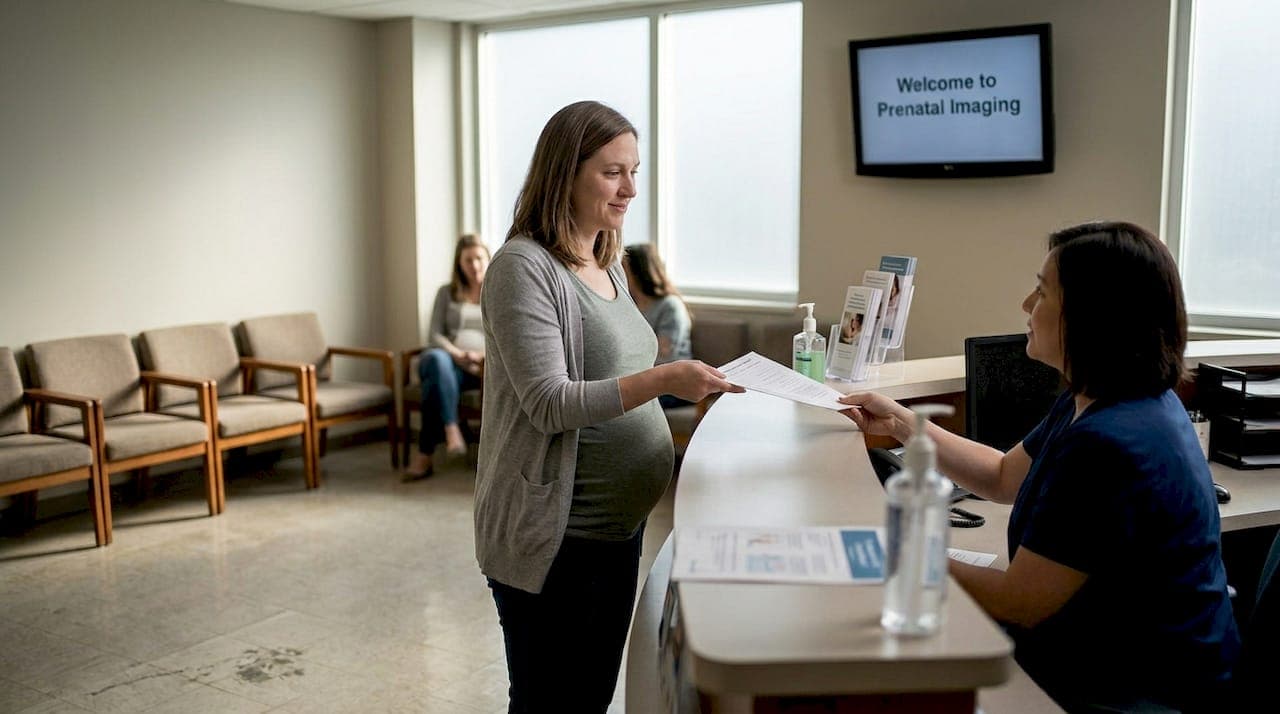
Many expecting parents walk into their first prenatal appointment assuming all ultrasound centers do the same thing. They don't. The gap between a standard diagnostic scan and a high-resolution 3D/4D bonding session is enormous, and understanding that difference can change how you experience your entire pregnancy. Today's ultrasound centers have evolved far beyond grainy black-and-white images into facilities that blend medical precision with deeply personal moments. This article breaks down exactly what ultrasound centers are, how they differ, what they can detect at each stage of pregnancy, and how to pick the right one for your family.
Table of Contents
- What is an ultrasound center?
- Types of ultrasound centers: Medical vs. elective
- How ultrasound centers detect and reveal key pregnancy milestones
- What to look for in a high-quality ultrasound center
- Why your ultrasound center choice matters more than ever
- Experience the best in ultrasound imaging with BabyView3D
- Frequently asked questions
Key Takeaways
| Point | Details |
|---|---|
| Medical vs. elective centers | Medical centers diagnose health issues while elective studios focus on bonding and keepsakes. |
| Scan timing matters | Early, mid, and late pregnancy scans each reveal different baby milestones and health details. |
| Choose quality and safety | Select a center with expert staff, advanced technology, and clear protocols for the best experience. |
| Emotional and clinical benefit | The right ultrasound center can deliver both peace of mind and unforgettable bonding moments. |
What is an ultrasound center?
An ultrasound center is a facility that uses sound wave imaging technology to visualize your baby during pregnancy. But that simple definition barely scratches the surface of what modern centers actually offer.
Historically, ultrasound was strictly a diagnostic tool. Doctors used it to confirm a heartbeat, check placenta placement, or measure fetal growth. Those needs haven't gone away. What has changed is that a second category of center now exists alongside clinical facilities: elective bonding studios. These spaces are designed not for medical diagnosis but for emotional connection, letting families see their baby's face, fingers, and movements in stunning detail before birth.
Here's what you'll typically find offered across both types of ultrasound centers:
- Anatomy screening scans to check organ development and fetal measurements
- Dating scans to confirm gestational age and expected due date
- 3D and 4D imaging that renders your baby's features in realistic depth and motion
- HD Live and 8K resolution scans for extraordinary image clarity
- Heartbeat recordings and keepsake videos you can share with family
- Fetal gender reveals available at specific gestational windows
Safety is often the first question parents ask, and it's a fair one. Both types of centers follow the ALARA principle, which stands for "As Low As Reasonably Achievable." This means ultrasound energy is kept at the minimum effective level. Professionally run centers pose no known health risk to your baby when protocols are followed correctly.
It's also worth knowing that major health bodies like ACOG (the American College of Obstetricians and Gynecologists) and the WHO are clear: elective scans supplement, not replace, your clinical prenatal care. Think of bonding studios as an add-on to your medical journey, not a shortcut through it. For more tips on navigating your prenatal journey, explore the BabyView3D blog for resources tailored to expecting families.
Types of ultrasound centers: Medical vs. elective
With a general definition in mind, let's break down the two main types of ultrasound centers you might encounter.
| Feature | Medical ultrasound center | Elective bonding studio |
|---|---|---|
| Primary goal | Diagnosis and clinical monitoring | Emotional bonding and keepsakes |
| Staff | Sonographers, radiologists, OBs | Certified sonographers |
| Technology | Standard 2D, some 3D | 3D, 4D, HD Live, 8K |
| Report sharing | Sent to your OB | Optional; for personal use |
| Ambiance | Clinical, efficient | Comfortable, family-friendly |
| Insurance coverage | Often covered | Typically out-of-pocket |
Medical centers prioritize finding what needs clinical attention. Their sonographers are focused on measurements, anomaly detection, and documenting findings for your doctor. The environment is professional but not necessarily designed for comfort or celebration.
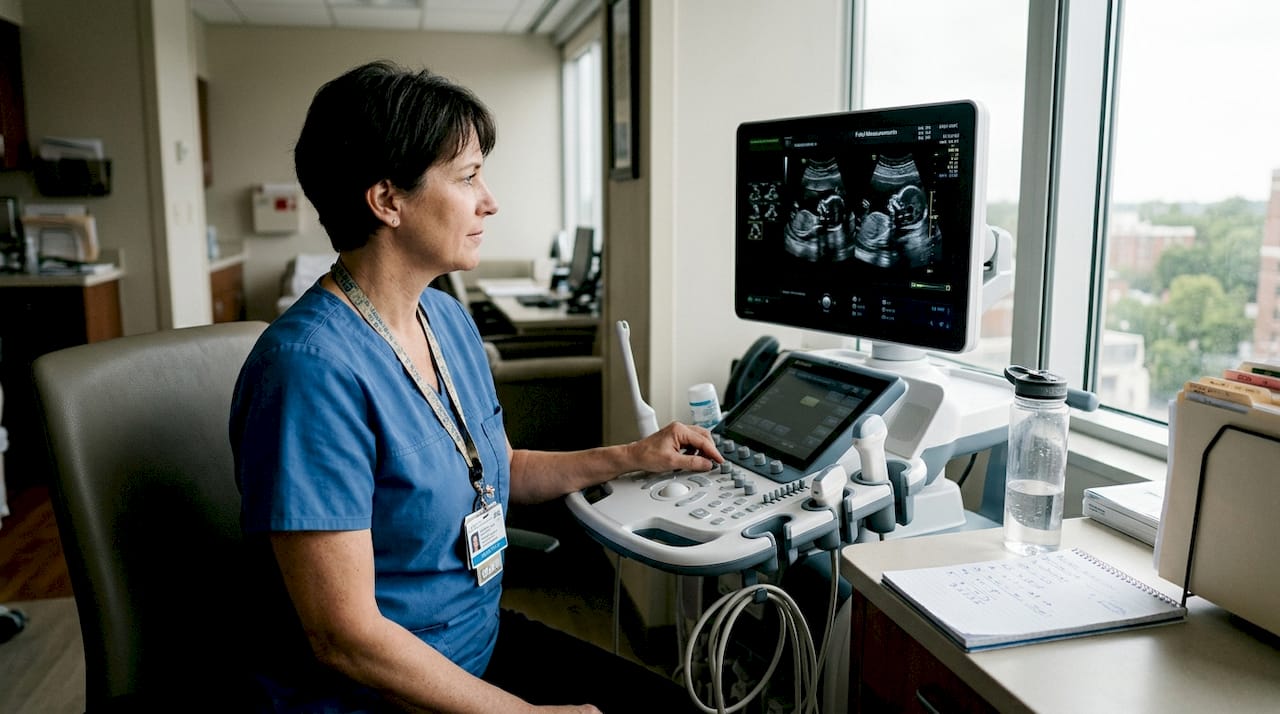
Elective studios flip that focus. The room might have soft lighting, a large screen for family viewing, and a staff that narrates what you're seeing in real time. High-resolution 3D/4D centers offer real emotional benefits, but they must complement your medical care rather than stand alone.
The WHO recommends at least one diagnostic scan before 24 weeks to confirm gestational age and screen for abnormalities. That clinical scan is non-negotiable. What you add on top of it is where elective studios shine.
Pro Tip: Use an elective bonding session after your medical scans are complete. This way you already have your clinical information and can fully enjoy the bonding experience without worry.
When you're ready to explore your options, BabyView3D services offer advanced imaging packages that pair stunning visuals with professional care. You can also browse keepsake products to commemorate the experience.
How ultrasound centers detect and reveal key pregnancy milestones
Understanding each center's focus, let's see how they help parents track major pregnancy milestones through advanced imaging.
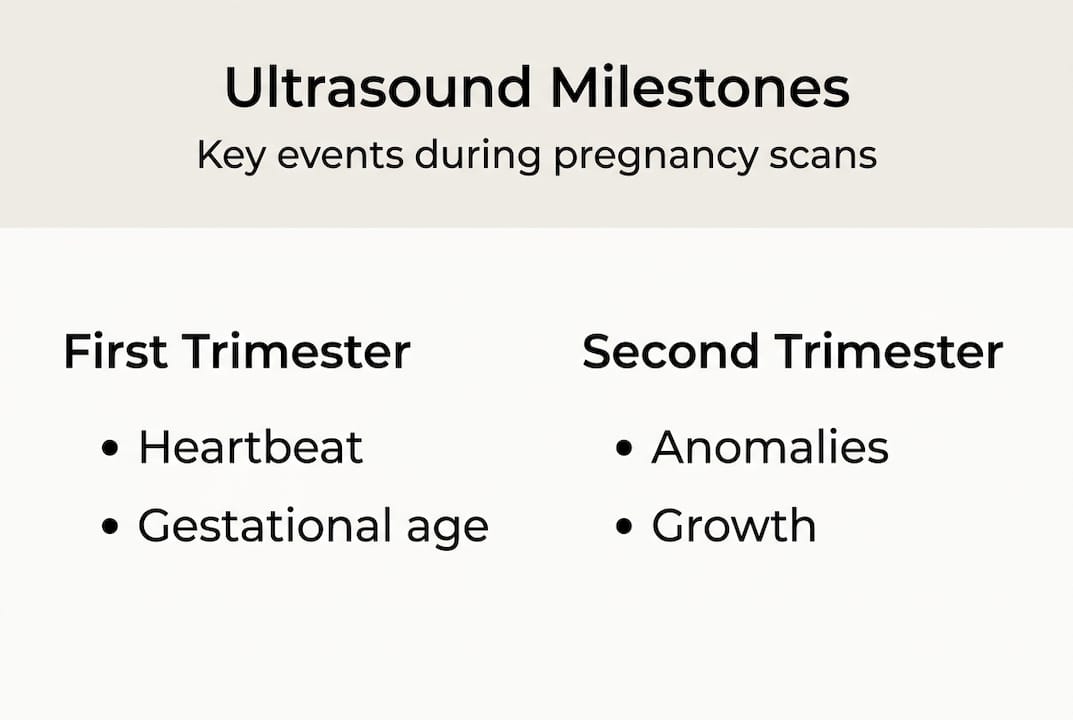
Research shows that detection rates vary significantly by timing. First-trimester screening detects 32-40% of major anomalies, the 20-week anatomy scan catches about 42%, and a third scan around 28-32 weeks adds another 24%. No single scan catches everything, which is exactly why spacing them out matters.
| Trimester window | Optimal timing | What you see | Detection focus |
|---|---|---|---|
| First trimester | 11-14 weeks | Heartbeat, early anatomy, nuchal fold | Chromosomal markers, dating |
| Second trimester | 18-22 weeks | Organ structure, facial features, gender | Major anomaly screening |
| Third trimester | 28-32 weeks | Baby's face, position, weight estimate | Growth, placenta, late risks |
Optimal ultrasound timing follows those three windows (11-14 weeks, 18-22 weeks, and 28-32 weeks) for maximum clinical benefit.
Here's a simple stepwise view of what each scan adds to your pregnancy picture:
- 11-14 week scan: Confirms the heartbeat, checks for chromosomal markers like nuchal translucency, and establishes your due date with accuracy.
- 18-22 week scan: This is the big anatomy scan. Organ structure, limb development, and the baby's face become visible in meaningful detail.
- 28-32 week scan: Tracks growth, checks amniotic fluid, confirms placenta position, and gives parents the clearest 3D bonding images of the pregnancy.
One stat that surprises many parents: detection sensitivity for abdominal wall defects exceeds 80%, while cardiac defects are caught less than 30% of the time by standard scanning alone. That's why expert staff and quality equipment aren't optional extras. They are central to what makes a center worth choosing. You can read more about what each stage reveals at key ultrasound milestones on the BabyView3D site.
What to look for in a high-quality ultrasound center
After knowing when and how imaging helps, it's important to choose a center that meets high standards.
Not every center offering 3D scans delivers the same experience or safety standards. Here's what to look for before you book:
- Certified sonographers with documented training in prenatal imaging
- Up-to-date equipment including HD Live or 8K imaging capability
- Clear scan protocols that follow established timing and safety guidelines
- Privacy and comfort features including family viewing rooms and a calm environment
- Transparent policies about how findings are handled and shared with your OB
- Verified reviews and a gallery of actual scan images you can evaluate before booking
"Image magnification scores between 67-96% are achievable with proper staff training and calibrated equipment, and increased nuchal translucency remains a key diagnostic marker when quality control is maintained."
This is why credentials and experience matter. A center with trained staff and quality controls delivers fundamentally different outcomes than one focused only on aesthetics.
Pro Tip: Before booking any ultrasound center, ask directly: "Can this report be shared with my OB, and how do you handle unexpected findings?" A quality center will have a clear and immediate answer.
The human element matters too. Staff who explain what they're seeing, who give you time to absorb the moment, and who treat your appointment as more than a transaction make a measurable difference in how you feel leaving the room. Browse the BabyView3D Gallery to see what professional, high-quality prenatal imaging actually looks like.
Why your ultrasound center choice matters more than ever
Here's something we've learned from years of working with expecting families: the ultrasound experience shapes how parents feel about their entire pregnancy, not just the scan itself.
Bonding scans can be genuinely life-changing. Seeing your baby yawn or stretch in 4D detail creates a connection that no photograph can replicate. But we've also seen the flip side. Parents who visit keepsake-only studios and walk away with reassurance they didn't actually earn from a medical perspective. That's a real risk.
The biggest mistake expecting parents make is treating elective scans as a health check. They aren't. They are a celebration. Our ultrasound services are built on the belief that you can have both, a clinically informed approach and an emotionally rich experience, when technology and compassionate staff work together. A great center puts your baby's health first and the pretty pictures second. Always.
Experience the best in ultrasound imaging with BabyView3D
If you're seeking a center where expertise meets empathy, here's how you can take the next step.
At BabyView3D, we've spent over 15 years combining advanced imaging technology with a deeply personal approach to prenatal care. Our certified sonographers use HD Live and 8K resolution tools to give you images that feel real, not clinical.
Whether you want to explore our services for your anatomy scan, find the perfect keepsake package, or simply learn more about what to expect, we're here for every step. Browse keepsake products for meaningful ways to remember this moment, or visit BabyView3D to book your first session. First-time visitors can take advantage of our limited introductory discount.
Frequently asked questions
Are elective ultrasound scans safe for my baby?
Elective scans are safe when performed by trained professionals using current equipment and protocols. All reputable centers follow ALARA safety standards to minimize ultrasound energy exposure.
How many ultrasound scans do I really need during pregnancy?
WHO recommends at least one scan before 24 weeks to confirm gestational age and screen for anomalies, with additional scans based on clinical guidance and personal preference.
Can I rely only on a 3D/4D bonding studio for my baby's health screening?
No. Bonding studios are not a substitute for clinical diagnostic scans conducted by qualified medical staff, even when the image quality is exceptional.
What milestones can be seen at each ultrasound scan?
Early anatomy appears at 11-14 weeks, detailed organ features at 18-22 weeks, and rich bonding moments with 3D/4D clarity at 28-32 weeks, based on key scan window timing guidelines.