
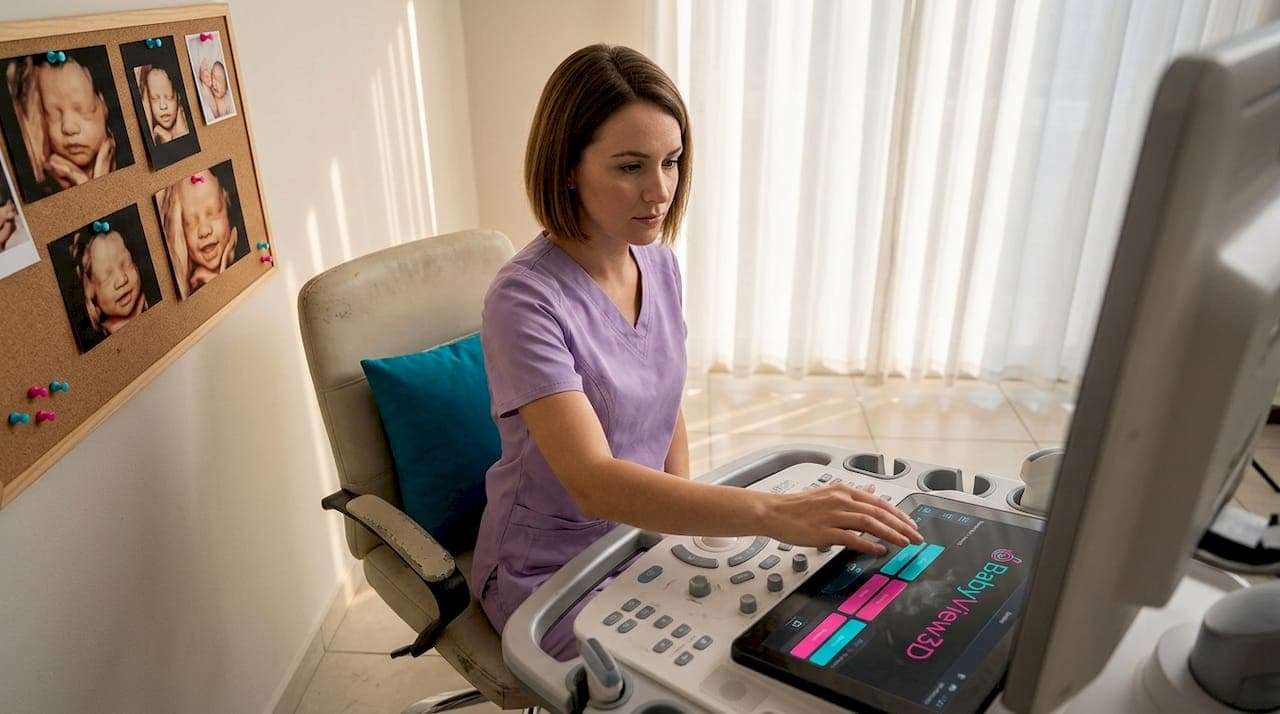
Most parents walk into their first elective ultrasound session expecting something similar to the flat, grainy images from their OB's office. What they see instead stops them cold: a near-photorealistic portrait of their baby, with visible eyelashes, chubby cheeks, and tiny fingers. That image isn't a photograph, and it isn't a medical diagnostic scan either. It's something entirely different, and understanding exactly what it is will help you get the most out of your session, set realistic expectations, and walk away with a keepsake you'll treasure for decades.
Table of Contents
- Understanding 8K ultrasound: Technology and process
- What makes 8K images unique? Visual quality and emotional appeal
- Timing, preparation, and accuracy: Maximizing your 8K experience
- Costs, clinics, and choosing your 8K provider
- The reality behind 8K ultrasound: Our take for expectant parents
- Experience 8K keepsakes with BabyView3D
- Frequently asked questions
Key Takeaways
| Point | Details |
|---|---|
| 8K portraits are enhancements | They transform standard 3D scans into lifelike images but are not true high-res photos. |
| Best timing is 26-32 weeks | Schedule your scan when facial features are clear for optimal results. |
| Accuracy varies | About 70% of parents report strong resemblance with proper scan quality. |
| Elective, not diagnostic | 8K ultrasounds are keepsakes for bonding, not tools for medical diagnosis. |
| Choose trusted providers | Pick experienced studios with good reviews and transparent pricing for memorable portraits. |
Understanding 8K ultrasound: Technology and process
Now that you know 8K ultrasound isn't a true medical photograph, let's break down how it's created and what the experience involves.
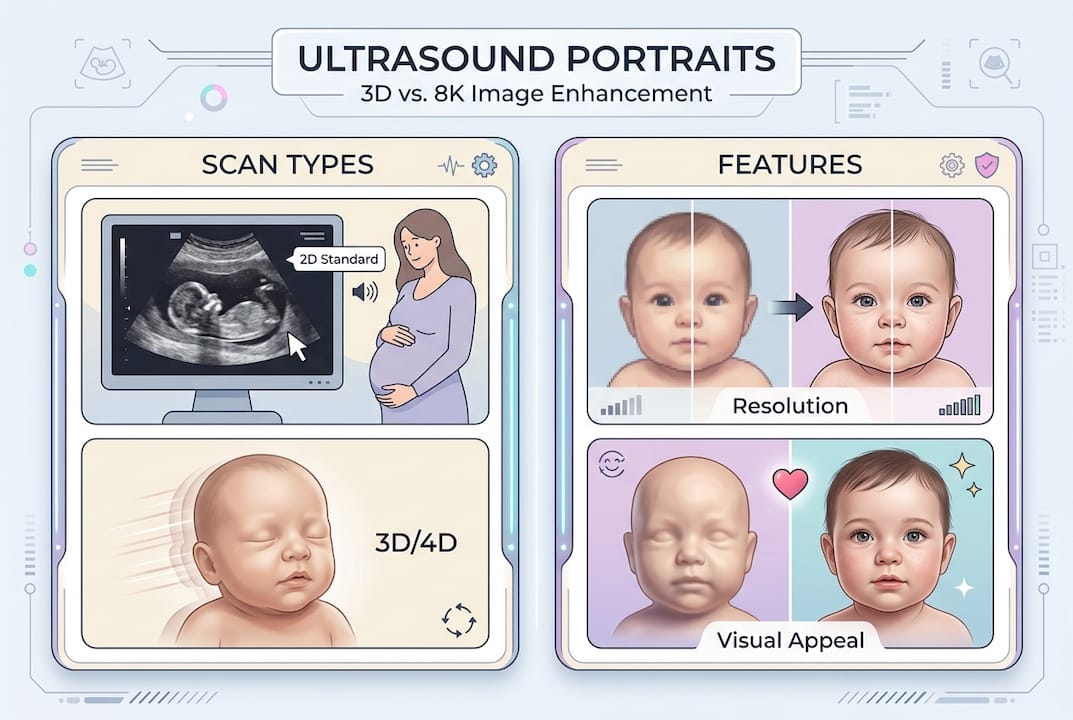
The term "8K" in the context of prenatal imaging refers to the resolution and rendering quality applied during the digital enhancement process, not to a raw capture device that literally records 8K footage of your baby in the womb. Here's how it actually works: your sonographer conducts a standard 3D or 4D ultrasound scan, capturing detailed sound wave data about your baby's facial structure, position, and features. That raw scan data is then processed using advanced 8K imaging technology that applies sophisticated rendering, tone mapping, and digital enhancement algorithms to produce an image that looks strikingly lifelike.
Think of it like this: the 3D scan is the sculptor's clay, and the 8K enhancement process is the skilled artist who refines every detail until the result looks like a finished portrait. The underlying data is real, captured directly from sound waves bouncing off your baby's actual features. The final visual output, however, is an artistically rendered interpretation of that data.
Key characteristics of the 8K ultrasound process:
- The base scan is a standard 3D or 4D ultrasound, using the same safe sound wave technology used in clinical settings
- Digital enhancement software refines texture, contrast, lighting simulation, and skin tone rendering
- The process takes raw volumetric data and applies visual layers to create depth and realism
- Output images are high-resolution files suitable for printing, framing, and sharing
- Some studios offer video loops in addition to still portraits, capturing baby's movements in cinematic quality
According to optimal timing research, the ideal window for base 3D and 4D scans suitable for 8K enhancement is 26 to 32 weeks of gestation, when facial features are sufficiently developed and there is enough amniotic fluid surrounding the baby to allow clear imaging without obstruction.
Here's a simple breakdown of what distinguishes 8K imaging from other prenatal options:
| Feature | Standard 2D scan | 3D/4D scan | 8K enhanced portrait |
|---|---|---|---|
| Primary purpose | Medical diagnosis | Elective viewing | Keepsake portrait |
| Image style | Flat, grayscale | 3D rendered, amber tones | Near-photorealistic |
| Resolution quality | Low to moderate | Moderate to high | Very high |
| Emotional impact | Clinical | Engaging | Deeply personal |
| Suitable for framing | Rarely | Sometimes | Yes, specifically designed for it |
You can learn more about the specific ultrasound service details offered at boutique studios, including the technology platforms and rendering processes used to create these portraits.
What makes 8K images unique? Visual quality and emotional appeal
Understanding the process sets the stage for how these images differ emotionally and visually from other ultrasound options.
The visual leap from a standard 3D scan to an 8K enhanced portrait is significant. Standard 3D scans produce amber-toned images with decent surface detail, but they can look somewhat waxy or two-dimensional compared to a real photograph. 8K enhancement adds simulated skin texture, lighting depth, shadow gradients, and tonal variety that makes the image feel warm, alive, and genuinely personal.
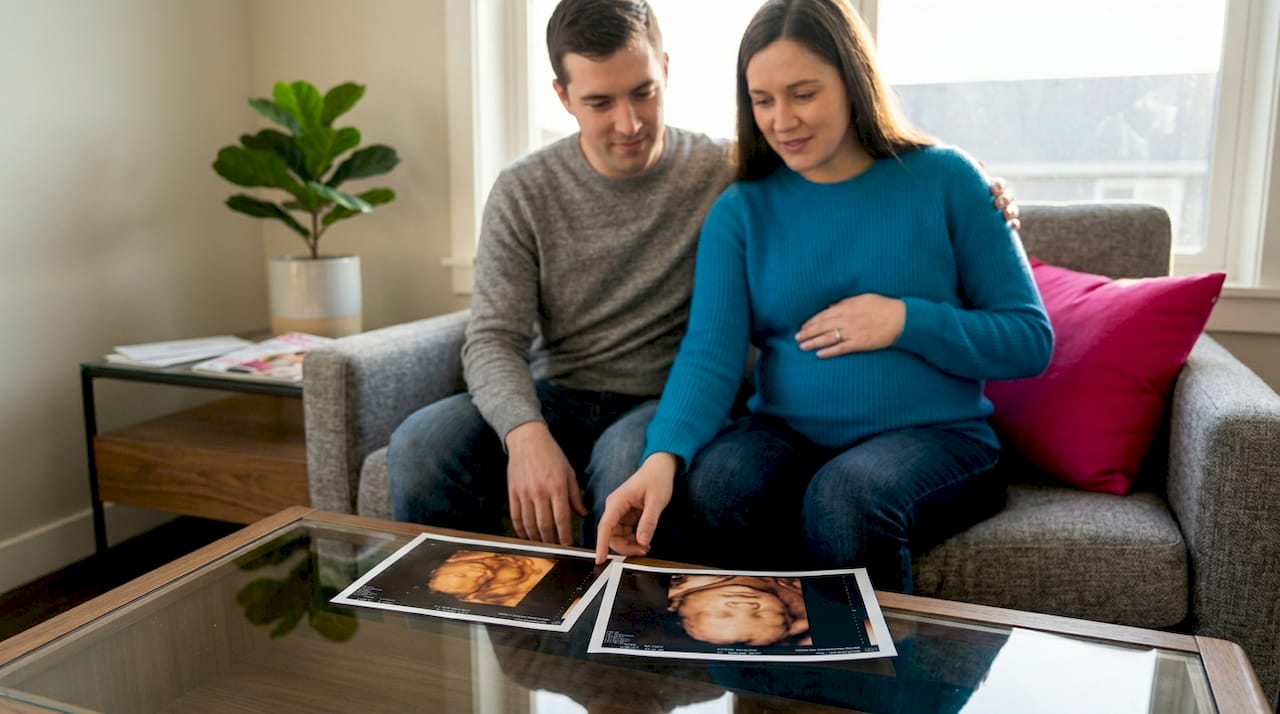
What does that mean for you emotionally? Parents consistently report that seeing their baby's face rendered with that level of detail triggers an immediate, visceral bonding response. You can see whether your baby has your nose. You might spot Dad's forehead or Grandma's chin. That moment of recognition, happening months before birth, is powerful in a way that clinical ultrasound images simply can't replicate.
Why parents choose 8K portraits:
- Creates a meaningful first "baby photo" to share with family and friends
- Supports early emotional bonding before birth
- Produces frameable art for the nursery or home
- Offers a unique social media announcement image
- Becomes a long-term keepsake that grows in sentimental value over time
A critical evaluation of 8K imaging notes that parental reports of strong resemblance to the newborn's actual facial shape are common when the base 3D scan is high quality, with an estimated success rate of around 70% for a close match. That's a meaningful number, though it also highlights why managing expectations matters.
"8K ultrasound portraits offer US expectant parents memorable frameable images from elective 3D sessions at boutique studios, enhancing bonding while functioning as artistic predictions rather than exact photographs."
The images are not diagnostic tools. They don't replace your OB's anatomy scan or any other medically supervised imaging. They exist in a separate category: elective, emotionally driven, and designed entirely for the experience of connection and memory-making. Browse a real parent photo gallery to see the range of what these portraits can look like across different gestational ages and baby positions.
Pro Tip: The clarity of your 8K portrait depends heavily on your baby's position during the scan. If the baby is facing toward your spine or has a hand covering their face, results will be limited. Ask your sonographer how to gently encourage repositioning before giving up on the session.
Timing, preparation, and accuracy: Maximizing your 8K experience
With a clear sense of the image quality, let's cover when and how to schedule your session and what to expect in terms of likeness.
Getting your timing right is probably the single most important thing you can control as a parent preparing for an 8K session. Book too early, and your baby's facial features won't be developed enough to produce a detailed portrait. Book too late, and reduced amniotic fluid and increased crowding in the womb can make it harder to get a clean image.
Step-by-step preparation guide for your 8K session:
- Schedule between 26 and 32 weeks. The optimal scan window is confirmed by prenatal imaging research as the period when features are clear and fluid levels are ideal for imaging.
- Hydrate aggressively in the days before your appointment. Drinking plenty of water in the 48 to 72 hours before your scan improves amniotic fluid clarity, which directly affects image quality.
- Eat a light snack about 30 minutes before your session. A small amount of natural sugar can encourage the baby to become active and shift positions, improving the likelihood of a face-forward image.
- Wear comfortable clothing with easy belly access. You'll want to be relaxed during the session, and loose clothing makes it easier for the sonographer to work.
- Bring your support person. These sessions are designed to be shared experiences. Having a partner, parent, or friend with you makes the emotional moment even more meaningful.
- Ask about a reshoot policy. Some studios offer the option to reschedule if baby's position isn't cooperating on the day of your appointment.
Accuracy is a reasonable concern for most parents. The 70% resemblance estimate for a strong match between the 8K portrait and the baby's actual newborn appearance is encouraging, but it's not a guarantee.
Several factors can affect how closely the final image resembles your newborn:
- Placenta location. An anterior placenta (positioned at the front of the uterus) creates an additional layer between the sound waves and the baby's face, softening the image detail.
- Baby's position. Face-down or spine-out positions reduce facial visibility significantly.
- Amniotic fluid levels. Low fluid reduces the natural "window" the sound waves travel through, limiting image clarity.
- Gestational age. Sessions outside the ideal 26 to 32 week window tend to produce less detailed results.
Pro Tip: If you have an anterior placenta, your doctor or midwife will usually mention it during earlier appointments. Let your studio know in advance so the sonographer can adjust technique and set realistic expectations before your session begins.
Check the ultrasound timing tips available at BabyView3D for more detailed guidance on scheduling based on your specific pregnancy progression.
Costs, clinics, and choosing your 8K provider
Once you know how and when to book, choosing the right clinic is essential for a memorable experience.
The financial investment for an 8K portrait session is genuinely accessible compared to many other pregnancy milestones. According to boutique studio research, 8K portrait enhancements typically run as an add-on to an existing elective 3D or 4D session, with costs ranging from approximately $35 to $100. That puts the total investment for a full session, including the base scan and 8K enhancement, well within reach for most families.
What to look for when choosing your provider:
- Certified sonographers on staff. Look for studios staffed by registered diagnostic medical sonographers or trained elective imaging specialists with verifiable credentials.
- Modern equipment. The quality of the base 3D scan directly determines how good your 8K portrait can be. Ask what ultrasound platform the studio uses.
- Clear pricing with no hidden fees. A trustworthy studio will show you exactly what's included in each package before you book.
- A comfortable, welcoming environment. This is an emotional experience, not a clinical one. The studio atmosphere should reflect that.
- Positive, detailed reviews from other parents. Look for testimonials that mention specific details about image quality and staff care, not just generic five-star ratings.
- Flexible scheduling and rescheduling policies. Baby cooperation isn't guaranteed. Studios confident in their service offer some form of protection for sessions where imaging quality falls short.
It's worth emphasizing again that no 8K portrait, no matter how lifelike it appears, should be used as a substitute for your standard prenatal care imaging. These sessions are elective, artistic, and memory-focused. They sit alongside your medical care, not in place of it.
Pro Tip: When comparing studios, ask specifically how they handle sessions where the baby doesn't cooperate. A studio that offers a complimentary rescan or a partial refund is showing you they stand behind their work.
Explore the full range of service package options and even shop keepsake portraits to see the types of finished products available before you commit to a studio.
The reality behind 8K ultrasound: Our take for expectant parents
After fifteen years of providing prenatal imaging experiences and watching thousands of families see their babies for the first time in vivid detail, we've developed a perspective that we think every parent considering 8K imaging should hear.
These portraits are genuinely powerful. The emotional weight of seeing your baby's face rendered with that level of clarity, months before birth, is not something that diminishes over time. Parents tell us they look at those framed images in the nursery long after their child has grown out of diapers. That kind of staying power is real, and it's earned.
But here's what we believe that most articles in this space don't say clearly enough: the magic is in the experience as much as the image itself. The room, the moment, the sonographer talking you through what you're seeing, the first time your partner gasps recognizing something familiar in your baby's face. Those things can't be captured in the final file you take home.
At the same time, we're honest about limitations. An 8K portrait is an artistic prediction built from sound wave data. When a parent asks us "Will my baby really look like this?", the truthful answer is: probably yes in the broad strokes, and maybe not in every fine detail. That honesty isn't a weakness in the product; it's respect for the parents sitting in our studios.
The studio you choose matters enormously. A trained sonographer with quality equipment working during the right gestational window will consistently produce results that genuinely resemble the baby who arrives months later. A lower-quality operation working with outdated equipment or undertrained staff will disappoint you regardless of the marketing language they use.
Our honest recommendation is to choose BabyView3D for the combination of certified staff, modern technology, and a studio environment designed entirely around making your family feel the weight of this moment. The portrait is the souvenir. The experience is the point.
Experience 8K keepsakes with BabyView3D
Ready to see your baby in breathtaking detail? BabyView3D specializes in premium elective prenatal ultrasound experiences, offering 3D, 4D, and HD Live imaging alongside 8K portrait enhancements designed specifically as frameable keepsakes for your family.
With over 15 years of experience, certified sonographers at multiple US locations, and package options built for every budget, BabyView3D is committed to giving you an experience that feels as special as the moment itself. You can explore service packages to find the right option for your pregnancy stage, or view the gallery to see real parent portraits before booking. First-time visitors receive a limited-time discount on their initial session, making this the perfect moment to take the next step.
Frequently asked questions
How accurate are 8K ultrasound portraits compared to newborn appearance?
Studies suggest a roughly 70% success rate for strong resemblance when the base 3D scan is high quality, though individual results vary based on baby position, fluid levels, and gestational timing.
Is 8K ultrasound a medical diagnostic scan?
No, 8K portraits are elective artistic enhancements offered at boutique studios and are not intended or used for medical diagnosis or prenatal health assessment.
When is the best time to get an 8K ultrasound image?
The ideal window is 26 to 32 weeks of pregnancy, when facial features are well-developed and amniotic fluid levels support the clearest base scan quality.
How much does an 8K ultrasound portrait typically cost?
8K portrait add-ons at boutique studios typically range from $35 to $100, added on to the cost of a base elective 3D or 4D ultrasound session.
Can I use an 8K ultrasound portrait for prenatal medical decisions?
No, these images are artistic keepsakes only and carry no diagnostic information that your doctor or midwife can use for medical assessment or treatment planning.