

Seeing your baby for the first time on a screen is a moment most parents never forget. What many don't expect is how much that moment can shape their emotional connection long before delivery day. Research shows that 3D and 4D ultrasounds can measurably increase prenatal attachment compared to standard 2D scans, which surprises parents who assumed ultrasounds were purely clinical checkpoints. This guide walks you through everything you need to know: what a modern ultrasound experience actually involves, how elective sessions differ from medical ones, how to prepare, and how to make the most of every second you get with your baby before birth.
Table of Contents
- What is an ultrasound experience?
- Medical vs elective ultrasounds: Benefits and cautions
- Maximizing your ultrasound experience: Practical tips
- The impact of ultrasound experiences on bonding
- A fresh perspective: Beyond the keepsake—what really matters
- Experience unforgettable moments with BabyView3D
- Frequently asked questions
Key Takeaways
| Point | Details |
|---|---|
| Ultrasound options | 2D, 3D, and 4D ultrasounds offer different experiences, with elective sessions adding emotional value. |
| Medical guidance | Professional bodies advise caution with non-essential ultrasounds, so always choose reputable providers. |
| Bonding potential | Modern ultrasound technology can increase prenatal bonding, although results vary by family. |
| Maximize results | Proper preparation and timing help ensure a memorable and clear ultrasound experience. |
| Prioritize safety | Keep sessions brief, follow technician advice, and focus on meaningful moments over keepsakes. |
What is an ultrasound experience?
With the growing interest in bonding, it's essential to understand what the ultrasound experience entails and how your options differ.
At its most basic, an ultrasound uses sound waves to create images of your baby inside the womb. A 2D ultrasound produces the classic flat, black-and-white image your OB uses to measure growth and check development. A 3D ultrasound takes multiple 2D images from different angles and stitches them together into a still, three-dimensional picture, showing contours of your baby's face, hands, and feet in remarkable detail. A 4D ultrasound does the same thing in real time, meaning you actually watch your baby yawn, stretch, or suck a thumb as it happens.
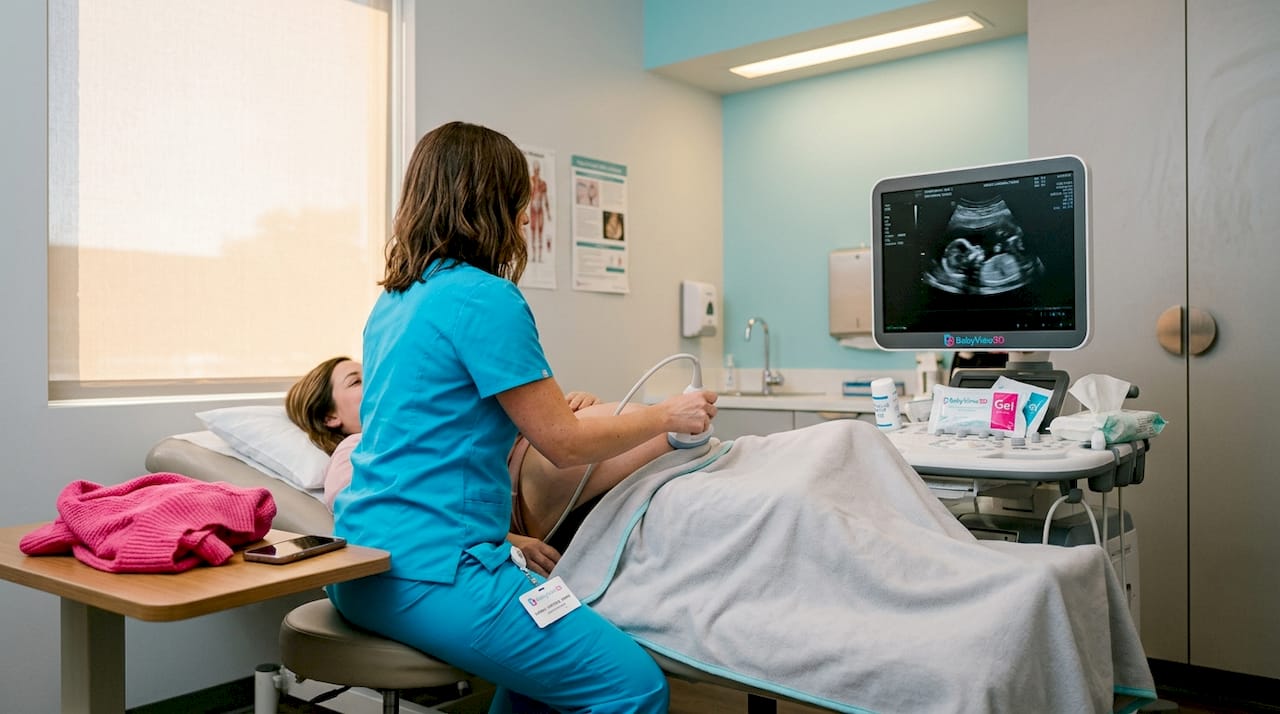
The distinction between a medical ultrasound and an elective one is important. Medical ultrasounds are ordered by your provider for specific clinical reasons: confirming a heartbeat, measuring fetal growth, checking the placenta, or screening for abnormalities. Elective sessions, offered by studios like BabyView3D, are scheduled specifically for the emotional experience. You get more time, better lighting in the room, family invited, and images designed to be kept as memories rather than filed in a chart.
Here's a quick comparison to clarify the difference:
| Feature | Medical ultrasound | Elective 3D/4D session |
|---|---|---|
| Ordered by | Doctor or midwife | Parent choice |
| Primary goal | Clinical diagnosis | Emotional bonding and keepsakes |
| Duration | 20 to 45 minutes | 30 to 60 minutes |
| Image type | 2D standard | 3D still and 4D video |
| Family attendance | Usually limited | Encouraged |
| Take-home media | Rarely included | Photos, videos, digital files |
| Cost | Covered by insurance | Out of pocket |
During an elective session, you can typically expect to:
- Watch your baby move in real time during the 4D portion of the session
- Receive printed and digital images you can share instantly
- Have family present including siblings, grandparents, or close friends
- Interact with a certified sonographer who narrates what you're seeing and points out features
- Possibly find out or confirm your baby's sex in a private, personal setting
- Walk away with video recordings of the entire session
Explore more about what sessions look like through ultrasound bonding insights from real families who have done exactly this. It's worth noting that organizations including the ACOG, AIUM, and FDA caution against elective ultrasounds performed without medical necessity, citing the ALARA principle, which stands for "as low as reasonably achievable" when it comes to sound wave exposure. No proven harm exists, but that guidance is worth understanding before you book.
Medical vs elective ultrasounds: Benefits and cautions
Having defined the basic experience, it's crucial to see how the purpose and recommended usage of ultrasounds diverge.
Medical ultrasounds serve a non-negotiable clinical role. Your anatomy scan around 20 weeks checks for structural development. Growth scans in the third trimester monitor weight and fluid levels. These are not optional checkpoints. They are the backbone of prenatal care. Elective 3D and 4D sessions sit in a completely different category. They are not replacements or supplements to medical care. They are experiences.
The emotional benefits of elective sessions are real and well-documented. Parents who see their baby's face in three dimensions before birth consistently report feeling more connected, more motivated to make healthy choices, and more emotionally prepared for the arrival. Siblings who attend often develop curiosity and gentleness toward the baby before birth. Partners who attend report feeling more involved in a process that can sometimes feel distant.
"Providers who offer supervised elective sessions emphasize that emotional benefits can be significant for families, while health authorities continue to caution against commercial keepsake ultrasounds due to potential thermal effects and the risk of anxiety if images appear unclear." Source
Here's a detailed side-by-side breakdown:
| Factor | Clinical ultrasound | Elective ultrasound |
|---|---|---|
| Medical oversight | Always present | Not required |
| Image interpretation | Diagnostic focus | Emotional focus |
| Recommended frequency | Per provider guidelines | Use discretion |
| Risk profile | Medically justified | Low but not zero |
| Emotional value | Secondary | Primary purpose |
| Official endorsement | Fully endorsed | Cautioned but not banned |
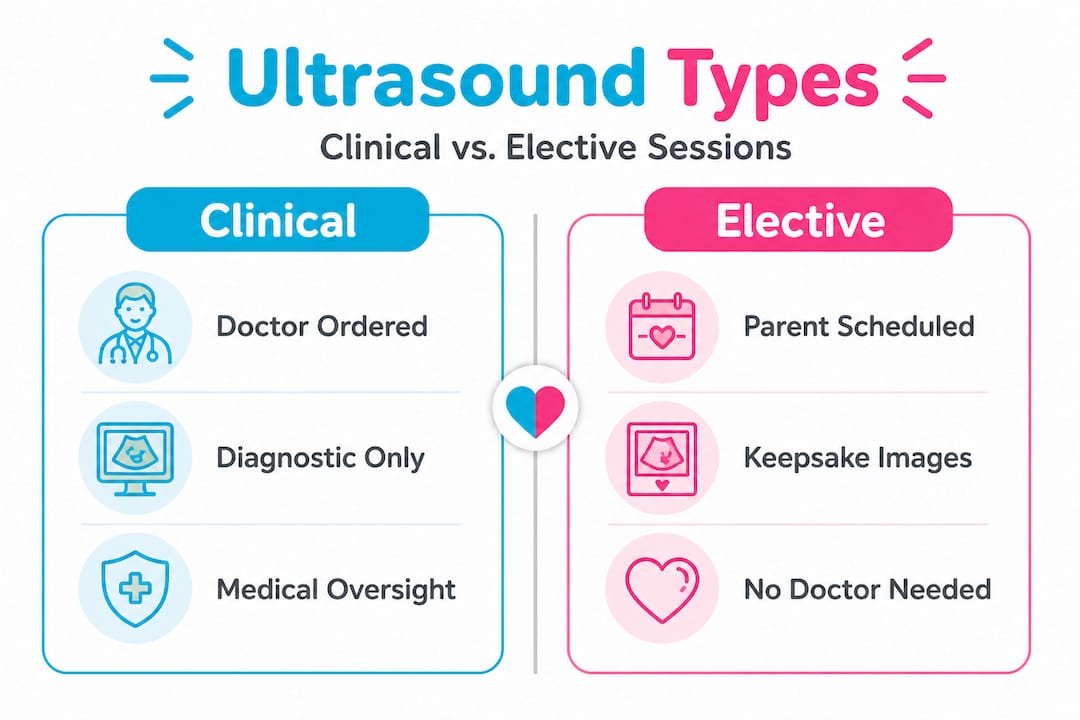
The ALARA-based caution from major health bodies does not mean elective ultrasounds are dangerous. It means they should be purposeful, brief, and conducted by trained professionals using properly maintained equipment. Studios operating with certified sonographers and time-limited sessions are the appropriate choice if you decide to pursue an elective experience. Avoid anyone offering unlimited scan time, as longer exposure without medical justification is exactly what the guidelines warn against.
You can learn more about the ultrasound service types available to families across the country, including package options that fit different stages of pregnancy and different family needs.
Pro Tip: The safest and most visually rewarding window for an elective 3D or 4D session is between 26 and 32 weeks of pregnancy. Before 26 weeks, your baby doesn't have much fat under the skin yet, so images can look skeletal rather than soft. After 32 weeks, the baby is larger and often pressed against the uterine wall, making clear facial views harder to achieve.
Maximizing your ultrasound experience: Practical tips
Once you know the potential risks and benefits, practical steps can help you and your family get the most joy and clarity from the experience.
Preparation matters more than most parents realize. A few intentional steps before your appointment can significantly improve image quality and the overall experience.
- Drink plenty of water in the days before your session. Amniotic fluid is essentially the medium through which ultrasound waves travel. Better hydration typically means clearer fluid and sharper images. Aim for 6 to 8 glasses daily in the 48 hours before your appointment.
- Eat something sweet 20 to 30 minutes before your session. A small amount of juice or a light snack can encourage your baby to be more active during the session, making for more dynamic 4D footage.
- Schedule between 26 and 32 weeks. This window gives you the best combination of developed facial features and enough room in the womb for clear views.
- Bring your people. This is one of the few moments during pregnancy where you can share a genuinely visual, emotional experience with your partner, older children, or parents. Don't underestimate the memory value of sharing this moment together.
- Write down your questions ahead of time. Ask your sonographer about your baby's position, estimated weight, and anything you've been curious about. Certified professionals can walk you through what you're seeing in real time.
- Confirm media options when you book. Ask whether your package includes printed photos, digital downloads, video files, or all three. Some studios offer USB drives, apps, or cloud links for sharing.
Not every session produces magazine-worthy images, and that's important to understand going in. Factors that affect image clarity include the baby's position (facing away from the probe), low amniotic fluid levels, higher maternal BMI, and how late in pregnancy the session is. Any of these can result in partially obscured images or a session that needs to be rescheduled for a better view.
What makes an ultrasound experience truly memorable goes beyond the images themselves:
- A gender reveal moment shared with family in the room
- Watching your baby's facial expressions, even something as small as a smile or a yawn
- Hearing your baby's heartbeat in a calm, unhurried setting
- Seeing recognizable family features already forming on your baby's face
- The reaction of an older sibling seeing their brother or sister for the first time
Read emotional ultrasound stories from families who have been through the experience to get a realistic sense of what to expect and how to prepare emotionally as well as practically.
Pro Tip: Before you book, ask the studio specifically whether they record the full session as a video or just provide still screenshots. A full video recording preserves the live, moving moments that still images simply cannot capture. Those real-time reactions and movements often become the most treasured part of the keepsake.
The impact of ultrasound experiences on bonding
With practical experience in mind, it's valuable to look at what research actually says about lasting emotional impacts.
The science behind prenatal bonding and ultrasound technology is still evolving, but the direction of evidence is consistent. Meta-analyses confirm that 3D and 4D ultrasounds increase prenatal attachment scores compared to 2D scans, with effect sizes described as small to moderate. In research terms, "small to moderate" effects are still meaningful and clinically significant, especially when we're talking about something as foundational as the emotional bond between a parent and their child.
What does increased attachment actually look like in practice? Families who have had 3D and 4D sessions consistently describe moments like:
- Starting to use the baby's name more often after seeing their face for the first time
- Increased motivation to follow prenatal health advice, including diet, sleep, and avoiding alcohol
- Greater emotional readiness for labor and delivery
- Partners feeling more connected to the pregnancy rather than experiencing it secondhand
- Siblings asking more questions about the baby and becoming genuinely curious and excited
It's also worth being honest about the limits of current research. Not every parent walks out of an ultrasound session feeling transformed. Expectations vary. Some parents feel an immediate surge of love and protectiveness; others feel moved but not dramatically different from before. Both responses are completely normal. The research measures averages across large groups, not guarantees for individuals.
The value of an ultrasound experience isn't measured solely in attachment scores on a research scale. It's in the photo your mother-in-law keeps on her fridge. It's in the video you play at your baby shower. It's in the moment your three-year-old points at the screen and says "that's my baby." Explore more ultrasound bonding experiences to understand the range of emotional outcomes families describe.
A fresh perspective: Beyond the keepsake—what really matters
There's a version of the elective ultrasound conversation that focuses entirely on packages, pricing, and image resolution. We want to offer a different angle, because after more than 15 years working with expectant families, we've noticed something important: the parents who get the most from the experience are rarely the ones who chose the most expensive package.
The families who treasure their ultrasound sessions most are the ones who arrived present and unhurried. They came with the people they love. They asked questions. They laughed when the baby covered their face with tiny hands. They cried when they recognized grandma's nose on a face that hadn't been born yet. The keepsakes matter, but they're the echo of the moment, not the moment itself.
Here's an uncomfortable truth about the commercialization of prenatal ultrasounds: some studios oversell the experience. They promise "perfect images" and imply that your connection to your baby depends on the quality of the footage. That's not accurate, and it sets parents up for disappointment when a baby is positioned awkwardly or images are partially obscured. Health authorities caution specifically about this dynamic, noting that poor images can actually create anxiety rather than joy.
Our position is this: choose a studio with certified sonographers, proper equipment, and a realistic conversation about what to expect. Go in with openness rather than a script for what the experience "should" look like. The most meaningful moments in that room are the unplanned ones.
You can read real family reflections in our personal ultrasound reflections section, where parents share both the magical moments and the imperfect ones that ended up being just as important.
Prioritize safety. Choose professionals. Keep expectations grounded in honesty. And then allow yourself to be surprised by how much love fits into a 30-minute appointment.
Experience unforgettable moments with BabyView3D
If you've been thinking about scheduling an elective ultrasound session, the guidance in this article gives you a solid foundation for making the right choice for your family. BabyView3D brings over 15 years of experience, certified sonographers, and advanced HD Live technology to every session, creating an environment where families feel comfortable, informed, and fully present for one of the most emotional moments of pregnancy.
When you're ready to move from research to experience, view our full range of services to find the right package for your stage of pregnancy and your family's vision. You can also explore our ultrasound gallery to see real examples of 3D, 4D, and 8K imaging before you book, so you know exactly what stunning and honest looks like. Your first appointment includes a special introductory offer, because we believe every family deserves this moment.
Frequently asked questions
Are 3D and 4D ultrasounds safe for my baby?
When conducted by certified professionals in time-limited sessions, 3D and 4D ultrasounds follow the ALARA safety principle and currently show no proven harm, though major health organizations advise against unnecessary exposure.
What if my ultrasound images are unclear or disappointing?
Factors like baby position, low amniotic fluid, or maternal body type can affect image clarity, and reputable studios will often offer a rescheduled session to give you a better view.
Does an ultrasound experience really help me bond with my baby?
Research consistently shows that 3D and 4D ultrasounds increase prenatal attachment scores compared to 2D scans, though effect sizes are modest and individual experiences vary widely.
When is the best time to schedule a 3D or 4D ultrasound?
The ideal window is between 26 and 32 weeks of pregnancy, when your baby's facial features are well-developed and there's still enough space in the womb for a clear, unobstructed image.