
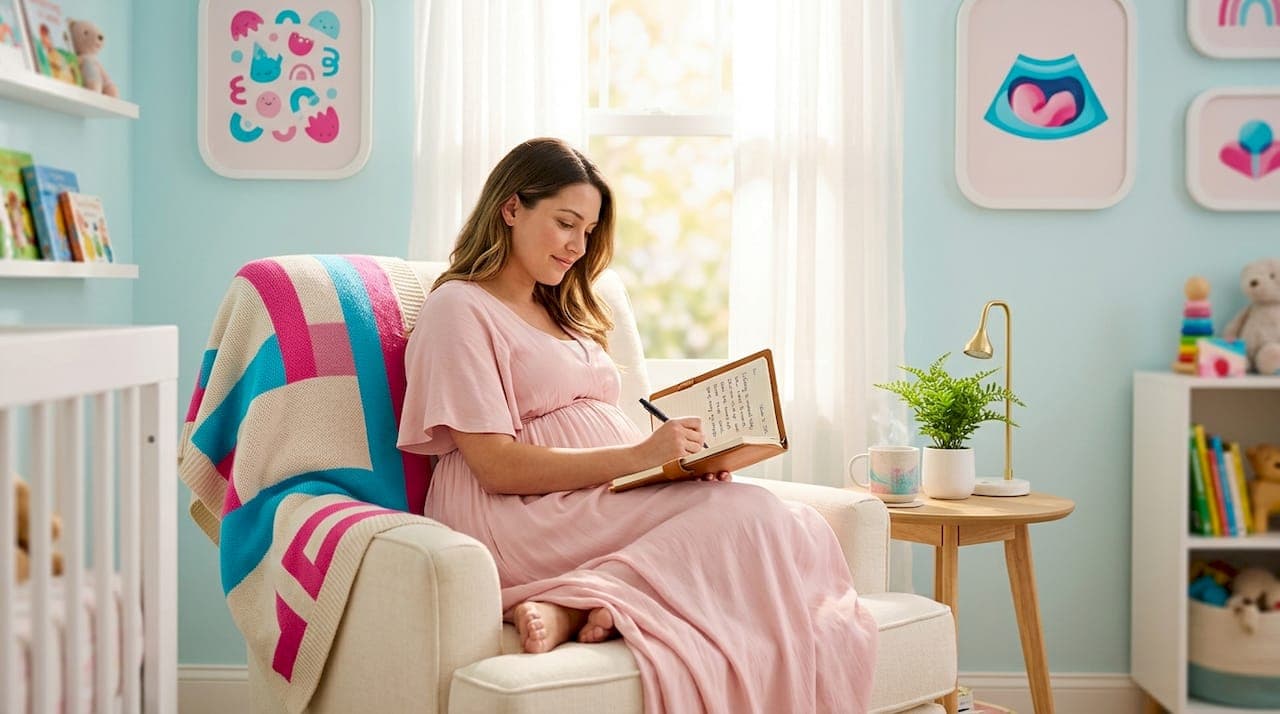
Prenatal memories are defined as the meaningful moments, emotions, and milestones experienced during pregnancy that families choose to preserve as lasting keepsakes. The top prenatal memories to capture span everything from the first positive test to the final night before birth, and research confirms that documenting them through photos, journals, audio, and video creates emotional connections that outlast the pregnancy itself. Tools like Lucy Darling pregnancy journals, maternity sessions guided by the American Pregnancy Association, and audio diaries recommended by Women In Balance each offer a distinct way to hold onto what pregnancy truly felt like. This guide walks you through the most meaningful moments worth preserving and the best methods for capturing each one.
1. The top prenatal memories to capture during pregnancy
Every pregnancy holds a set of moments that feel ordinary in the moment but become irreplaceable over time. Knowing which ones to prioritize helps you build a memory collection that tells the full story.
- The positive pregnancy test. The location, the time of day, who was with you, and the first words spoken are details that fade fast. Lucy Darling's structured prompts begin at week 4 with specific questions about exactly this moment, including where you were and what you felt first.
- The first ultrasound and heartbeat. Hearing a heartbeat for the first time is a sensory experience that photos alone cannot replicate. Recording a short video clip of the monitor, or asking the technician to record the audio, preserves what a still image misses.
- The first kick. The exact week, what you were doing, and your partner's reaction when they felt it too. These are the details that become the stories you tell your child at age ten.
- The baby shower. The theme, the people in the room, the gifts that made you cry, and the moment you realized this was actually happening. A few candid photos and a single journal entry capture more than a hundred posed shots.
- Maternity photo sessions and weekly bump progression. The American Pregnancy Association recommends scheduling your formal shoot during the late 7th or 8th month, when the bump is fully defined and you still feel physically comfortable. Weekly progression photos with a simple letter board take under two minutes and create a visual timeline that is genuinely moving to look back on.
- The birth plan and hospital bag moment. Writing your birth plan and packing your hospital bag are acts of preparation that carry real emotional weight. A short journal entry or voice note on the night you pack captures the mix of readiness and nerves that you will want to remember.
- The last night before birth. This is the most overlooked moment in prenatal memory-keeping. The quiet, the anticipation, the last night as a family of two or three. A single photo and a few written lines from that evening become one of the most treasured entries in any pregnancy journal.
Pro Tip: Write down the specific sensory details, what you smelled, what was playing on TV, what the weather was like. Specific details are what make a memory feel real years later, not general emotions.
2. How to use photos, journaling, audio, and video for memory-keeping

Different formats capture different dimensions of the same experience. A photo shows what something looked like. A journal entry explains what it meant. Audio and video preserve what it sounded and felt like in real time. Using all four creates a memory collection with genuine depth.
| Format | Best for | Practical tool |
|---|---|---|
| Photography | Visual milestones, bump progression, maternity sessions | Letter boards, natural light, weekly consistency |
| Journaling | Emotional reflection, specific details, mental processing | Lucy Darling prompts, structured weekly entries |
| Audio/video diary | Tone, laughter, partner reactions, dynamic moments | Smartphone voice memos, short video clips |
| Physical keepsakes | Tactile memory, scrapbooks, hospital mementos | Ultrasound prints, hospital bands, shower invites |
Structured weekly prompts do more than capture memories. They also support mental health by giving emotional experiences a structured outlet during a period when feelings can be intense and hard to process. This dual benefit makes journaling one of the highest-return memory practices during pregnancy.
Audio and video diaries capture tone, laughter, and pauses that text simply cannot hold. A 90-second video of your partner talking to your belly at week 32 will be watched more times than any photo album. Women In Balance specifically highlights family involvement in these recordings as a way to add multiple perspectives to the same memory.
For physical keepsakes, ultrasound prints deserve special attention. Requesting high-resolution JPEG or TIFF files from your provider preserves the detail that screenshots from a monitor destroy. Ultrasound images originate as DICOM files in medical systems, and the patient-friendly export formats hold far more clarity for printing and framing.
Pro Tip: Assign each format a specific role rather than using all of them for everything. Photos for milestones, journal for feelings, video for voices. This prevents overlap and makes each format more intentional.
3. Planning tips to keep memory-keeping sustainable
The biggest obstacle to prenatal memory-keeping is not motivation. It is consistency. The parents who end up with the richest collections are not the ones who tried to document everything. They are the ones who built a simple, repeatable ritual.
- Set a weekly ritual, not a daily one. Weekly memory rituals that include a brief emotional check-in plus one physical or milestone note are more sustainable than daily journaling. NewbornNest's guidance confirms that weekly consistency beats daily ambition every time, especially during the exhausting first and third trimesters.
- Schedule your maternity shoot at the right time. The late 7th or 8th month is the professional standard for a reason. The bump is prominent, energy levels are still manageable, and the emotional readiness for the shoot tends to be at its peak. Booking earlier often means rebooking.
- Pack memory tools in your hospital bag. A journal, a pen, and an extra-long charging cord for your phone belong in your hospital bag alongside the practical items. The first hours after birth are irreplaceable, and a dead phone battery is a preventable loss.
- Balance digital and physical formats. Digital files are searchable and shareable. Physical keepsakes are tangible and emotionally grounding. Printing your best photos quarterly and storing them with physical mementos creates a backup that does not depend on a cloud subscription.
- Avoid over-documentation. Psychologist Charlotte Armitage has noted that excessive photographing reduces the brain's encoding of smells, sounds, and feelings in the moment. Capturing a moment and then putting the phone down is not just acceptable. It is the better memory strategy.
- Use prompts to beat blank-page paralysis. Apps and structured journals with pre-written prompts remove the friction of not knowing what to write. Lucy Darling's format covers all 40 weeks with specific, emotionally targeted questions that make starting easy even on tired days.
4. How to create prenatal keepsakes to share with your family
The goal of prenatal memory-keeping is not just personal reflection. It is creating something your child and family can experience together for decades.
- Build a pregnancy scrapbook or memory box. Women In Balance recommends combining ultrasound images, shower invitations, weekly photos, and handwritten notes into a single physical collection. A memory box with a lock and a planned opening date, like your child's 18th birthday, transforms a collection of items into a ceremony.
- Write a letter to your child. A handwritten or recorded letter written during pregnancy, describing who you were, what you hoped for, and what you felt, is one of the most personal keepsakes you can create. It requires no tools beyond a pen and honesty.
- Create a personalized pregnancy playlist or calendar. Mapping songs to specific weeks or milestones creates an audio timeline. Hearing a particular song years later will bring the memory back with a clarity that photos alone cannot trigger.
- Include your partner and family. Ask your partner to record a short video message at each trimester. Invite grandparents to write a note for the memory box. Family-focused memory collection adds perspectives that the primary parent cannot provide and makes the keepsake richer for the child who will eventually receive it.
- Request the best possible ultrasound images. High-resolution ultrasound files print with dramatically more detail than standard printouts. For 3D and HD Live images, the difference between a pixelated print and a high-resolution one is the difference between a blurry memory and a vivid one.
Key takeaways
The most meaningful prenatal memory collections combine multiple formats, weekly consistency, and intentional restraint rather than trying to document every moment.
| Point | Details |
|---|---|
| Start with milestone moments | Capture the test, first ultrasound, first kick, and last night before birth as your core collection. |
| Use multiple formats | Photos, journals, audio, and video each preserve a different dimension of the same experience. |
| Weekly rituals beat daily ones | A simple weekly check-in is more sustainable and produces better records than daily documentation. |
| Request high-resolution ultrasound files | JPEG or TIFF exports from your provider preserve far more detail than monitor screenshots. |
| Involve the whole family | Partner and family contributions add perspectives that make keepsakes richer for your child later. |
Why intentional memory-keeping matters more than you think
There is a version of prenatal memory-keeping that looks productive but produces very little. It involves taking hundreds of photos, never printing any of them, and losing the journal somewhere around week 18. I have seen this pattern repeatedly, and it almost always comes from starting without a clear intention.
The parents who end up with genuinely moving collections are the ones who chose a format that fit their personality and committed to it weekly rather than daily. A parent who writes three sentences every Sunday for 40 weeks has a more complete record than one who wrote ten pages in week 6 and nothing after that.
The other thing worth saying directly: put the phone down sometimes. Video captures what photos cannot, but neither replaces the act of simply being present in the moment. The sensory memories you encode by being fully present, the smell of the room, the sound of the heartbeat, the weight of the moment, are the ones that stay with you the longest. Technology supports memory. It does not replace it.
Find the format that feels natural to you, whether that is a structured journal, a weekly voice memo, or a simple photo ritual, and protect it from the pressure to do more. The goal is a collection you will actually want to revisit, not one that impresses people on paper.
— LENIER
See your baby before birth with Bbview3d
Bbview3d offers 3D, 4D, and HD Live ultrasound sessions that produce the kind of high-resolution prenatal images worth building a keepsake collection around. With over 15 years of experience and certified sonographers at multiple U.S. locations, Bbview3d gives expectant families a chance to see their baby with remarkable clarity before birth. Explore the full range of prenatal imaging services to find the package that fits your pregnancy stage, or browse the image gallery to see the quality of what is possible. First-appointment discounts are available for new families.
FAQ
What is a prenatal memory?
A prenatal memory is any meaningful moment, emotion, or milestone experienced during pregnancy that a family chooses to preserve through photos, journaling, audio, video, or physical keepsakes.
When should I schedule a maternity photo shoot?
The late 7th or 8th month is the recommended window, when the bump is fully defined and physical comfort is still manageable, according to the American Pregnancy Association.
How do I keep prenatal memory-keeping sustainable?
A weekly ritual that includes a brief emotional check-in and one milestone note is more consistent than daily journaling, especially during the first and third trimesters when fatigue is highest.
What format is best for capturing prenatal memories?
No single format is best. Photos preserve visual milestones, journals capture emotional detail, audio and video hold tone and movement, and physical keepsakes provide tactile connection. Combining all four produces the richest collection.
How do I get the best quality ultrasound prints?
Request high-resolution JPEG or TIFF files directly from your provider rather than taking screenshots from the monitor. These formats preserve the detail needed for clear, frameable prints.