
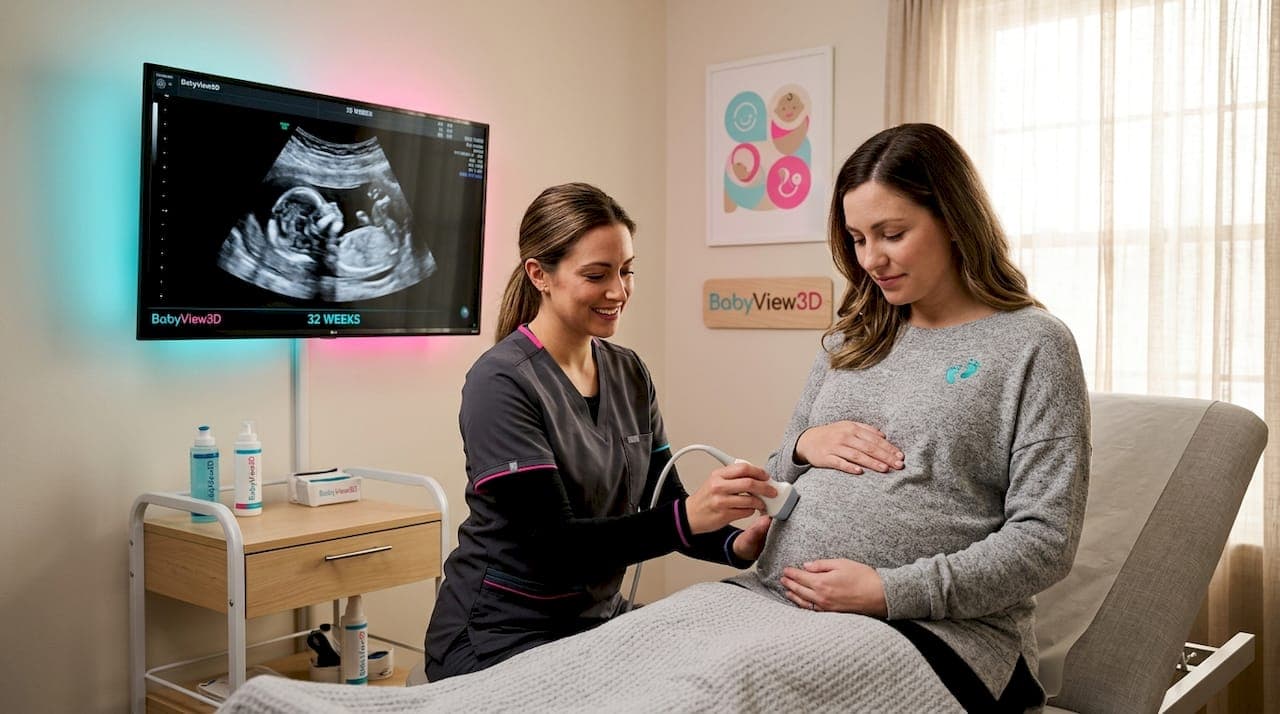
Ultrasound has a reputation as purely clinical. You book it, lie on the table, the technician checks measurements, and you leave. But that framing misses something real: an ultrasound is often the first time you see your baby. Understanding why choose ultrasound for prenatal memories goes far beyond the standard health checkup. The images you capture, the movements you witness, and the emotional weight of that moment are things you carry with you long after the appointment ends. This article covers how ultrasound works, why it creates such powerful bonds, and how to get the most out of the experience.
Table of Contents
- Key Takeaways
- How ultrasound works and what it can show
- The emotional side of prenatal ultrasound
- Comparing 2D, 3D, and 4D ultrasound for memory creation
- Practical steps for choosing your ultrasound experience
- Limitations you should know before booking
- My take on prenatal ultrasound memories
- See your baby in stunning detail with Bbview3d
- FAQ
Key Takeaways
| Point | Details |
|---|---|
| More than a medical tool | Ultrasound creates lasting prenatal memories alongside its diagnostic function. |
| 3D and 4D add emotional depth | Lifelike images and live movement footage help parents connect with their baby before birth. |
| Timing affects image quality | Sessions between 26 and 32 weeks typically produce the clearest facial images for keepsakes. |
| Keepsakes don't replace medical scans | Elective bonding sessions should always complement, never substitute, your regular prenatal care. |
| Professional environments enhance the moment | Certified sonographers in family-friendly settings make the experience both safe and memorable. |
How ultrasound works and what it can show
To fully appreciate why choose prenatal ultrasound as a memory-making tool, you need to understand what the technology actually does. Ultrasound uses sound waves to generate real-time images of your baby without any radiation exposure. No X-rays, no ionizing energy. Just sonar-type detection that creates a moving picture of what's happening inside the womb. That makes it one of the safest imaging tools used throughout pregnancy.
The images you see fall into a few distinct categories:
- 2D ultrasound: The traditional black-and-white scan your doctor uses to check measurements, heartbeat, and anatomy. It's functional and informative but doesn't produce the kind of images you'd frame on a wall.
- 3D ultrasound: Reconstructs multiple image slices into a still, three-dimensional view of the fetus. You can see facial features, fingers, and expressions with remarkable clarity.
- 4D ultrasound: Adds motion to the 3D image. Real-time baby movements like yawning, stretching, or sucking a thumb become visible as they happen.
Pro Tip: If your primary goal is capturing prenatal memories, ask specifically about 3D and 4D options when booking. Not all clinics offer both, and the difference in emotional impact between a flat 2D image and a lifelike 3D portrait is significant.
The technician guides the probe to capture multiple angles, and fetal positioning during the scan directly affects how much you can actually see. A baby facing toward the transducer gives you a clear face-forward view. One tucked away might show you mostly the back of a head. Knowing this ahead of time helps you set realistic expectations.
The emotional side of prenatal ultrasound
Here is where ultrasound for baby bonding becomes something genuinely profound. Many parents describe seeing their baby on screen for the first time as the moment pregnancy became real. The heartbeat was an abstraction. The bump was unmistakable. But seeing a tiny face, watching a hand open and close, witnessing a yawn. That changes things.
Research consistently backs this up. Viewing 3D and 4D images enhances parental bonding, reduces anxiety, and promotes early attachment. Parents report feeling significantly closer to their babies after a detailed imaging session compared to a standard diagnostic scan. That emotional shift matters. It affects how you prepare, how you talk to your baby, how you plan.
"When I saw her stretch and yawn during our 4D session, I burst into tears. She felt like a real person in that moment. It's the single most emotional experience I've had during this pregnancy." — a parent's firsthand account from a Bbview3d session
The benefits of prenatal ultrasound for emotional connection span the whole family:
- Partners who attend the session often report a surge in connection that rivals what they felt at the positive test
- Siblings brought along to watch frequently become noticeably more excited and prepared for the baby's arrival
- Grandparents viewing the images often describe it as the moment they fell in love with the grandchild before ever meeting them
Keepsake ultrasound sessions are specifically designed around this emotional experience. Unlike a clinical scan where the focus is measurements and diagnostic accuracy, a keepsake session gives your family time to watch, react, and record. The goal is the memory, and that shift in purpose changes the entire atmosphere of the appointment.
Comparing 2D, 3D, and 4D ultrasound for memory creation

Knowing you want to capture prenatal memories is one thing. Knowing which type of scan serves that goal best is another. The differences between ultrasound types matter more for memory creation than most guides let on.
| Type | Visual quality | Memory value | Best for |
|---|---|---|---|
| 2D | Flat, grayscale | Low as a keepsake | Medical diagnosis and measurements |
| 3D | Detailed still image | High for prints and framing | Portraits and sharing with family |
| 4D | Live motion video | Highest for emotional impact | Bonding sessions and video keepsakes |
A 2D scan tells you your baby is healthy and growing. A 3D scan shows you the face you will recognize when they are born. A 4D session lets you watch your baby live their first little moments before they ever take a breath. The gap in emotional impact between a flat 2D image and a live 4D session is not subtle.
That said, there are real variables. The quality of the session depends heavily on the equipment being used, the skill of the sonographer, and the positioning of the fetus on the day. Premium providers now offer HD Live and 8K resolution imaging, which takes the detail of 3D and 4D to an entirely different level. You're not looking at a blurry approximation. You're seeing skin texture, individual features, and real-time expression.
Pro Tip: Book your 3D or 4D memory session between weeks 26 and 32. The fetus has developed enough body fat for facial definition to show clearly, and there is still enough amniotic fluid for the imaging technology to work well. After week 34, space becomes limited and images often lose clarity.
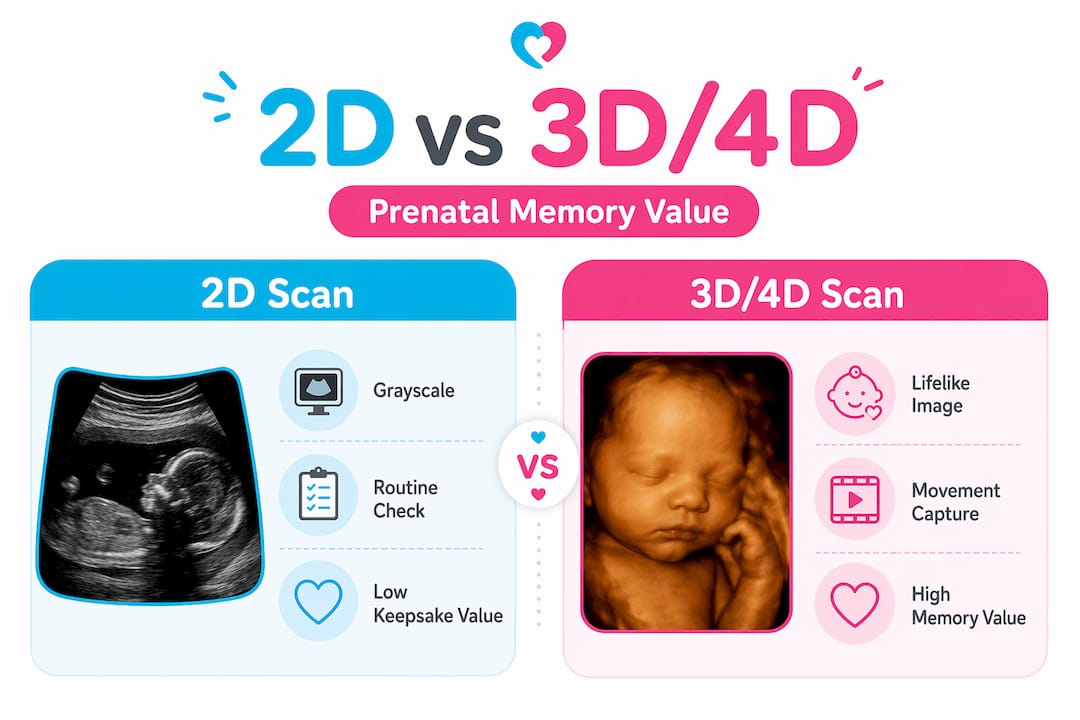
The emotional dimension of 3D vs 2D ultrasound for prenatal memory creation is not a matter of preference. It's a matter of what you want to hold onto. If you want something meaningful enough to frame, share, or revisit years later, 3D and 4D are the answer.
Practical steps for choosing your ultrasound experience
Capturing prenatal memories through ultrasound is not something you want to leave to chance. A few deliberate decisions ahead of time make a significant difference in what you take home.
- Schedule at the right gestational age. The optimal window for keepsake imaging is 26 to 32 weeks. Gestational age and fetal positioning are the two biggest factors in image quality. Plan your session within this window whenever possible.
- Drink water before the session. Hydration increases amniotic fluid clarity, which directly improves image sharpness. Start drinking extra water two to three days before your appointment.
- Choose a certified sonographer. Not all elective imaging centers maintain the same standards. Look for certified sonographers and professional equipment rather than booking purely on price.
- Bring your people. Keepsake sessions are built for the whole family. Bring your partner, your older children, your parents. The emotional experience multiplies when you share it.
- Ask about packages in advance. Many providers offer options that include printed images, digital files, heartbeat recordings, and video clips. Knowing what is available helps you decide what kind of prenatal ultrasound package works best for your family.
Pro Tip: Eat something sweet, like a small piece of fruit or juice, about 30 minutes before your session. Many parents find this encourages fetal activity, which makes 4D sessions more dynamic and engaging.
Understanding how ultrasound creates memories is partly about the technology and partly about preparation. When you walk in at the right stage, hydrated, with family around you and a skilled sonographer operating high-quality equipment, the session becomes something you remember as much as the images themselves.
Limitations you should know before booking
Understanding the ultrasound advantages for parents also means knowing what ultrasound cannot do. This is not a reason to avoid keepsake sessions. It's a reason to use them wisely.
- Ultrasound cannot diagnose all birth defects on its own. It can detect conditions like spina bifida but cannot confirm chromosomal conditions like Down syndrome without additional testing.
- Keepsake sessions are not medical evaluations. Untrained operators at keepsake studios risk providing false reassurance if parents misinterpret what they are seeing.
- A beautiful 4D image does not mean everything is medically normal. Only a physician-ordered scan with clinical review confirms fetal health.
- Keepsake scans should complement your regular prenatal appointments, not substitute for them.
- Even in clinical settings, radiologists review images separately after the session. The emotional experience you have in the room is real, but the diagnostic conclusion comes later.
The most responsible approach treats these two types of sessions as partners. Your medical scans handle the clinical picture. Your keepsake sessions handle the emotional one. Both matter, and neither replaces the other.
My take on prenatal ultrasound memories
I've spent years watching families walk into ultrasound sessions with nervous energy and walk out with something they didn't expect: a different relationship with a baby they haven't met yet. That's what I find remarkable about this technology. Not the mechanics of it, but the shift in how parents carry the pregnancy afterward.
What I've noticed is that the families who invest in a dedicated keepsake session, one designed around the emotional experience rather than a clinical checklist, tend to talk about pregnancy differently. They reference the session. They show the images to everyone. They describe specific moments, a yawn, a wave, a visible smile, as early signs of their child's personality.
The misconception I encounter most often is that a medical scan covers all of it. It doesn't. A diagnostic ultrasound is focused and efficient. A 3D ultrasound session designed for memory creation is slow, deliberate, and built around what you feel, not what a chart needs to record. Those are genuinely different experiences, and treating them as interchangeable shortchanges both.
My honest advice: don't wait until after the birth to start building connection. The months of pregnancy are not a waiting room. They are part of the story, and ultrasound is one of the clearest ways to document that chapter.
— LENIER
See your baby in stunning detail with Bbview3d
If you're ready to turn your ultrasound appointment into a memory your whole family will keep, Bbview3d offers exactly the kind of experience this article describes. With over 15 years in prenatal imaging, certified sonographers, and technology that includes 3D, 4D, and 8K HD Live resolution, every session is designed around the emotional connection you came for.
Bbview3d's ultrasound packages and services are built for families who want more than a checkup. You choose the package, bring your people, and leave with images and videos that capture your baby's personality before they arrive. Locations across the United States make it easy to find a studio near you. First-time appointments come with a special discount, so there's no reason to put this off. Visit Bbview3d to explore your options and book your session.
FAQ
Why choose ultrasound for prenatal memories?
Ultrasound is the only technology that lets you see your baby's face, movements, and expressions before birth without any radiation risk. 3D and 4D sessions turn that visibility into shareable, lasting keepsakes.
What is the best week for a 3D or 4D ultrasound session?
Weeks 26 to 32 of pregnancy offer the best combination of fetal development and amniotic fluid volume for clear, detailed images during a keepsake ultrasound session.
Do keepsake ultrasounds replace medical prenatal scans?
No. Keepsake ultrasounds are elective bonding experiences and do not provide medical diagnosis. They should always complement, not replace, your physician-ordered prenatal care.
How does 4D ultrasound differ from 3D for bonding?
3D ultrasound provides a still, lifelike image of the fetus. 4D adds real-time motion, letting you watch your baby move, yawn, and stretch live during the session, which most parents find far more emotionally impactful.
Is prenatal ultrasound safe for the baby?
Yes. Ultrasound involves no radiation and has no known risks to the mother or baby beyond minor pressure from the probe. It is widely regarded as the safest imaging method used in pregnancy.