

Prenatal technology is moving faster than most parents realize. The ultrasound trends in 2026 go well beyond clearer pictures. We're talking about handheld devices your OB can carry in a coat pocket, AI that spots fetal details your eye would miss, and probe technology that renders tiny fingers with a level of detail that was simply impossible five years ago. The global ultrasound market is valued at $11.47 billion in 2026, growing at 6.2% annually through 2036. If you're expecting, understanding these shifts helps you ask better questions and make the most of every scan.
Table of Contents
- Key Takeaways
- 1. What to look for in today's ultrasound advancements
- 2. Handheld and point-of-care devices are reshaping access
- 3. AI is transforming what sonographers can see and do
- 4. New probe technology is producing sharper fetal images
- 5. Sustainability is entering the ultrasound industry
- 6. Diagnostic ultrasound dominates but elective imaging is growing
- 7. Comparative overview: which trends matter most for your prenatal journey
- My honest take on what these trends mean for your family
- See these trends come to life at Bbview3d
- FAQ
Key Takeaways
| Point | Details |
|---|---|
| Handheld devices expanding access | Portable ultrasound tools now bring quality imaging to outpatient and rural prenatal settings. |
| AI improving image quality | Artificial intelligence assists real-time image capture and flags potential anomalies automatically. |
| Probe tech sharpening detail | New transducer materials deliver higher sensitivity, producing clearer views of fetal features. |
| Safety oversight keeps pace | FDA and CE regulation of AI-powered devices protects families while shaping how fast tools roll out. |
| Premium studios lead in experience | Specialized prenatal studios combine the latest technology with a family-centered, emotionally rich visit. |
1. What to look for in today's ultrasound advancements
Before we get into the specific trends, it helps to know what actually matters when evaluating new ultrasound technology. Not every advance is equally relevant to expecting families. Some improvements are purely clinical. Others directly change what you see and feel during a prenatal session.
Here are the criteria worth paying attention to:
- Image resolution and depth. 3D and 4D imaging have been around for years, but the clarity threshold keeps rising. Look for HD Live or 8K rendering when choosing a prenatal session.
- Portability and setting. Can the technology travel to you, or is it hospital-only? Accessibility matters for families in rural areas or those with high-risk pregnancies requiring frequent monitoring.
- AI assistance. Does the system help the sonographer capture the best image automatically, or does everything depend entirely on manual skill?
- Regulatory approval. FDA-cleared devices offer meaningful reassurance that safety protocols have been met.
- Family-centered design. Is the interface built to create a memorable experience, or is it purely a clinical diagnostic tool?
Pro Tip: When you book a prenatal ultrasound, ask whether the studio uses HD Live or 4D technology. That single question tells you a lot about whether the equipment was chosen for diagnostic precision, family experience, or both.
The step-by-step 3D ultrasound process can also help you know exactly what to expect before you walk in the door.
2. Handheld and point-of-care devices are reshaping access
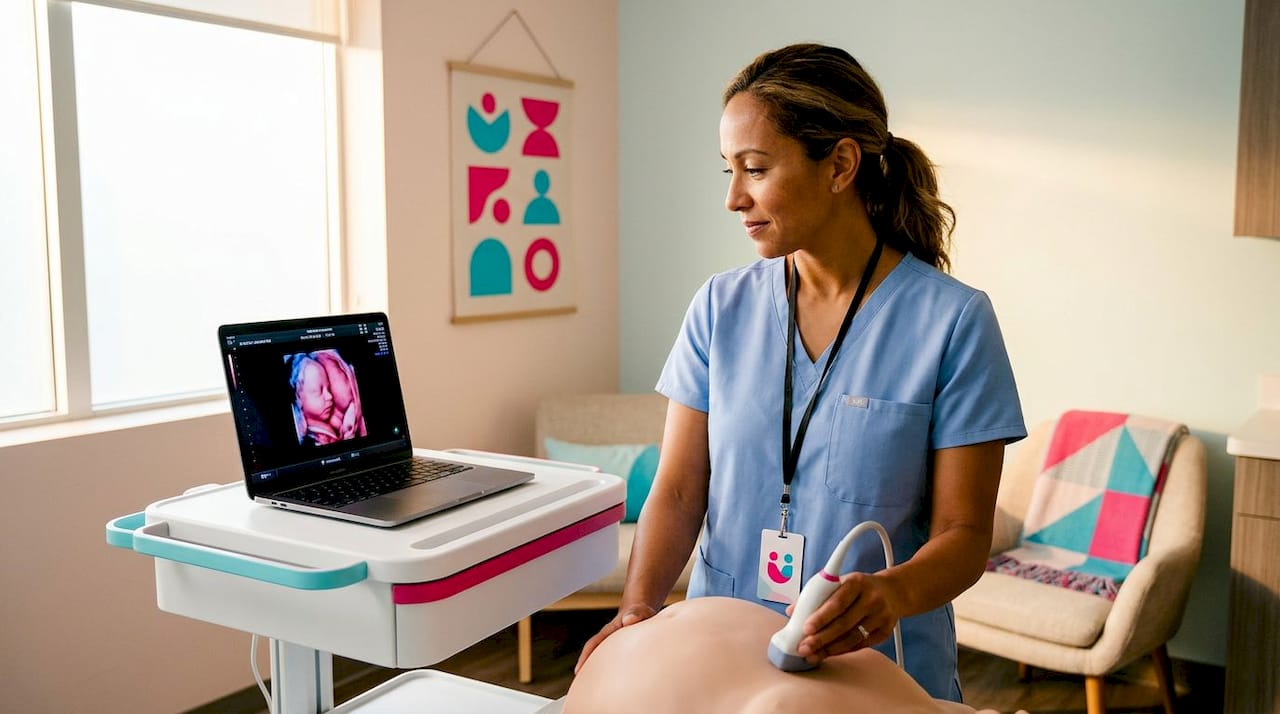
One of the most talked-about ultrasound trends in 2026 is the rise of point-of-care ultrasound, known as POCUS. These are smartphone-sized devices that let providers perform quick scans at the bedside, in a clinic, or even in a home visit setting.
Devices like GE Vscan Air and Philips Lumify are already changing how and where prenatal imaging happens. Here's what that means for expectant families:
- A rural OB can confirm fetal heartbeat and position without sending you an hour away to a radiology center.
- High-risk pregnancies requiring frequent checkups can be monitored more often and with less disruption.
- Earlier reassurance at the first sign of concern, without waiting days for a scheduled appointment.
- More frequent informal glimpses of your baby across trimesters, not just at two or three scheduled milestones.
The tradeoff is real, though. Portable ultrasound accuracy can vary depending on operator skill and device quality. Clinical training remains non-negotiable. A handheld scan in a primary care office is not the same as a full anatomy survey at a specialized imaging center. Think of POCUS as a powerful first check, not a replacement for your dedicated prenatal scans.
The democratization of imaging through AI and miniaturization is shifting ultrasound availability well beyond hospitals into primary care and outpatient settings. That shift is genuinely exciting for families who previously had limited access.
3. AI is transforming what sonographers can see and do
The impact of AI on ultrasound is the single biggest story in trends in medical imaging 2026. It's not a future promise. It's already embedded in clinical workflows at leading imaging centers.
Here's the core shift: AI-assisted image acquisition means the software helps guide probe placement and automatically enhances image clarity in real time. It can flag potential anatomical concerns that a less experienced operator might not catch. The practical result for you as a parent is that you get sharper images and more consistent quality, regardless of how many years the sonographer has been practicing.
"AI doesn't replace the skilled sonographer. It makes the skilled sonographer's work more consistent, and it gives newer clinicians a meaningful safety net during imaging."
That distinction matters. The best prenatal sessions still depend on a trained professional who understands anatomy, knows how to position the probe, and can communicate what they're seeing in a way that connects with the family. AI handles the repetitive optimization tasks. The sonographer handles the human part.
One important check on this excitement: FDA and CE regulatory scrutiny is increasing for AI-powered ultrasound systems. That scrutiny can slow product rollout, but it also protects families from tools that haven't been rigorously validated. Fast adoption is not always better adoption.
Pro Tip: If a prenatal studio promotes AI-enhanced imaging, ask whether the underlying system is FDA-cleared. It's a fast way to separate marketing language from meaningful technology.
4. New probe technology is producing sharper fetal images
The transducer probe is the part of the ultrasound device that actually touches the skin and sends and receives sound waves. For most of ultrasound history, probe design changed gradually. In 2026, that pace has accelerated significantly.
Ultrasound probes with enhanced PZT materials and miniaturized designs now provide measurably higher sensitivity and diagnostic accuracy. Here's what that means in practical terms:
- Subtle anatomical details that previously required multiple angles or follow-up scans are now visible in a single session.
- Miniaturized probes designed for specific applications, like transvaginal or specialty fetal imaging, reduce discomfort while improving image quality.
- Higher sensitivity in the transducer material translates to better signal with less pressure, which is relevant for patient comfort.
- Early identification of minor anomalies is now possible at gestational ages where older probes would have produced ambiguous results.
For bonding specifically, this is where the emotional payoff becomes tangible. Seeing your baby's profile with true depth, watching a yawn or a stretch in 4D with genuine clarity, creates a fundamentally different connection than the grainy black-and-white images of even a decade ago. The prenatal ultrasound experience has evolved into something that families return to not just for reassurance but for memory.
5. Sustainability is entering the ultrasound industry
This one surprises most parents, but the ultrasound market is shifting toward eco-friendly manufacturing and recyclable materials. Probe casings, device packaging, and even disposable probe covers are being redesigned with sustainability in mind.
It's not the most headline-grabbing trend, but it reflects something meaningful about where the industry is headed. The companies investing in sustainable production today are generally the same ones investing in long-term quality and clinical reliability. For you as a consumer, it's a secondary signal of brand values worth noticing.
6. Diagnostic ultrasound dominates but elective imaging is growing
Diagnostic ultrasound holds 72% of the ultrasound systems market in 2026. That number reflects how central standard prenatal scans are to obstetric care. But the elective and specialty prenatal imaging segment, the kind offered by dedicated studios, is growing at a rate that is drawing serious industry attention.
The reason is straightforward. Clinical scans are optimized for diagnostic data. They need to be efficient and medically complete. They are not designed to be emotionally memorable. Dedicated prenatal studios fill that gap by using the same or superior imaging technology in an environment built entirely around the family's experience.
The ultrasound packages available at specialized studios often include extended session times, printed keepsakes, video compilations, and certified sonographers who take time to explain what you're seeing. That combination of quality technology and intentional experience design is becoming a standard expectation for families, not a luxury add-on.
7. Comparative overview: which trends matter most for your prenatal journey
Here's a practical comparison of the major 2026 ultrasound trends and how they apply to different prenatal needs:
| Technology trend | Best for | Limitation |
|---|---|---|
| Handheld POCUS devices | Frequent monitoring, rural access | Lower image detail than full systems |
| AI-enhanced imaging | Consistent quality, anomaly detection | Regulatory rollout still in progress |
| Advanced probe materials | High-detail fetal visualization | Primarily in specialized or hospital settings |
| HD Live / 4D rendering | Bonding, keepsake imaging, emotional connection | Requires specialized prenatal studio |
| Sustainable device design | Long-term quality signal, brand values | Limited direct impact on imaging experience |
The honest takeaway is that no single technology trend delivers everything on its own. The families who get the most from prenatal imaging in 2026 are the ones who understand the difference between a clinical scan and an experience-focused session and book both deliberately.
My honest take on what these trends mean for your family
I've spent years paying close attention to how prenatal imaging technology evolves, and what stands out to me right now is not any single advancement. It's the gap between what's technically possible and what most families actually receive.
AI-enhanced imaging and advanced probe technology are real. They're in clinical use today. But the average prenatal scan at a busy hospital still lasts 20 to 30 minutes, optimized for throughput, not for the emotional experience you were hoping for. That's not a criticism of clinical care. It's just the reality of how medical systems prioritize their resources.
What I think expecting parents should do with all these 2026 ultrasound trends is use them as a benchmark. When you're choosing where to have an elective session or asking your provider about imaging options, you now have enough background to ask specific questions. Does this system use AI-assisted acquisition? What probe technology are you using? Is this device FDA-cleared?
I also want to offer a cautionary note. The excitement around future ultrasound technology is real, but the emotional value of a prenatal scan is not determined by the equipment alone. The sonographer's ability to communicate, the time given to the family, and the environment all shape what you carry away from that experience. Chase the right combination. Not just the most advanced device in the room.
— LENIER
See these trends come to life at Bbview3d
Bbview3d has been delivering premium prenatal ultrasound experiences for over 15 years, and every trend covered in this article shows up in how their sessions are designed. Their certified sonographers use advanced 3D, 4D, and HD Live imaging technology to give families the clarity and emotional depth that clinical scans rarely have time for. From first-trimester heartbeat moments to detailed late-pregnancy facial features, every session is built around your connection with your baby. Explore their prenatal imaging services to see available packages, session options, and what makes Bbview3d one of the most trusted names in family-centered prenatal imaging. You can also browse their image gallery to see exactly what today's technology looks like on screen.
FAQ
What are the biggest ultrasound trends in 2026?
The top ultrasound trends in 2026 include handheld point-of-care devices, AI-assisted image enhancement, and new high-sensitivity probe materials. Together, these advances are making prenatal imaging more accessible, clearer, and more consistent across different care settings.
How does AI affect prenatal ultrasound quality?
AI improves prenatal ultrasound by assisting with real-time image acquisition and flagging potential anatomical details for the sonographer. It reduces the impact of operator skill differences, leading to more consistent image quality across sessions.
Are handheld ultrasound devices safe for prenatal use?
FDA-cleared handheld devices like GE Vscan Air are considered safe for prenatal use when operated by trained clinical staff. However, they are best suited for quick checks rather than full anatomy surveys, which still require dedicated imaging systems.
What is the difference between a clinical scan and an elective prenatal session?
A clinical scan is optimized for diagnostic completeness within a limited time window. An elective prenatal session at a specialized studio uses comparable or superior technology with extended time, family-centered design, and keepsake imaging as the focus.
Will advanced probe technology improve what I see during my baby's ultrasound?
Yes. New probe materials with higher PZT sensitivity produce sharper images with greater anatomical detail, making features like facial expressions and limb movement significantly more visible than older technology allowed.