
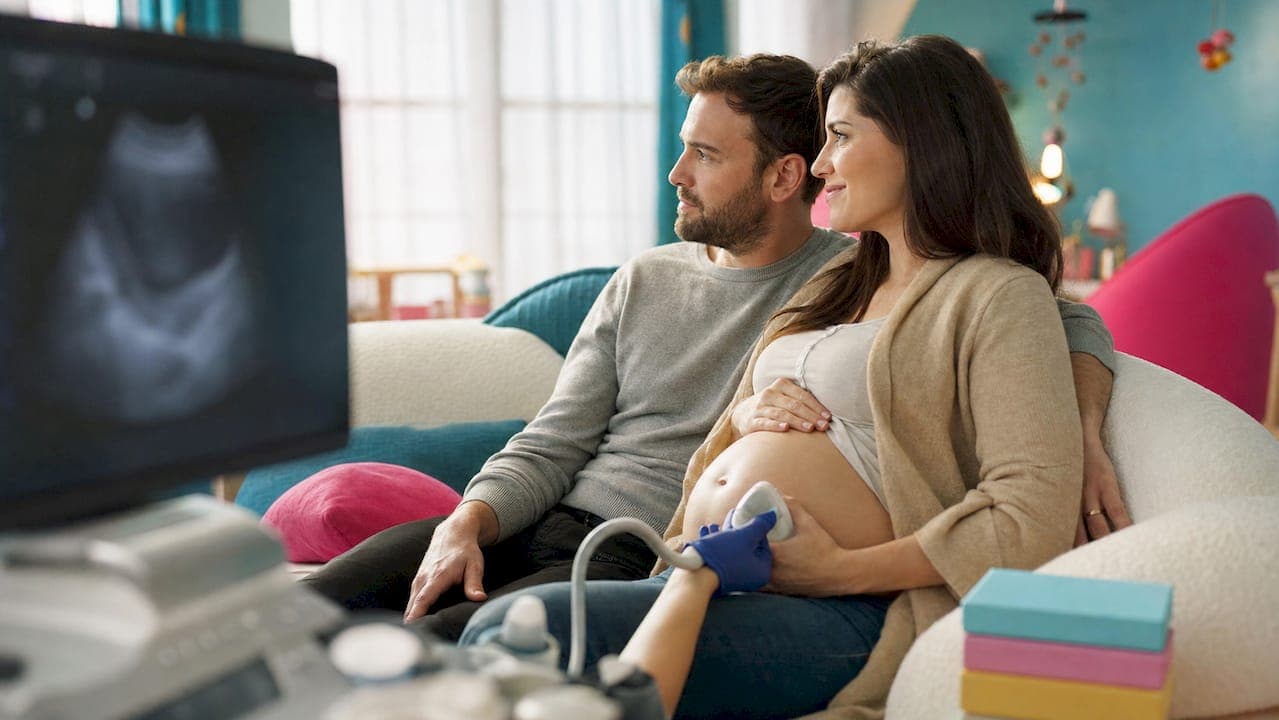
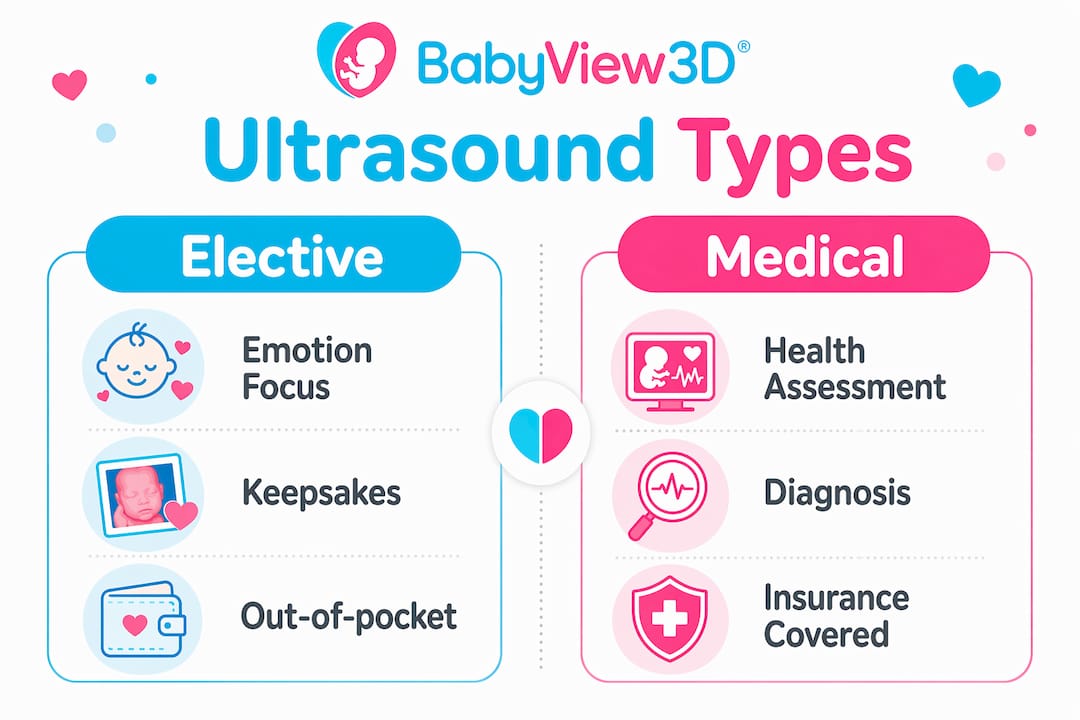
An elective prenatal ultrasound is an optional imaging session performed for emotional bonding and keepsake purposes rather than medical diagnosis. Unlike the anatomy and dating scans your OB orders, this type of scan exists purely to give you a closer look at your baby before birth. The same ultrasonic technology powers both types, but the intent, setting, and experience are entirely different. Understanding what elective prenatal ultrasound is, how it works, and when to schedule it helps you make a confident, informed choice for your family.
What is elective prenatal ultrasound and how does it differ from medical scans?
Elective prenatal ultrasound is defined as a non-medically necessary scan performed outside of routine obstetric care. The key distinction is purpose. Diagnostic ultrasounds are strictly regulated, performed by licensed professionals for medical assessment, while elective scans prioritize the family's emotional experience. Your OB's anatomy scan at 18–22 weeks checks fetal organs, measurements, and placental position. An elective session at a dedicated studio gives you a longer, more relaxed look at your baby's face, movements, and expressions.
Both scan types use the same underlying physics. Neither replaces the other. An elective session does not substitute for the medically required scans between 10–14 and 18–22 weeks gestation. Think of elective imaging as a supplement, not a swap.
How does elective ultrasound work and what technology is used?
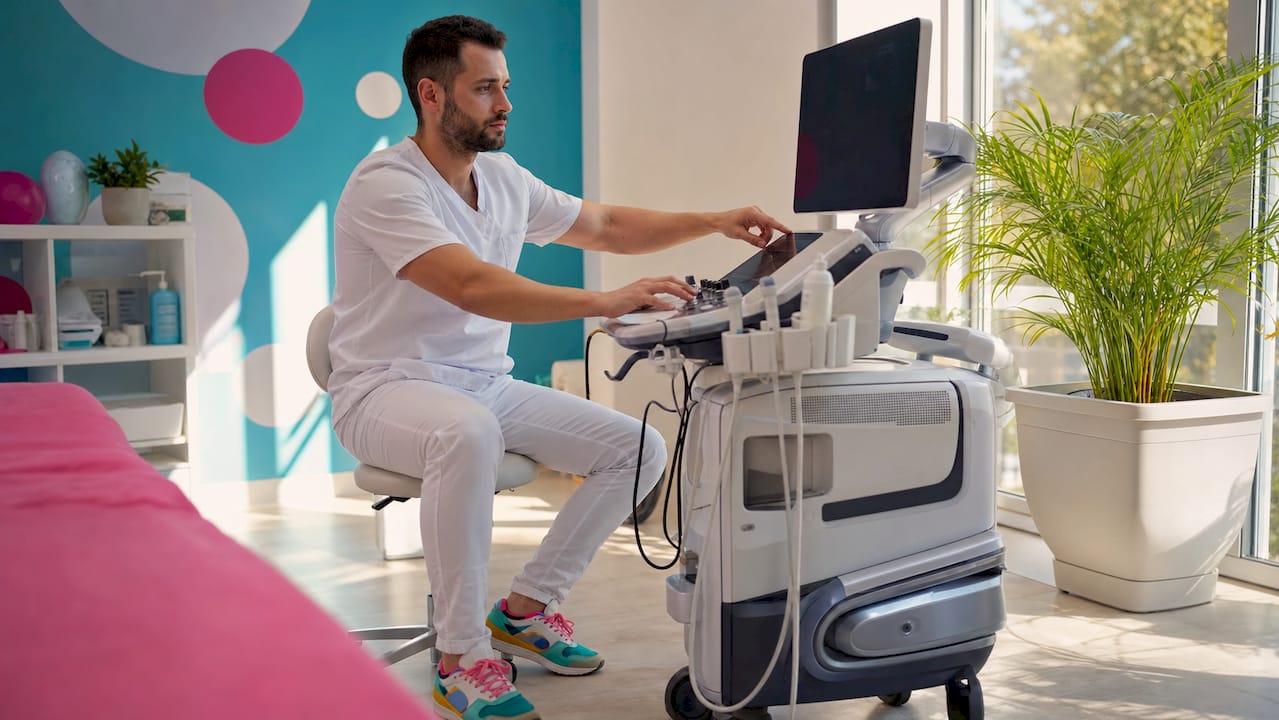
Ultrasound technology works by sending high-frequency sound waves through the body. Those waves bounce off fetal tissues and fluids, then return as signals that a computer converts into images on a monitor. No radiation is involved. The process is the same whether you are in a hospital or a dedicated elective studio.
The difference lies in the imaging format offered:
- 2D ultrasound: Produces flat, cross-sectional grayscale images. This is the classic black-and-white scan most parents recognize from early prenatal appointments.
- 3D ultrasound: Compiles hundreds of 2D image slices into a single three-dimensional still image. You see surface detail, including facial features, fingers, and toes.
- 4D ultrasound: Adds real-time motion to the 3D format. You watch your baby yawn, stretch, or suck a thumb as it happens.
- HD Live imaging: A rendering technology that adds directional lighting and skin-tone shading to 3D/4D images, producing photo-realistic results. Bbview3d uses HD Live technology alongside 3D and 4D imaging to deliver this level of detail.
Sessions at elective studios typically run longer than clinical scans. The sonographer takes time to find the best angles, and families can watch the screen together in a comfortable, welcoming room.
Pro Tip: Drink plenty of water in the two to three days before your session. Adequate hydration improves amniotic fluid clarity, which directly improves image sharpness.
What are the safety considerations for elective prenatal ultrasound?
Elective ultrasound is generally safe when performed by trained professionals following standardized protocols. Professional standards updated through 2026 emphasize minimizing non-medical exposure and using the lowest effective power output for the shortest necessary time. The FDA advises against keepsake ultrasounds performed by untrained operators or in unregulated settings. That guidance is not a reason to avoid elective scans entirely. It is a reason to choose your provider carefully.
Reputable studios follow the ALARA principle, which stands for "As Low As Reasonably Achievable." This means trained sonographers keep exposure duration and acoustic output within safe limits throughout the session.
"Elective does not mean unregulated. Reputable studios employ sonographers who adhere to established safety guidelines on exposure duration and power output. The professional standard sits between pure entertainment and clinical practice, and the best providers take that responsibility seriously."
Key safety factors to verify before booking:
- Sonographer holds recognized credentials and specific training for elective imaging
- Studio follows ALARA exposure guidelines
- Session length is capped at a reasonable duration, typically under 30 minutes
- The studio does not market scans as a medical service or diagnostic tool
- Staff can answer your safety questions clearly and without hesitation
Elective ultrasound providers increasingly staff certified sonographers with specific training for these services. That professional standard is what separates a trustworthy studio from a pop-up keepsake booth.
When is the best time to schedule an elective prenatal ultrasound?
Timing affects image quality more than most parents expect. The best window for clear 3D and 4D facial imaging is between 26 and 32 weeks gestation. During this period, your baby has developed enough subcutaneous fat to give facial features definition, and amniotic fluid volume is still high enough to provide a clear acoustic window. Before 26 weeks, features can look skeletal. After 32 weeks, the baby drops lower into the pelvis and fluid decreases, both of which reduce image clarity.
Here is a practical timing guide by imaging type:
- 2D scans (any trimester): Standard 2D imaging works throughout pregnancy. Early scans confirm heartbeat and dating; later scans show position and movement.
- 3D scans (24–32 weeks): The sweet spot for still 3D facial portraits. Aim for 26–30 weeks for the clearest results.
- 4D scans (26–32 weeks): Real-time motion imaging benefits most from the same window. Your baby is active but still has room to move.
- Gender confirmation scans (16–20 weeks): Many elective studios offer early gender reveal sessions using 2D or 3D imaging from around 16 weeks.
For detailed guidance on choosing your scan timing, the gestational age of your baby and your personal goals for the session should drive the decision.
Pro Tip: Schedule your 3D or 4D session on a day when you have eaten a light meal about an hour before. A small amount of sugar, like a glass of juice, can encourage fetal movement and produce more dynamic images.
What types of elective prenatal ultrasounds are available?
Elective studios offer several imaging formats, each with a different visual experience and price point. Understanding the differences helps you choose the session that matches what you want to take home.
| Imaging type | What you see | Typical use |
|---|---|---|
| 2D | Flat grayscale cross-section | Early gender reveal, heartbeat confirmation |
| 3D | Still three-dimensional surface image | Facial portraits, keepsake photos |
| 4D | Live motion three-dimensional video | Watching baby move, family viewing experience |
| HD Live | Photo-realistic 3D/4D with lighting | Premium keepsake images and video |
Most studios bundle these formats into packages. A typical package includes a set session length, a printed photo, a digital image file, and sometimes a short video clip. Premium packages may add a USB drive, a heartbeat recording, or a plush toy with a recorded heartbeat inside.
Elective ultrasound services are paid out of pocket. Health insurance does not cover them because they are not medically necessary. Pricing varies by session length, imaging type, and included keepsakes. Entry-level 2D gender reveal sessions cost less than full 4D HD Live packages. Bbview3d offers tiered ultrasound session packages with options for different budgets and gestational stages.
The emotional benefits of prenatal imaging are well documented. Families who see detailed images of their baby before birth report stronger early bonding and greater confidence heading into labor.
How to choose an elective prenatal ultrasound provider
The provider you choose matters as much as the technology they use. A high-resolution machine operated by an undertrained technician produces poor images and carries unnecessary risk. A certified sonographer using standard equipment produces safe, clear results every time.
Before booking, ask these questions:
- What credentials does the sonographer hold, and are they specific to prenatal imaging?
- Does the studio follow ALARA guidelines and limit session duration?
- Is the equipment regularly maintained and calibrated?
- What keepsake materials are included, and in what format are digital files delivered?
- Does the studio have a clear policy for situations where something unexpected appears on the scan?
That last point matters. Certified, experienced providers know they are not performing diagnostic scans. A reputable studio will refer you to your OB immediately if anything unusual appears, rather than interpret findings themselves. That boundary protects you.
Bbview3d has operated for over 15 years with certified sonographers across multiple US locations. The studio's focus on safety protocols and family experience reflects the professional standard that separates quality elective imaging from unregulated alternatives. You can review what to expect at an ultrasound appointment before your first visit.
Key Takeaways
Elective prenatal ultrasound is a safe, bonding-focused imaging option when performed by certified sonographers following 2026 professional standards, but it never replaces medically required diagnostic scans.
| Point | Details |
|---|---|
| Definition is clear | Elective ultrasound is non-medical imaging for bonding and keepsakes, not diagnosis. |
| Technology is the same | 2D, 3D, 4D, and HD Live all use the same high-frequency sound wave principles as clinical scans. |
| Timing matters | The 26–32 week window produces the clearest 3D and 4D facial images. |
| Safety requires credentials | Choose studios with certified sonographers who follow ALARA exposure guidelines. |
| Cost is out of pocket | Insurance does not cover elective scans; package pricing varies by session type and inclusions. |
What I've learned from watching families experience elective scans
Parents often arrive at elective sessions with a mix of excitement and low-grade guilt, as if choosing a bonding scan is somehow indulgent. That framing is wrong. Seeing your baby's face before birth is not a luxury. It is a meaningful moment that research consistently links to stronger early attachment and reduced prenatal anxiety.
That said, I have seen families make one avoidable mistake: they skip or delay their medical anatomy scan because they assume the elective session covers it. It does not. The two serve completely different purposes. Your OB's scan checks organ development, placental position, and fetal growth. An elective session shows you your baby's personality. Both matter, and neither replaces the other.
The other thing I tell every parent: hydration is not optional. I have watched sessions produce mediocre images simply because the parent did not drink enough water in the days before. A well-hydrated parent produces clearer amniotic fluid, and clearer fluid means sharper images. That one preparation step costs nothing and makes a visible difference.
Choose a studio with certified sonographers, ask about their safety protocols before you book, and schedule between 26 and 32 weeks for the best 3D and 4D results. When those conditions are met, an elective prenatal ultrasound is one of the most memorable experiences of pregnancy.
— LENIER
Bbview3d's approach to elective prenatal ultrasound
Bbview3d has spent over 15 years helping families across the United States see their babies in detail before birth. The studio's certified sonographers use 3D, 4D, and HD Live technology to produce clear, high-quality images in a comfortable, family-friendly setting.
Every session at Bbview3d follows established safety protocols, with session lengths and exposure levels kept within professional guidelines. Packages include keepsake photos, digital files, and optional add-ons available through the Bbview3d store. First-time visitors can access a limited introductory offer. If you are ready to see your baby's face in detail, the full range of imaging services is available to browse and book online.
FAQ
What is the difference between elective and medical ultrasound?
Medical ultrasounds are ordered by a physician to assess fetal health, anatomy, and development. Elective ultrasounds are optional sessions focused on bonding and keepsake imaging, not diagnosis.
Is elective prenatal ultrasound safe?
Elective ultrasound is safe when performed by certified sonographers following ALARA exposure guidelines. Professional standards updated through 2026 emphasize minimizing non-medical exposure and using trained personnel.
When should I schedule a 3D or 4D elective ultrasound?
The clearest 3D and 4D images come from sessions scheduled between 26 and 32 weeks gestation, when fetal fat development and amniotic fluid volume are both optimal for surface imaging.
Does insurance cover elective prenatal ultrasounds?
Health insurance does not cover elective ultrasounds because they are not medically necessary. Sessions are paid out of pocket, with pricing that varies by imaging type and package inclusions.
Do I need to prepare anything before an elective ultrasound session?
Drink plenty of water in the two to three days before your session. Good hydration improves amniotic fluid clarity and directly improves the sharpness of your images.