

Your first ultrasound appointment is one of the most emotionally charged moments of early pregnancy. Many expectant parents feel a mix of excitement and nerves walking into that room, unsure of what to expect, what to do beforehand, or what the images actually mean. This first ultrasound appointment guide cuts through that uncertainty. You'll learn exactly how to prepare, what happens step by step during the scan, how preliminary findings are communicated, and what comes next in your prenatal care journey. No jargon, no vague reassurances. Just clear, practical guidance so you can walk in ready.
Table of Contents
- Key Takeaways
- What to know and prepare before your first ultrasound
- Step-by-step walkthrough of your scan appointment
- Understanding what your scan reveals and its limitations
- Tips to avoid common mistakes at your first appointment
- How your first scan fits into your full prenatal care plan
- My honest take on preparation and expectations
- See your baby like never before with Bbview3d
- FAQ
Key Takeaways
| Point | Details |
|---|---|
| Bladder preparation matters | Drink 500 ml of water before your scan; a full bladder produces significantly clearer images. |
| Scan type depends on timing | Early scans at 7 to 8 weeks are often transvaginal; later scans are typically abdominal. |
| No fasting required | You do not need to skip meals before a prenatal ultrasound, just follow your facility's specific instructions. |
| Preliminary results are tentative | Sonographers share initial findings during the scan, but the official report comes from a clinician afterward. |
| First ultrasound is just the start | Your care team uses multiple scans throughout pregnancy to monitor development, not just one visit. |
What to know and prepare before your first ultrasound
The single biggest thing most expectant parents get wrong before their first ultrasound is assuming all appointments require the same preparation. They do not. What you need to do depends heavily on how far along you are.
Understanding scan types by timing
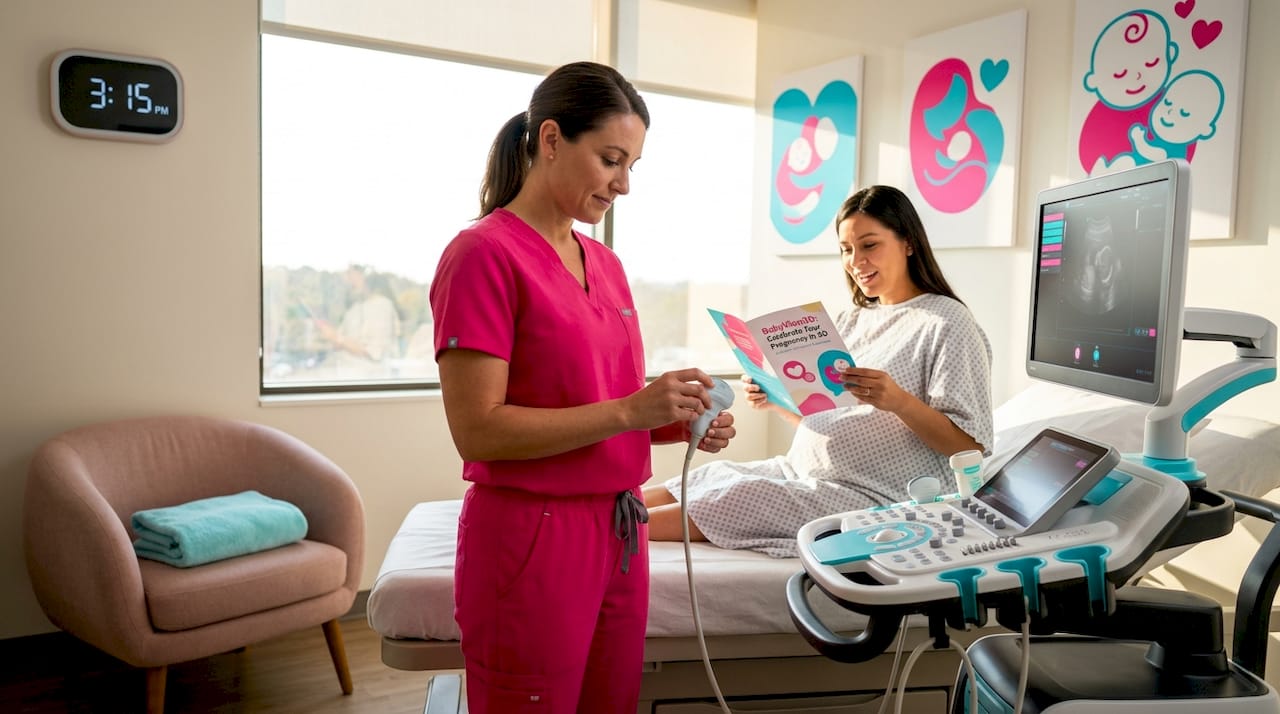
Early ultrasounds at 7 to 8 weeks often use a transvaginal approach rather than the abdominal method most people picture. The reason is simple: at this stage, the baby is too small and too low for an external probe to capture a clear image. Transvaginal ultrasounds are chosen for image clarity, not because of any safety concern. After about 10 to 12 weeks, most scans switch to the more familiar abdominal method.
Practical preparation steps
For your first trimester ultrasound, the standard recommendation is to drink about 500 ml of water roughly an hour before your appointment and arrive with a comfortably full bladder. A full bladder pushes the uterus up and out of the pelvis, which gives the sonographer a much cleaner view. The key word here is comfortably. Painfully full is not better.
Here is a quick checklist of everything to organize beforehand:
- Drink water as instructed by your specific facility, since bladder prep guidelines vary depending on how many weeks along you are
- Wear loose, two-piece clothing so the sonographer can access your abdomen easily
- No fasting is required before prenatal ultrasounds, so eat normally
- Bring your referral paperwork, insurance card, and any relevant medical history
- Write down your questions beforehand so you do not forget them in the moment
- Confirm the facility's guest policy in advance; most allow one or two support people
Pro Tip: Call your ultrasound facility the day before your appointment and ask specifically about bladder preparation for your gestational age. Instructions are not universal, and showing up with the wrong bladder fullness can delay your scan or require rebooking.
Step-by-step walkthrough of your scan appointment
Knowing exactly what to expect when you walk through the door takes a lot of the anxiety out of the room. Here is how a typical first ultrasound unfolds.
- Check-in. You arrive, complete any remaining paperwork, and wait to be called. Bring patience; busy facilities run behind schedule, and a short wait is normal.
- Entering the scan room. A certified sonographer will greet you and confirm your details. They will explain the type of scan being performed before anything begins.
- Positioning. For an abdominal scan, you lie on your back and a small amount of warm gel is applied to your belly. For a transvaginal scan, a slim probe is inserted gently with a protective cover and lubricating gel. You may feel mild pressure, but the procedure is quick and safe.
- The scan itself. The sonographer moves the probe slowly to capture images from different angles. They will measure the baby, look for the heartbeat, and check the gestational age. Most first-trimester scans take 20 to 40 minutes.
- Preliminary discussion. Once the sonographer has the images they need, they typically share what they observed. This is your first look at initial findings, though it is not the same as an official medical report.
- Wrap-up. Gel is wiped off, you are free to use the restroom if needed, and you will be told how and when to expect the formal results.
Pro Tip: If you want your support person to see the screen during the scan, ask the sonographer at the start. Some position the monitor away from the patient by default, and a simple request can change that.
For a deeper look at how the 3D ultrasound process works from start to finish, that walkthrough goes into even more detail about what each stage involves.
Understanding what your scan reveals and its limitations
Your sonographer will check several key things during this appointment. Understanding what is being looked at helps you follow along and ask better questions.
What is typically assessed:
- Fetal heartbeat: detection confirms a viable pregnancy
- Gestational age: measured using fetal size to estimate your due date
- Number of fetuses: confirms singleton, twins, or more
- Location of pregnancy: rules out ectopic pregnancy
- Placenta position and amniotic fluid levels (more relevant at later scans)
A reminder worth holding onto: ultrasound scans are painless with no known risks, but they cannot detect all health conditions. A normal scan is genuinely reassuring, yet it is not a guarantee of a problem-free pregnancy. Any concerns, whether the scan looks typical or not, deserve a conversation with your care team.
The gap between what the sonographer tells you in the room and what the official report says can feel confusing. Here is why it happens: sonographers share preliminary findings during the appointment, but the formal interpretation is completed separately by a physician or radiologist. Consider in-room comments a helpful preview, not a diagnosis.
Understanding pregnancy ultrasound safety in more detail can help you feel genuinely confident about the procedure rather than just taking reassurance on faith.
Tips to avoid common mistakes at your first appointment
Most first-time ultrasound experiences go smoothly. But a few very avoidable mistakes can throw off the entire visit. These tips for your first ultrasound visit are the ones that actually make a difference.
- Do not skip the water. Arriving with an empty bladder when a full one is required often results in poor image quality, and your appointment may be rescheduled. Follow the specific instructions from your facility, not generic advice from the internet.
- Avoid tight, one-piece clothing. A dress or jumpsuit forces you to partially undress for an abdominal scan. Two-piece outfits are far more practical.
- Bring your questions written down. It sounds obvious, but the excitement of seeing your baby for the first time genuinely causes people to forget everything they planned to ask.
- Build in extra time. Do not schedule anything demanding immediately after the appointment. Delays happen, and you may also feel emotionally overwhelmed and need a few quiet minutes afterward.
- Know what to do if something unexpected comes up. If the sonographer pauses, takes extra images, or seems quiet, do not panic. They are trained to be thorough. Ask calmly what they are looking at, and wait for the official report before drawing conclusions.
For more on the questions worth asking and concerns worth raising, the prenatal ultrasound packages guide covers common patient concerns in depth.
How your first scan fits into your full prenatal care plan
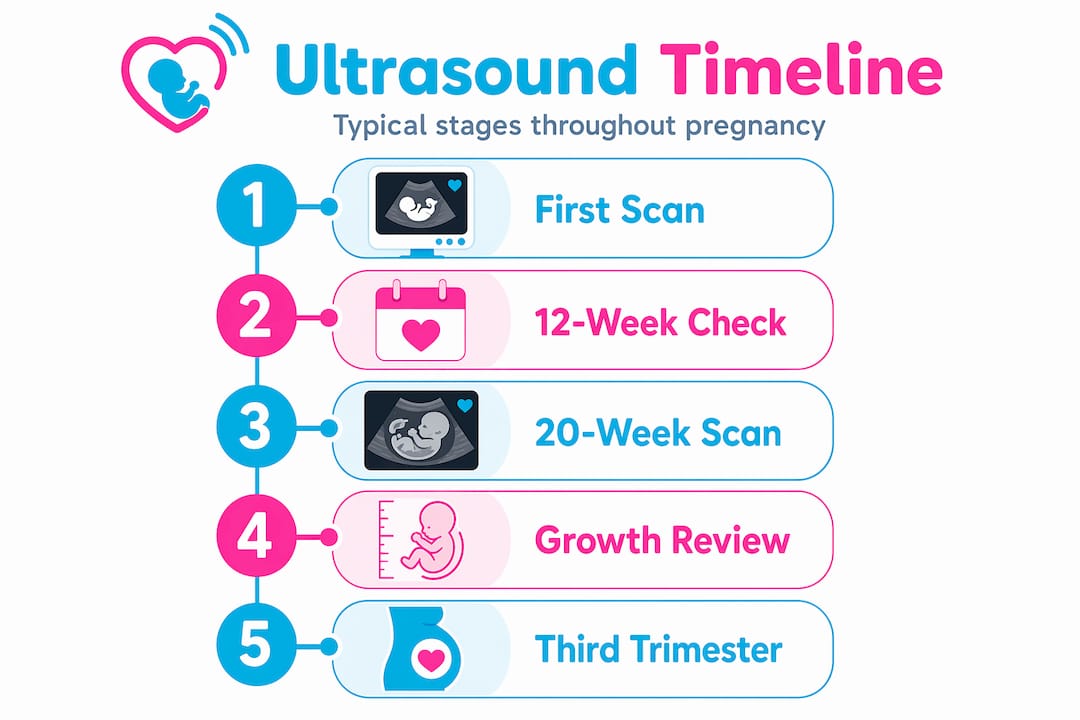
Your first ultrasound is the beginning of a series of scans, not a one-time event. Understanding the full schedule helps you see where this appointment fits and what to expect next.
| Scan | Timing | Primary purpose |
|---|---|---|
| Early viability scan | 6 to 10 weeks | Confirm pregnancy, detect heartbeat, rule out ectopic |
| Dating scan | Around 12 weeks | Estimate due date, check fetal size and development |
| Anomaly scan | Around 20 weeks | Detailed anatomy review, check organ development |
| Growth scans | Third trimester (if needed) | Monitor fetal growth and placenta function |
The NHS recommends two routine scans during pregnancy: a 12-week dating scan and a 20-week anomaly scan. Your provider may add more depending on your individual health history or risk factors.
Your first scan directly informs your due date calculation, which then becomes the anchor for every other appointment and decision in your prenatal care. Getting an accurate gestational age reading at this stage matters far more than most expectant parents realize. It is also the appointment where your care team often introduces optional screening discussions, such as nuchal translucency measurements for chromosomal markers. These are choices, not requirements, and your provider should walk you through each one before the scan begins.
My honest take on preparation and expectations
I've seen too many expectant parents walk into their first ultrasound completely unprepared, not because they didn't care, but because no one gave them the right information in time. The anxiety that comes from that? Completely avoidable.
What I've learned from working in prenatal imaging is that preparation genuinely changes the experience. Not just practically, in terms of getting better images faster, but emotionally. Parents who know what to expect are calmer. Calmer parents ask better questions. Better questions lead to more meaningful conversations with their care team.
My honest opinion: the biggest mistake expectant families make isn't skipping the water or wearing the wrong clothes. It's placing the entire emotional weight of their pregnancy's health on one scan. Ultrasounds are a powerful tool. They are also one tool among many. I've found that parents who treat the first scan as a starting point rather than a verdict carry a healthier mindset through the rest of their pregnancy.
If your scan raises a question, follow up. If your scan looks perfect, stay engaged with your care team anyway. Either way, you're doing exactly what good prenatal care looks like.
— LENIER
See your baby like never before with Bbview3d
Once you've had your standard medical ultrasound, many expectant families want to go deeper. Bbview3d specializes in prenatal imaging experiences using 3D, 4D, and 8K HD Live technology, giving you a level of detail that standard clinical scans simply are not designed to provide. With over 15 years of experience and certified sonographers across multiple U.S. locations, Bbview3d creates keepsakes and memories that families return to again and again. Explore the full range of ultrasound session packages or browse the keepsakes and mementos available to commemorate your baby's earliest images. First-time appointment discounts are available for new families.
FAQ
What should I drink before my first ultrasound?
Drink around 500 ml of water about an hour before your appointment so your bladder is comfortably full. Always confirm the exact amount with your specific facility, since instructions can vary by gestational age.
Is a first-trimester ultrasound transvaginal or abdominal?
It depends on how far along you are. Scans at 7 to 8 weeks are often transvaginal for better image clarity, while scans closer to 12 weeks are typically abdominal.
Are prenatal ultrasounds safe?
Yes. Ultrasound scans carry no known risks to you or your baby and are a standard part of prenatal care used throughout pregnancy.
How soon will I get official results?
You will likely hear preliminary observations from your sonographer during the appointment, but the official report is prepared separately by a clinician and usually follows within a few days.
Can the first ultrasound detect everything about my baby's health?
No. Ultrasound is a powerful monitoring tool, but it cannot detect all health conditions. A normal scan is a positive sign, and any remaining concerns should always be discussed directly with your healthcare provider.