

Choosing music for your ultrasound session means selecting calming, lyric-free, instrumental tracks at low volume to create a peaceful environment that deepens your bond with your baby. This is not background noise selection. Music during prenatal imaging, a practice now supported by clinical research, directly shapes how relaxed you feel and how still your baby stays. Neoclassical music recordings provide calming effects in 73% of infants and 44% of parents during imaging sessions. That number tells you music is not optional decoration. It is a tool that changes the experience for both of you.
How to choose music for an ultrasound session
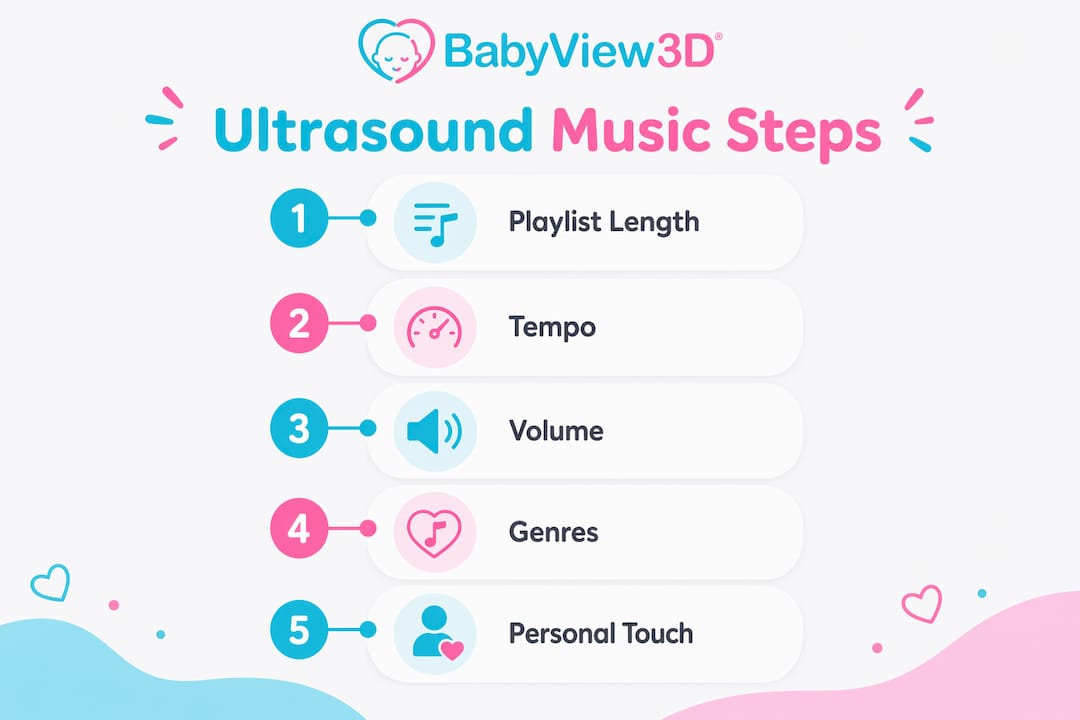
The best music for an ultrasound session is instrumental, slow-paced, and free of lyrics. Genres that work well include neoclassical, ambient, soft jazz, and nature-inspired soundscapes. These styles share one quality: they create a steady, predictable sound environment that does not compete for attention.
Lyrics pull your brain toward language processing. During an ultrasound, you want full emotional presence, not a mental sing-along. Lyrics distract from the baby's heartbeat recording during the session, which means they also weaken the keepsake you take home. Instrumental tracks keep the recording clean and emotionally focused.

Soft background music at low volume also masks the mechanical hum of ultrasound equipment. That ambient noise reduction is what gives elective ultrasound studios their spa-like feel. Without it, the room sounds clinical. With it, the room feels like a sanctuary.
Good music styles for an ultrasound session include:
- Neoclassical: Composers like Max Richter or Ólafur Arnalds offer slow, melodic pieces with no lyrics
- Ambient: Brian Eno's ambient catalog is a standard reference for calm, non-intrusive sound
- Soft acoustic: Fingerpicked guitar without vocals works well for parents who prefer something warmer
- Nature soundscapes: Rain, ocean waves, or forest sounds create a neutral backdrop without musical structure
Pro Tip: Build your playlist around tracks that feel meaningful to you personally. A song connected to a memory or a place you love adds emotional weight that generic relaxation playlists cannot match.
How to play music safely during your session
Safe music playback during an ultrasound follows three rules: volume control, speaker placement, and timing. Each one matters for a different reason.
-
Keep volume below conversational levels. Speakers should never be placed directly on the belly, and volume must stay under 70 decibels to avoid overstimulating your baby. Your sonographer also needs to speak clearly throughout the session. Music that competes with their voice creates confusion and slows the process.
-
Use room speakers, not personal devices held close to your body. A Bluetooth speaker placed on a side table or a built-in studio sound system distributes sound evenly without concentrating it near the transducer area.
-
Prepare a playlist before you arrive. A 15–20 minute playlist covers the typical session length without requiring you to manage your phone during the scan. Streaming platforms like Spotify or Apple Music let you download playlists for offline playback, which avoids notification interruptions.
-
Test your playlist at home first. Play it in a quiet room and listen for abrupt tempo changes, sudden volume spikes, or jarring transitions. These are the moments that break the calm you are trying to build.
-
Have a backup option ready. Some studios provide their own curated music. Ask in advance whether you can bring your own or whether the studio's selection is available to you.
Pro Tip: Ask your sonographer to confirm the room volume is comfortable before the scan begins. They hear this music session after session and will tell you immediately if it is too loud.
Music in medical scanning environments works best with restraint. The goal is a calm, private atmosphere, not a performance. When in doubt, turn it down one notch further than you think you need to.
How does music enhance bonding during an ultrasound?
Music reduces anxiety and creates emotional openness. A clinical trial with 157 adults found that calming music reduced anxiety by up to 65% during medical procedures, with effects comparable to sedative medication. Lower anxiety means you are fully present for the moment you first see your baby's face in detail.
Your baby responds to music too. Fast or upbeat music causes fetal movement, while slow, repetitive sounds help settle the baby during scans. A calm baby holds still longer, which gives the sonographer more time to capture clear images. Better images mean better keepsakes.
The emotional benefits of prenatal imaging go beyond the scan itself. Parents who feel emotionally connected during the session report stronger feelings of attachment in the weeks that follow. Music is one of the simplest ways to shift the session from a medical appointment into a personal milestone.
Key emotional benefits of pairing music with your ultrasound session:
- Reduced anxiety: Lower stress levels let you absorb the experience rather than endure it
- Stronger presence: Calm music quiets mental chatter and keeps your attention on the screen
- Personalized memory: A song you chose becomes permanently linked to the moment you saw your baby
- Partner connection: Shared music creates a shared emotional experience for both parents in the room
- Keepsake quality: Calm sessions produce clearer recordings, which makes the video you take home more meaningful
A 15-minute session of calming music during invasive ultrasound procedures measurably lowers patient anxiety and provides pain relief. For elective prenatal scans, the effect is the same without the clinical pressure. The music simply makes the room feel safer.
What mistakes should you avoid when selecting songs?
The most common mistake is choosing music you love emotionally rather than music that serves the session. A song that makes you cry at a wedding is not the right choice for an ultrasound. Emotionally intense music pulls you out of calm observation and into a different kind of feeling entirely.
Avoid these specific choices:
- High-tempo tracks: Upbeat pop, dance music, or anything above roughly 80 beats per minute will encourage fetal movement and make the sonographer's job harder
- Heavy bass: Deep bass frequencies travel through surfaces and can be felt, not just heard, which adds unnecessary stimulation
- Lyrical tracks: Vocals compete with the heartbeat recording and split your attention between the song and the screen
- Abrupt transitions: Playlists that jump between genres or moods break the calm environment you built at the start
- Emotionally charged anthems: Songs tied to grief, loss, or intense personal memories can shift your emotional state in ways that are hard to recover from mid-session
Instrumental-first programming with gentle pacing avoids turning the room into a performance space. Clinical audio consultants consistently recommend restraint and subtlety for medical environments. That principle applies directly to your ultrasound playlist.
One more thing to avoid: silence. A completely quiet room amplifies every equipment sound and every moment of uncertainty. Soft music fills that space with something intentional.
Step-by-step guide to building your ultrasound playlist
Building a playlist for your session takes about 20 minutes and pays off for the entire appointment.
- Start with three anchor tracks. Choose three instrumental pieces that feel calm and personal. These set the emotional tone for everything that follows.
- Fill to 15–20 minutes total. A typical elective ultrasound session runs 15–20 minutes. Match your playlist length to the session so you are not scrambling to restart or skip tracks.
- Arrange by energy level. Begin with your calmest track, build slightly in the middle, and return to calm at the end. This mirrors the natural arc of the session.
- Check licensing if you plan to record. If your studio records video with audio, tracks from Spotify or Apple Music may trigger copyright flags on social platforms. Royalty-free libraries like Epidemic Sound or Artlist offer licensed tracks that travel cleanly into video keepsakes.
- Test transitions. Play the full playlist once at home and listen for jarring cuts between songs. Crossfade settings on most streaming apps smooth these out automatically.
| Playlist element | Recommendation |
|---|---|
| Total length | 15–20 minutes |
| Tempo | Slow to moderate, under 80 BPM |
| Lyrics | None |
| Volume | Below conversational level |
| Genre | Neoclassical, ambient, soft acoustic |
| Transitions | Crossfaded or gapless |
Pro Tip: Save your playlist under a name that marks the date and your baby's nickname. Years from now, pressing play on that playlist will bring the whole moment back.
Understanding how to prepare for your ultrasound appointment covers more than music. But music is the one preparation step that changes how the room feels the moment you walk in.
Key Takeaways
The most effective music for an ultrasound session is slow, instrumental, and played at low volume, because those three qualities protect fetal calm, support clear recordings, and keep parents emotionally present.
| Point | Details |
|---|---|
| Choose instrumental tracks | Lyrics compete with heartbeat recordings and split your attention during the scan. |
| Keep volume below 70 decibels | Higher volumes overstimulate the baby and block sonographer communication. |
| Avoid fast tempos | Upbeat music causes fetal movement, which makes clear imaging harder to achieve. |
| Build a 15–20 minute playlist | Match playlist length to session duration so you never need to manage your phone mid-scan. |
| Music reduces parent anxiety | Clinical research shows calming music cuts anxiety significantly during medical procedures. |
Why I think most parents get this backwards
Most expectant parents pick music for their ultrasound the same way they pick a song for a road trip: they choose what they love. That instinct is understandable. But it misses the point of what music is doing in that room.
The session is not a concert. It is a conversation between you, your baby, and a screen. Music is there to lower the noise in your head so you can actually hear that conversation. The parents I have seen get the most out of their sessions are the ones who chose music that felt almost invisible. They barely noticed it was playing. And that is exactly why it worked.
My honest recommendation: pick one song that means something to you and build the rest of the playlist around its tempo and mood. Do not overthink the other tracks. The one meaningful song anchors the memory. The rest just hold the space open.
The emotional connection that ultrasound builds is already powerful on its own. Music does not create that connection. It removes the interference that gets in the way of it.
— LENIER
Bbview3d brings your session to life with sound and image
Bbview3d has spent over 15 years helping expectant parents turn prenatal scans into lasting memories. Every session combines certified sonographers, HD Live imaging technology, and a studio environment designed to feel personal rather than clinical.
Music is part of that design. Bbview3d sessions are built around the full sensory experience, including the sound in the room, the quality of the image on screen, and the keepsake you leave with. If you want a session where every detail is considered, the Bbview3d services page shows the full range of packages available, including options that pair your ultrasound video with personalized audio. Your first appointment includes a limited-time discount for new families.
FAQ
What is the best type of music for an ultrasound session?
Instrumental, slow-paced music in neoclassical or ambient genres works best. These styles calm both parent and baby without competing with heartbeat recordings.
How loud should music be during an ultrasound?
Volume should stay below 70 decibels, roughly quieter than a normal conversation. Higher volumes overstimulate the baby and make it harder for the sonographer to communicate clearly.
Can I bring my own playlist to an ultrasound appointment?
Most elective ultrasound studios allow personal playlists. Confirm with your studio in advance and prepare a 15–20 minute playlist downloaded for offline playback to avoid interruptions.
Does music affect the baby during an ultrasound?
Yes. Fast or upbeat music causes fetal movement, while slow, repetitive sounds help settle the baby. A calmer baby holds still longer, which improves image quality during the scan.
Why should I avoid songs with lyrics during my session?
Lyrics distract from the baby's heartbeat recording and split your attention between the music and the screen. Instrumental tracks keep the audio recording clean and the emotional focus on your baby.