
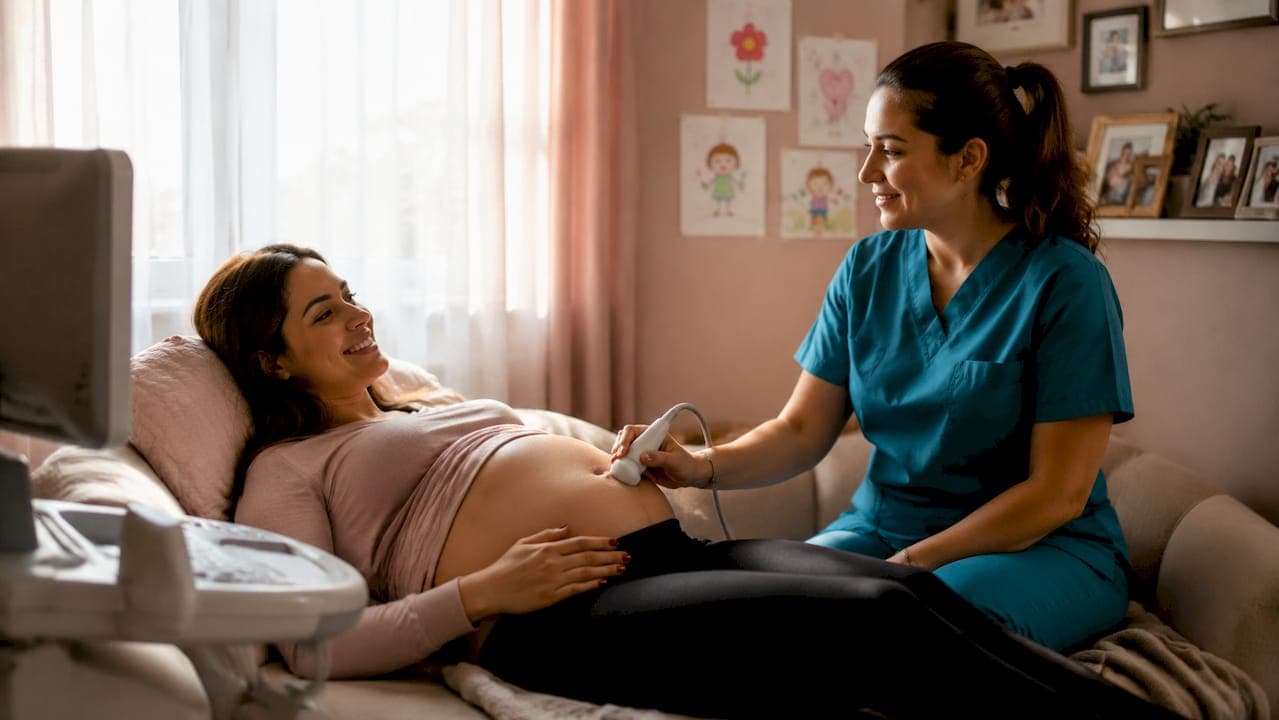
Ultrasound is defined as the primary prenatal technology that transforms an abstract fetal presence into a visible, emotionally engaging experience for expectant parents. How ultrasound enhances emotional connection goes beyond seeing a heartbeat on a screen. Research confirms that the combination of reassuring imagery, empathetic communication, and family involvement produces measurable improvements in maternal-fetal attachment and reductions in prenatal anxiety. Technologies like 3D/4D imaging and telemedicine home ultrasound have expanded these benefits, giving families more ways to bond with their baby before birth.
How ultrasound enhances emotional connection through psychology
Ultrasound works on two distinct psychological levels: it shifts attention and it provides reassurance. When you see your baby moving on screen, your focus moves away from worry and toward the living, responsive presence in front of you. This attention shift mechanism is clinically documented as a core driver of reduced anxiety and improved attachment scores in pregnant women.
The field of sonopsychology, which studies ultrasound as a human encounter shaped by communication and social context, identifies three core bonding drivers:
- Visual confirmation: Seeing fetal features, movement, and facial expressions makes the baby feel real and present.
- Reassurance: Confirmation of fetal health directly reduces stress hormones and increases emotional availability.
- Social scaffolding: The presence of a partner, family member, or empathetic sonographer amplifies the emotional impact of the scan.
Research in sonopsychology shows that the quality of interaction during a scan matters as much as the image itself. A sonographer who narrates what they see, points out the baby's features, and invites the partner to engage turns a medical procedure into a shared emotional event.
Pro Tip: Ask your sonographer to describe what they are seeing in real time, including the baby's position, movements, and facial features. This narration deepens your emotional engagement and helps partners feel equally connected.
Empathetic communication during ultrasound also reduces what researchers call "scanxiety," the specific anxiety that builds before and during prenatal scans. When families feel informed and included, the scan becomes a source of comfort rather than dread. This is why family involvement during ultrasound appointments is consistently linked to better emotional outcomes for both parents.
How do different ultrasound technologies compare in emotional impact?
Not all ultrasound experiences deliver the same emotional benefits. The modality, setting, and purpose of the scan each shape how deeply a family connects during the appointment.
| Modality | Image detail | Emotional benefit | Best use case |
|---|---|---|---|
| Standard 2D | Basic outline, cross-sections | Medical reassurance, heartbeat confirmation | Routine clinical checks |
| 3D ultrasound | Lifelike still images of face and body | Stronger perceived closeness, facial recognition | Bonding sessions, keepsakes |
| 4D ultrasound | Real-time movement, facial expressions | Highest emotional engagement, personality glimpses | Elective bonding appointments |
| Telemedicine home ultrasound | Variable, depends on device | Anxiety reduction in high-risk or vulnerable groups | Frequent monitoring, prior loss patients |
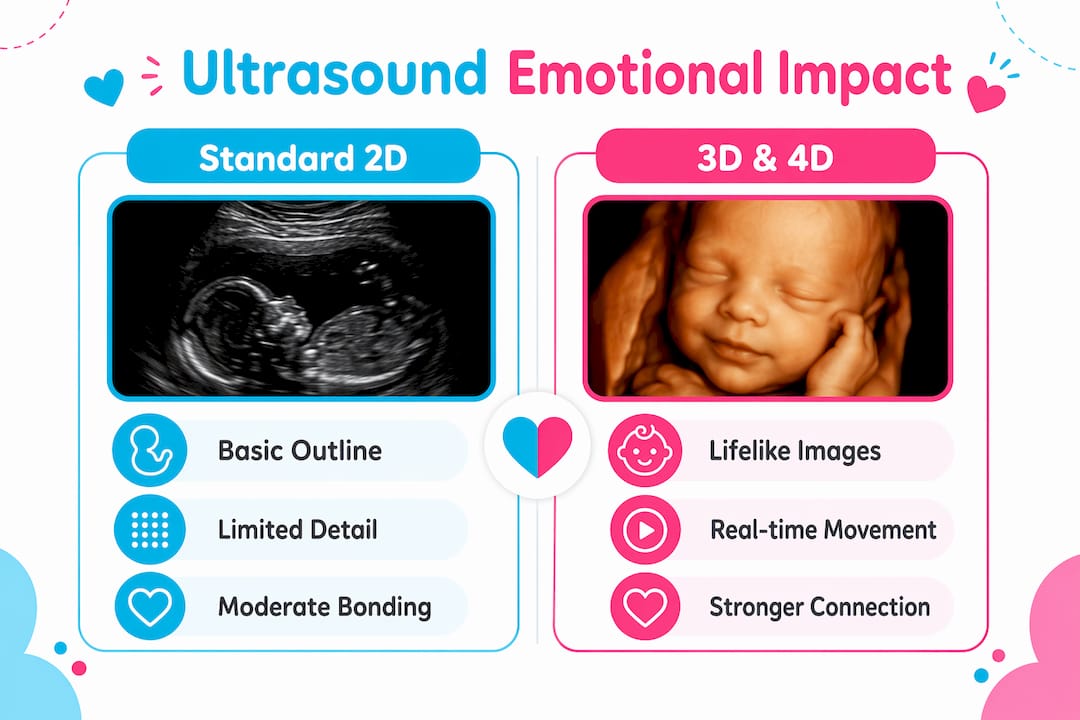
3D and 4D ultrasounds produce detailed, lifelike images that contribute to perceived closeness and stronger bonding than standard 2D scans. Parents report higher emotional involvement and a clearer sense of their baby's individual personality when they can see facial features and real-time movement. This is not a minor difference. Seeing your baby yawn, stretch, or appear to smile activates the same parental recognition responses that occur after birth.
Telemedicine home ultrasound represents a newer category with specific advantages for vulnerable families. Frequent, reassuring access to ultrasound in high-risk groups creates measurable anxiety reductions that support stronger antenatal attachment beyond what occasional clinical scanning achieves. For families who experience significant anxiety between appointments, home-based monitoring closes the emotional gap that standard prenatal care schedules leave open.
Clinical ultrasounds and elective bonding ultrasounds serve different purposes, and understanding that distinction helps you get the most from each. Clinical scans prioritize diagnostic accuracy. Elective bonding sessions, like those offered at specialized centers, prioritize the emotional experience. Both have value. The emotional benefits of ultrasound are maximized when you approach each type with the right expectations and preparation.
What role does communication during ultrasounds play in shaping emotional connections?
The words a sonographer uses during a scan have a documented, lasting effect on how parents perceive their child. Research by Dr. Kaylin Hill found that negative descriptors used during scans, such as calling a baby "uncooperative" when they move away from the probe, are linked to parents later rating their toddlers as more emotionally reactive. Positive framing, by contrast, is associated with better perceived emotional stability in the child. This means the language used in a single scan appointment can shape parental expectations for years.

Parents view sonographers as trusted authorities during these emotionally charged moments. That authority carries real weight. A sonographer who says "your baby is being a little shy today" instead of "this baby is not cooperating" delivers the same clinical information with a completely different emotional outcome. The first framing builds warmth. The second plants a seed of concern.
Here is what effective communication during an ultrasound looks like in practice:
- Narrate actively: Describe what you see as you see it, including movements, position, and visible features.
- Use positive or neutral framing: Replace clinical or negative descriptors with observational language that invites curiosity.
- Invite participation: Ask parents what they notice, point out the baby's hands or face, and give them a moment to absorb what they are seeing.
- Acknowledge emotions: If a parent tears up or goes quiet, pause and recognize the moment rather than continuing mechanically.
Pro Tip: Before your scan, tell your sonographer that you want to maximize the bonding experience. Most certified sonographers will adjust their communication style when they know emotional connection is a priority for your family.
Poor emotional handling during a scan can increase anxiety even when the medical findings are completely normal. This is why prenatal ultrasound innovation increasingly focuses on the human side of the experience, not just the imaging technology.
How ultrasounds benefit vulnerable families in emotional bonding
The emotional benefits of ultrasound are especially significant for families navigating high-risk pregnancies, prior pregnancy loss, or fertility treatments. A 2026 Tel Aviv University study on home ultrasound in patients with prior late pregnancy loss found that STAI-S anxiety scores dropped significantly in the home ultrasound group compared to controls (43.6 vs 51.5, p=0.004), while maternal-fetal attachment scores improved measurably (MAAS-2: 79.5 vs 75.0, p=0.022). These are not marginal differences. They represent a clinically meaningful shift in psychological wellbeing during one of the most anxiety-laden periods a family can experience.
For IVF mothers, the emotional impact of ultrasound is similarly well-documented. A systematic review found that fetal ultrasound combined with psychoeducation and emotional-cognitive care strategies further improves maternal-fetal attachment relationships during the first trimester. IVF pregnancies often carry heightened anxiety because of the medical complexity involved. Structured ultrasound experiences that include emotional support and clear communication address that anxiety directly.
| Population | Key challenge | Ultrasound benefit | Supporting evidence |
|---|---|---|---|
| Prior pregnancy loss | Persistent anxiety, fear of recurrence | Frequent monitoring reduces anxiety, improves attachment | Tel Aviv University, 2026 |
| IVF mothers | Emotional distance, medical detachment | Combined ultrasound and psychoeducation improves bonding | Springer systematic review, 2026 |
| High-risk pregnancies | Uncertainty, limited reassurance between visits | Regular access to imaging reduces uncertainty | Sonopsychology research |
| Partners and fathers | Feeling excluded from the pregnancy | Family-inclusive scans increase paternal attachment | Sonopsychology framework |
Non-clinical prenatal strategies including fetal talk, mindfulness, and music therapy also improve maternal-fetal bonding and reduce prenatal anxiety, according to multiple randomized controlled trials. Ultrasound works best when it is part of a broader approach to prenatal emotional support rather than a standalone intervention. Combining regular scans with intentional bonding practices at home produces the strongest attachment outcomes.
Key takeaways
Ultrasound enhances emotional connection through a dual mechanism of visual reassurance and empathetic communication, with 3D/4D imaging and structured bonding sessions producing the strongest attachment outcomes.
| Point | Details |
|---|---|
| Attention shift drives bonding | Seeing fetal movement redirects focus from anxiety to emotional engagement with the baby. |
| Language shapes long-term perception | Positive descriptors during scans are linked to better parental views of the child's emotional stability. |
| 3D/4D imaging deepens connection | Lifelike images of facial features and movement produce stronger bonding than standard 2D scans. |
| Vulnerable families benefit most | Home ultrasound and structured sessions measurably reduce anxiety and improve attachment in high-risk groups. |
| Family presence amplifies impact | Including partners and family members during scans consistently improves emotional outcomes for all involved. |
What I've learned about making ultrasound moments truly count
After working closely with expectant families for years, the pattern I see most often is this: parents who prepare emotionally for their scans get dramatically more out of them than those who treat it as a routine appointment. Scanxiety is real, and it is underestimated. Families who walk in tense and distracted often miss the emotional richness of what they are seeing because they are waiting for something to go wrong.
The research on why families choose ultrasound consistently points to one underappreciated factor: the presence of a partner or family member transforms the experience from a medical event into a shared memory. I have seen fathers who felt disconnected from the pregnancy become visibly moved the moment they see their baby's face in 3D. That shift does not happen by accident. It happens because someone created the conditions for it.
My honest recommendation is to treat your bonding ultrasound as an event, not an errand. Bring your partner. Ask questions. Let yourself feel it. The science supports every bit of that approach, and the memories you create in that room will outlast any image on a screen.
— LENIER
See your baby in stunning detail with Bbview3d
Bbview3d specializes in creating exactly the kind of emotionally rich ultrasound experience this article describes. With over 15 years of experience and certified sonographers trained in family-centered communication, Bbview3d offers 3D, 4D, and HD Live 8K imaging sessions designed to maximize your emotional connection with your baby. Partners and family members are always welcome. Sessions are structured to give you time to absorb, react, and truly bond with what you are seeing. Explore the full range of prenatal ultrasound packages available at Bbview3d centers across the United States, and take advantage of first-appointment discounts to start your bonding experience today.
FAQ
How does ultrasound improve emotional bonding during pregnancy?
Ultrasound improves bonding by making the fetus visually real and present, which shifts parental attention from anxiety to emotional engagement. Research confirms that seeing fetal movement and features directly increases maternal-fetal attachment scores.
What is the emotional impact of 3D and 4D ultrasound compared to 2D?
3D and 4D ultrasounds produce lifelike images of facial features and real-time movement, leading to higher parental engagement and a stronger sense of closeness than standard 2D scans provide.
Can ultrasound reduce pregnancy anxiety?
Yes. Clinical evidence from a 2026 Tel Aviv University study shows that regular ultrasound access significantly reduces anxiety scores in pregnant women, particularly those with prior pregnancy loss or high-risk conditions.
How does sonographer communication affect the bonding experience?
The language a sonographer uses during a scan shapes how parents perceive their baby's personality. Positive framing is linked to better emotional outcomes, while negative descriptors can increase parental anxiety and affect long-term perceptions of the child.
How can partners maximize their emotional connection during ultrasound?
Partners should attend every scan possible, ask the sonographer to narrate what they see, and take time to observe the baby's movements together. Family-inclusive scans consistently produce stronger attachment outcomes for both parents.