

Knowing how to use advanced ultrasound features can turn a routine prenatal appointment into one of the most memorable experiences of your pregnancy. Most expectant parents walk into their first 3D or 4D scan excited but unsure of what to ask, what to watch for, or how to get the clearest images possible. The technology has advanced significantly, with AI-powered portable devices now enabling levels of detail that felt impossible a decade ago. This guide gives you practical, specific steps to prepare, participate, and get the most out of every scan.
Table of Contents
- Key Takeaways
- How to use advanced ultrasound features: what you need first
- Getting the most from your scan, step by step
- Common mistakes and how to avoid them
- Understanding your results and next steps
- My take on why families should engage fully with this technology
- See what Bbview3d can show you
- FAQ
Key Takeaways
| Point | Details |
|---|---|
| Prepare your body beforehand | Drink water in the hours before your scan to improve amniotic fluid clarity and image quality. |
| Know the available features | Features like 4D live imaging, color Doppler, and HD Live each serve different purposes during prenatal scans. |
| Communicate with your technician | Asking for specific views or features during the scan helps you engage with and understand what you are seeing. |
| Gel quality affects everything | Insufficient coupling gel creates air pockets that degrade image quality, especially in 3D and color modes. |
| Results go beyond clinical data | Advanced scans contribute to early detection, bonding, and a deeper emotional connection to your baby's development. |
How to use advanced ultrasound features: what you need first
Before you can get anything meaningful out of an advanced prenatal ultrasound, you need a basic understanding of what these tools actually do. Standard 2D scans produce flat, grayscale cross-sections of your baby. Advanced features layer on top of that foundation.
Here is what is commonly available at elective and clinical prenatal facilities today:
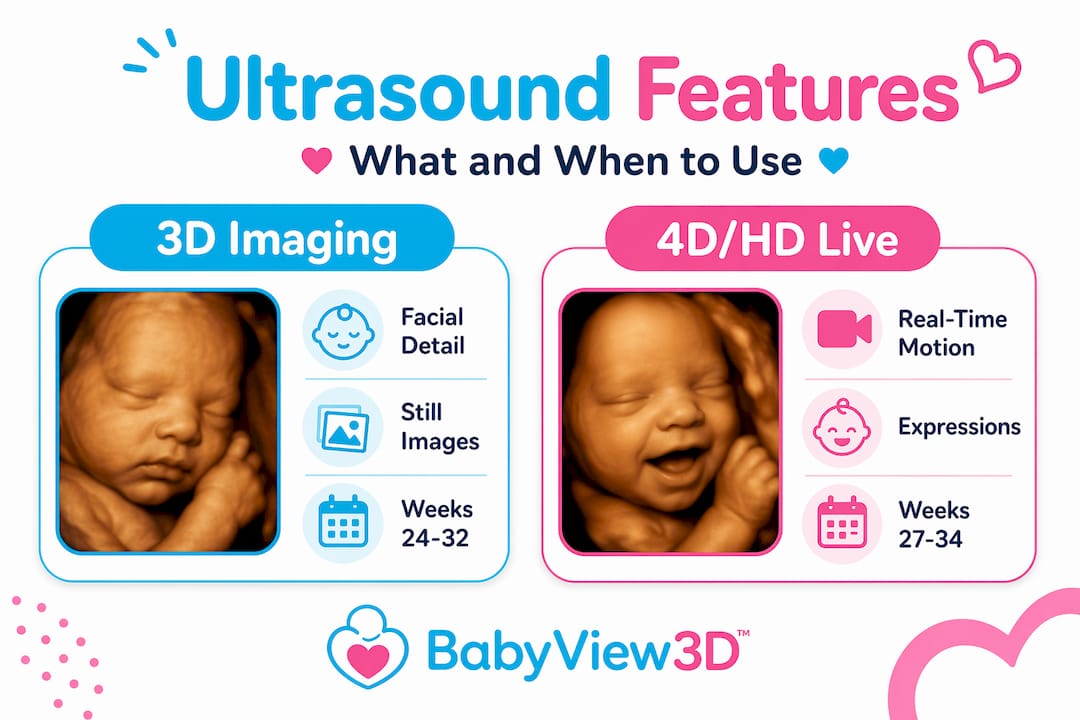
- 3D imaging captures still, three-dimensional surface images of your baby's face, hands, and body
- 4D imaging adds real-time movement to the 3D picture, so you can watch your baby yawn, kick, or suck their thumb
- HD Live technology adds a light source simulation that creates photorealistic depth and shadow in images
- Color Doppler maps blood flow through the placenta and umbilical cord using color-coded overlays
- AI-assisted imaging (found in systems like Samsung Medison's HERA Z20) automates fetal measurements and verifies image quality in real time
Each of these features requires specific conditions to work well, and your preparation matters. The best results from 3D and 4D imaging generally happen between weeks 26 and 32, when the baby has enough fat under the skin for facial detail but still has room to move in the womb.
Pro Tip: Drink 32 to 64 ounces of water daily in the three days leading up to your scan. Higher amniotic fluid levels give the sound waves more space to bounce clearly around your baby, producing sharper images.
| Feature | What it shows | Best timing |
|---|---|---|
| 3D imaging | Still surface images, facial features | Weeks 26 to 32 |
| 4D imaging | Live movement, expressions | Weeks 28 to 32 |
| HD Live | Photorealistic rendering with depth | Weeks 26 to 34 |
| Color Doppler | Blood flow through cord and placenta | Any trimester |
| AI-assisted tools | Automated measurements, quality checks | Any trimester |
Getting the most from your scan, step by step
Walking in prepared is one thing. Knowing how to actively participate during the scan is what separates a good experience from a great one. Here is exactly how to approach your appointment.
-
Arrive hydrated and fed. A small snack 30 minutes before the scan can encourage your baby to move, which helps the technician capture better angles, especially for 4D imaging.
-
Wear comfortable, two-piece clothing. You want easy access to your abdomen without having to fully undress. This keeps the session relaxed and efficient.
-
Understand the gel. Therapeutic ultrasound sessions use conductive gel and slow circular transducer motions to eliminate air between the probe and skin. The same principle applies to prenatal scans. If you notice the image looking patchy or broken up, it is often a gel coverage issue, not a problem with your baby.
-
Watch the screen actively. Ask the technician to orient you to the image before they start moving. Understanding where the head, spine, and limbs are on screen helps you follow along and ask better questions in real time.
-
Request the features you want. Technicians work through a protocol, but most elective scan providers will accommodate specific requests. If you want to see the heartbeat with color Doppler, ask for it directly. If you want a 4D live window opened for a few minutes, say so.
-
Keep your movements gentle. Transducer stabilization is a key professional technique that prevents motion blur. The same applies to your movements. Tense muscles or sudden position shifts can interrupt the acoustic window and blur the image.
-
Ask for a short rest if needed. If your baby is in an awkward position, taking a short walk or lying on your left side for a few minutes often causes them to shift, opening up better imaging angles.
Pro Tip: Before your appointment, write down two or three specific things you want to see. This gives the technician a clear goal and helps you feel confident asking for what matters most to you.
| Approach | Effect on imaging | Recommended |
|---|---|---|
| Drinking water beforehand | Increases amniotic fluid for clarity | Yes |
| Eating a small snack before scan | Encourages fetal movement for 4D | Yes |
| Staying still during the scan | Reduces motion blur and artifact | Yes |
| Asking for specific views | Improves personal engagement and coverage | Yes |
| Moving suddenly or tensing up | Disrupts acoustic window, blurs image | No |
Common mistakes and how to avoid them
Even with the best preparation, things can go sideways at an advanced ultrasound session. Knowing what typically goes wrong helps you handle it calmly.
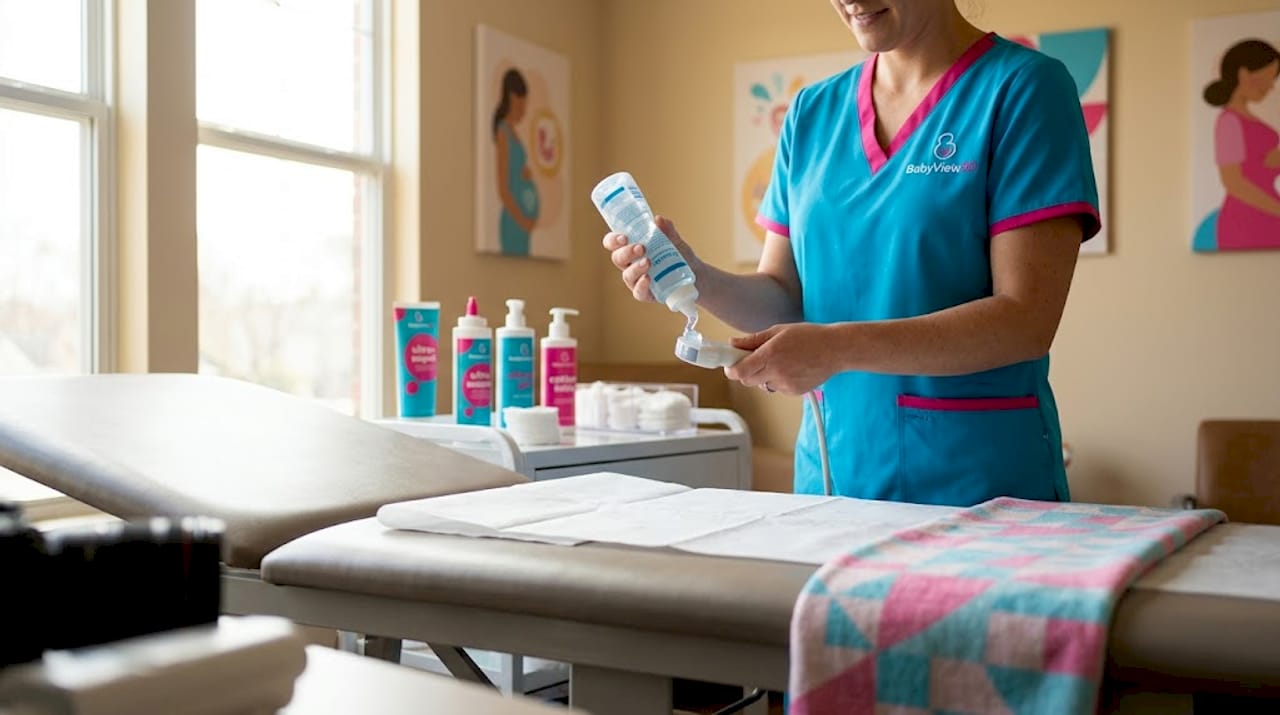
The most common issue is poor image quality, and most of it comes down to gel coverage. Insufficient coupling gel creates air pockets that fully block the ultrasound signal, causing significant image degradation especially in 3D and color Doppler modes. If your images look fragmented, it is completely reasonable to ask the technician to reapply gel before moving on.
Another common misconception is expecting 3D and 4D images to look like a photograph. They are sound-based renderings, not optical images. Factors like the baby's position, the amount of fluid around the face, and even the specific ultrasound system in use all influence how clearly facial features appear. This is why the role of HD Live technology is so significant: it uses a simulated light source to add dimension that pure 3D cannot.
Here is a clear list of dos and don'ts to take into your next appointment:
- Do drink plenty of water in the days before your scan
- Do ask questions throughout the session, not just at the end
- Do confirm the gestational week is appropriate for the features you want
- Do tell the technician if you feel uncomfortable or need a break
- Don't assume a blurry image means something is wrong with your baby
- Don't skip the appointment if your baby seems inactive that day; the technician has techniques to help
- Don't expect the same result every session; positioning and fluid levels change weekly
A blurry or incomplete image during a 3D or 4D scan is almost always a technical or positioning issue, not a medical concern. Always ask your technician to explain what you are seeing before drawing any conclusions.
Understanding your results and next steps
Once the scan is complete, the real value comes from understanding what you saw and how to use that information going forward. You do not need a medical degree to read the basics.
Advanced ultrasound features contribute to prenatal care in ways that go well beyond confirming gender or getting cute photos:
- Early anatomical assessment: 3D imaging gives providers a clearer view of facial structures, limb formation, and spine alignment, which can support earlier detection of certain developmental conditions
- Blood flow monitoring: Color Doppler tracks circulation through the umbilical cord and placenta, flagging any restrictions in nutrient or oxygen delivery before they become serious
- Growth tracking: AI-assisted measurement tools in newer systems can plot fetal growth curves more accurately and in less time, giving your care team better data between appointments
- Emotional bonding: Families who see detailed images of their baby's face, movements, and expressions often report a stronger sense of connection before birth. This is not trivial. Prenatal bonding has real effects on parental readiness and early caregiving.
After your scan, bring your images and any printed reports to your next OB or midwife appointment. Ask specifically about any measurements flagged as outside the standard range, and ask what follow-up, if any, is recommended. Most prenatal ultrasound packages include a summary of key measurements, which makes this conversation much easier to have.
My take on why families should engage fully with this technology
I have spent years watching families walk out of advanced ultrasound sessions completely transformed. And I have also watched families walk out feeling like they barely participated in what just happened.
In my experience, the parents who get the most out of these sessions are the ones who treated the appointment as something they were part of, not something being done to them. They asked questions. They requested specific views. They brought their partner or a family member so the moment could be shared in real time. That shift in mindset makes an enormous difference.
What surprises most parents is how early personality starts to show. Watching a baby cover their face, yawn, or respond to sound during a 4D session is not just a cute moment. It reframes the entire pregnancy. You stop thinking about a due date and start thinking about a person.
I also think people underestimate the practical value. Ultrasound skills can be learned quickly in short focused sessions, and the same is true for understanding what you are seeing on screen. You do not need training to engage meaningfully with your scan. You just need to ask the right questions and pay attention.
The families who leave with the richest experience are the ones who came prepared, stayed curious, and did not treat the session as just another appointment. It is one of the few chances you get to meet your baby before they arrive. Use every second of it.
— LENIER
See what Bbview3d can show you
If you want to experience these advanced ultrasound features with a team that has guided families for over 15 years, Bbview3d offers a level of quality and care that goes far beyond what a standard clinical scan provides.
Bbview3d uses HD Live technology, 3D and 4D imaging, and certified sonographers to deliver the clearest, most detailed prenatal images available today. Sessions are designed around your family's experience, not just clinical protocol. Whether you are scheduling your first peek or a detailed third-trimester session, their ultrasound service packages are built to match what you actually want to see. First-time appointments come with a special offer, and every session is backed by a genuine commitment to your satisfaction.
FAQ
What is the best week for a 4D ultrasound?
Most technicians recommend scheduling a 4D ultrasound between weeks 26 and 32. During this window, the baby has enough facial fat for detailed features but still has room to move freely in the womb.
How do I prepare for an advanced ultrasound session?
Drink 32 to 64 ounces of water daily in the three days before your appointment and eat a light snack about 30 minutes before the scan. These two steps significantly improve amniotic fluid clarity and fetal movement.
Why are my 3D ultrasound images blurry?
Blurry 3D images are almost always caused by insufficient coupling gel, the baby's position relative to the transducer, or low amniotic fluid. Ask the technician to reapply gel or wait a few minutes for your baby to shift before trying again.
Can I request specific views during my scan?
Yes. At elective ultrasound studios especially, you can ask to see specific features like the face, hands, or a color Doppler view of the umbilical cord. Communicating your priorities before the session begins helps the technician plan accordingly.
Are advanced ultrasound features safe during pregnancy?
Diagnostic and elective prenatal ultrasound has a long safety record when performed by certified technicians using standard protocols. AI-assisted imaging tools now also help reduce scan time while improving accuracy, which benefits both parent and baby.