

Fetal development milestones are defined as the key biological and functional events that mark your baby's growth from a single fertilized cell to a fully formed newborn. Clinically, these events are organized across three trimesters and two major phases: the embryonic period (weeks 1–8) and the fetal period (weeks 9–40). Tracking the top fetal development milestones helps you understand what your baby is experiencing at each stage and gives your prenatal care team clear checkpoints to assess healthy progress. Every milestone builds on the last, and knowing what to expect week by week turns a complex biological process into something you can follow with confidence.
1. fertilization and implantation (weeks 1–4)
The fetal development timeline begins the moment a sperm fertilizes an egg, forming a single-celled zygote with a complete genetic blueprint. Within days, that zygote divides rapidly and travels down the fallopian tube. By day 6–10, it implants into the uterine wall. This implantation triggers the hormonal cascade that a home pregnancy test detects. These first four weeks are invisible to the naked eye, but they set every structural foundation that follows.
2. the first heartbeat (weeks 5–6)
The embryo's first detectable heartbeat appears as early as 6 weeks gestation, starting at approximately 100–110 beats per minute. That rate can nearly double the mother's resting heart rate within days. A transvaginal ultrasound at this stage can often detect this cardiac flicker before an abdominal scan can. Hearing or seeing that heartbeat for the first time is one of the most emotionally significant moments in early pregnancy.
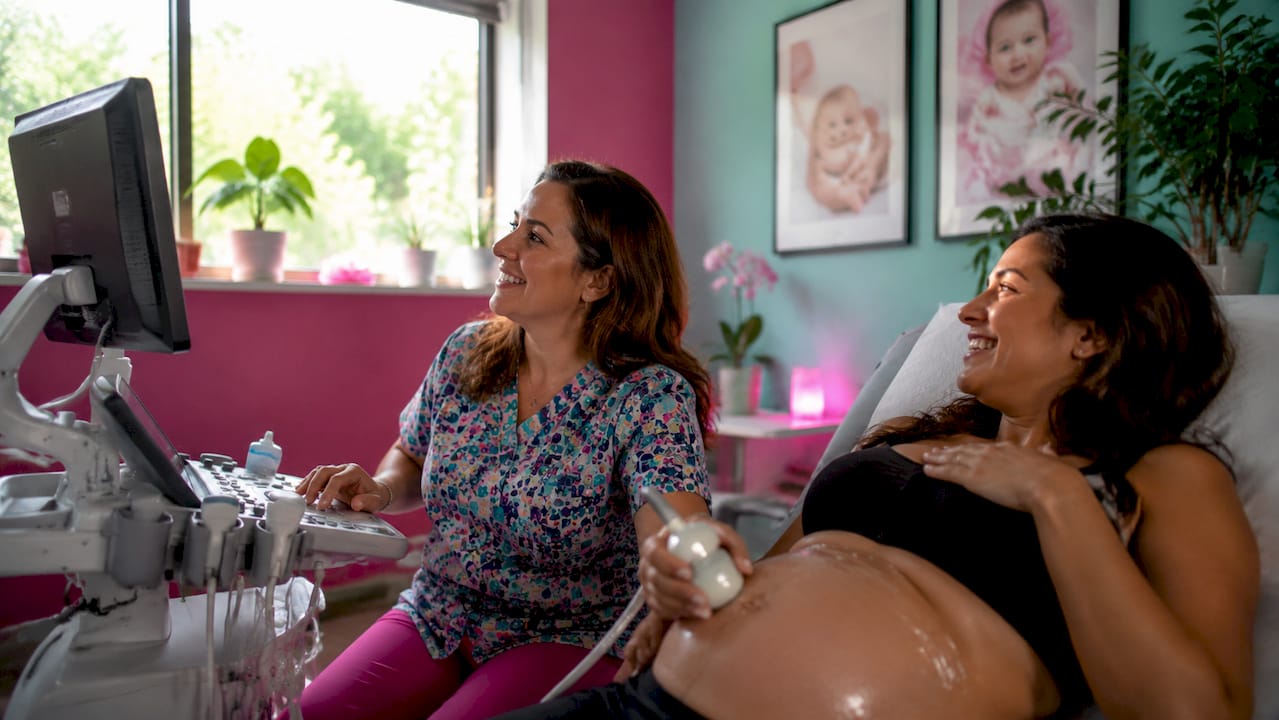
Pro Tip: If your 6-week ultrasound does not detect a heartbeat, ask your provider about scheduling a follow-up at 7–8 weeks before drawing any conclusions. Timing and equipment sensitivity both affect early detection.
3. neural tube closure and brain growth (week 7)
Week 7 marks one of the most critical events in the entire fetal development timeline: the neural tube closes, forming the foundation of the brain and spinal cord. At this same stage, up to 250,000 neurons form per minute inside the developing brain. That rate of neuron production is faster than at any other point in human life. Folic acid taken before and during early pregnancy directly supports this process, which is why prenatal vitamins matter most in these earliest weeks.
4. facial features and limb buds (weeks 7–8)
By week 8, the embryo has recognizable facial structures: eye sockets, a forming nose, and the early outline of a mouth. Limb buds that appeared in week 6 have now elongated into paddle-shaped hands and feet with visible digital rays where fingers and toes will separate. The embryo measures roughly half an inch at this point. What looks like a tiny curved shape on an ultrasound is already organizing into a distinctly human form.
5. the embryo becomes a fetus (weeks 9–12)
At week 9, the term "embryo" officially gives way to "fetus." This is one of the most important milestones in pregnancy because it signals that all major organ systems are present, even if not yet fully functional. The heart has four chambers. The kidneys are producing urine. The liver is making blood cells. By week 12, the fetus can make small movements, and a Doppler device can usually detect the heartbeat at a prenatal appointment. You can learn more about what ultrasound shows at this stage to understand what your provider is looking for.
6. rapid growth and bone formation (weeks 13–16)
The second trimester opens with a growth surge. The fetus doubles in size between weeks 13 and 16. Soft cartilage begins hardening into bone through a process called ossification. Genitals become distinguishable on ultrasound by around week 14–16, making this the window when many parents learn their baby's sex. Facial muscles develop enough that the fetus can make expressions, including squinting and grimacing, though these are reflexive rather than intentional.
7. fetal movement begins internally (weeks 7–16)
Fetal movement starts far earlier than most parents realize. Movement begins internally as early as 7–8 weeks gestation, detectable only by ultrasound. Most parents do not feel anything yet because the fetus is too small for movements to register through the uterine wall. This is a key distinction in the fetal movement milestones list: the baby is active long before you feel it.
8. quickening: when you feel the first kicks (weeks 16–24)
Quickening is the clinical term for the first maternal perception of fetal movement. Most expectant parents perceive movement between 16 and 24 weeks, with first-time parents typically feeling it closer to 20–22 weeks. Parents who have been pregnant before often notice it earlier because they recognize the sensation. The timing varies significantly based on individual factors, and that variation is completely normal.
Pro Tip: If you have an anterior placenta (one that sits on the front wall of the uterus), expect to feel movement later than average. The placenta acts as a cushion between the baby and your abdominal wall, delaying your perception by several weeks without any cause for concern.
9. lung development and viability (weeks 22–32)
Lung maturation is the milestone that determines when a baby can survive outside the womb. Fetal viability is recognized around 24 weeks gestation with intensive medical care, but the lungs do not reach full functional maturity until closer to week 32. Between those two points, the lungs produce increasing amounts of surfactant, the substance that keeps air sacs from collapsing. Premature births in this window require neonatal intensive care precisely because of this lung development gap.
10. eyes open and sensory awareness develops (week 26)
Fetal eyes open around week 26, and the retinas begin responding to light stimuli. This is a significant sensory milestone because it marks the beginning of visual system activation. The fetus can also hear sounds from outside the womb by this point, including your voice and music. Research consistently shows that fetuses respond to familiar voices after birth, suggesting that auditory memory begins forming in the second trimester.
11. third trimester weight gain and fat deposition (weeks 28–36)
The third trimester is defined by rapid weight gain. The fetus gains roughly half a pound per week during this period, with most of that mass coming from subcutaneous fat deposits. That fat serves two purposes: it insulates the newborn against temperature changes and provides an energy reserve for the first days of life. A baby born at 28 weeks weighs about 2.5 pounds. A baby born at 36 weeks weighs roughly 6 pounds. That difference explains why every additional week in the third trimester matters.
12. movement pattern changes in the third trimester
As the fetus grows, the character of fetal movement shifts. Third trimester movements change from sharp kicks to rolling, stretching motions as available space decreases. This shift is a sign of neurological maturation, not distress. Clinicians use this context when interpreting movement reports from parents. A nonstress test at 32 weeks or beyond looks for heart rate accelerations of at least 15 beats per minute above baseline, lasting 15 seconds, as a marker of fetal well-being.
Here is a quick reference for how movement perception changes across pregnancy:
| Stage | What the Fetus Does | What You Feel |
|---|---|---|
| Weeks 7–15 | Active movement, detectable by ultrasound | Nothing yet |
| Weeks 16–20 | Stronger kicks and flutters | Flutters, bubbles (first-time parents may miss this) |
| Weeks 20–28 | Distinct kicks, rolls, hiccups | Clear kicks and jabs |
| Weeks 28–40 | Rolling, stretching, position shifts | Rolls, pressure, visible movement |
13. brain maturation and breathing practice (weeks 32–40)
The fetal brain produces complex electrical wave patterns by week 32, reflecting the kind of neural organization that supports sleep cycles and sensory processing. The fetus also practices breathing movements using amniotic fluid, preparing the respiratory muscles for the moment of birth. By week 36, most organ systems are mature enough for life outside the womb. The final weeks are primarily about brain refinement and weight gain rather than new structural development.
Key takeaways
Fetal development follows a predictable biological sequence, and understanding each stage helps expectant parents engage with prenatal care more confidently and recognize what is normal at every point in pregnancy.
| Point | Details |
|---|---|
| Heartbeat by week 6 | A detectable heartbeat at 100–110 bpm is one of the earliest confirmed milestones. |
| Viability threshold at 24 weeks | Lung development makes 24 weeks the recognized survival threshold with intensive care. |
| Movement felt at 16–24 weeks | Quickening timing varies by parity and placenta position, both are normal factors. |
| Eyes open at week 26 | Sensory development accelerates in the second trimester, including light response and hearing. |
| Third trimester shifts movement type | Rolling motions replacing kicks signals neurological maturation, not a problem. |
What i have learned from watching families track these milestones
Expectant parents often arrive at their first ultrasound appointment expecting a checklist. They want to confirm that every milestone landed on schedule. What I have seen over years of working alongside families in prenatal care is that the checklist mindset creates unnecessary anxiety when reality does not match a textbook week number.
The American Pregnancy Association makes a point that I think deserves more emphasis: consistent nutrition and prenatal care support development better than fixating on specific calendar dates. That is not a dismissal of milestones. It is a reminder that your baby is not reading the same week-by-week guide you are.
The milestone I find most misunderstood is quickening. Parents who do not feel movement by week 18 often panic. But each pregnancy is unique, and an anterior placenta alone can push that first perception to week 22 or 23 without any clinical concern. Knowing that fact before you reach that window changes everything about how you experience it.
My honest recommendation: use the fetal development timeline as a framework for curiosity, not a performance standard. Schedule your ultrasounds at the right gestational windows, ask your provider specific questions about what they are measuring, and let the imaging do the reassuring. The milestones are real and meaningful. They just do not all arrive on the same day for every baby.
— LENIER
See your baby's milestones up close with Bbview3d
Understanding fetal milestones on paper is one thing. Seeing your baby's face, hands, and movements in real time is something else entirely.

Bbview3d offers prenatal imaging sessions using 3D, 4D, and 8K HD Live technology, giving expectant parents a level of visual detail that standard clinical ultrasounds are not designed to provide. With over 15 years of experience and certified sonographers at multiple U.S. locations, Bbview3d specializes in turning developmental milestones into lasting memories. Explore imaging packages and services to find the right session for your stage of pregnancy, or visit Bbview3d to learn more about what to expect at your appointment.
FAQ
When do fetal movements start?
Fetal movement begins internally as early as 7–8 weeks gestation, but most parents first feel movement (quickening) between 16 and 24 weeks depending on individual factors like placenta position and whether this is a first pregnancy.
What is the most critical milestone in the first trimester?
Neural tube closure at week 7 is widely considered the most critical first-trimester event because it forms the foundation of the brain and spinal cord. Adequate folic acid intake directly supports this process.
What does fetal viability mean at 24 weeks?
Fetal viability at 24 weeks means a baby born at that point has a chance of survival with intensive neonatal care, though lung maturity sufficient for independent breathing is not reached until closer to week 32.
Why do third trimester kicks feel different?
As the fetus grows and space inside the uterus decreases, movements shift from sharp kicks to rolling and stretching motions. This change reflects neurological maturation and normal space constraints, not reduced fetal activity.
How can i track fetal development between appointments?
Monitoring fetal movement patterns daily after week 28 is the most practical at-home tracking method. Your provider may recommend a kick count log, and a nonstress test at 32 weeks or later provides a clinical assessment of fetal well-being based on heart rate patterns.