
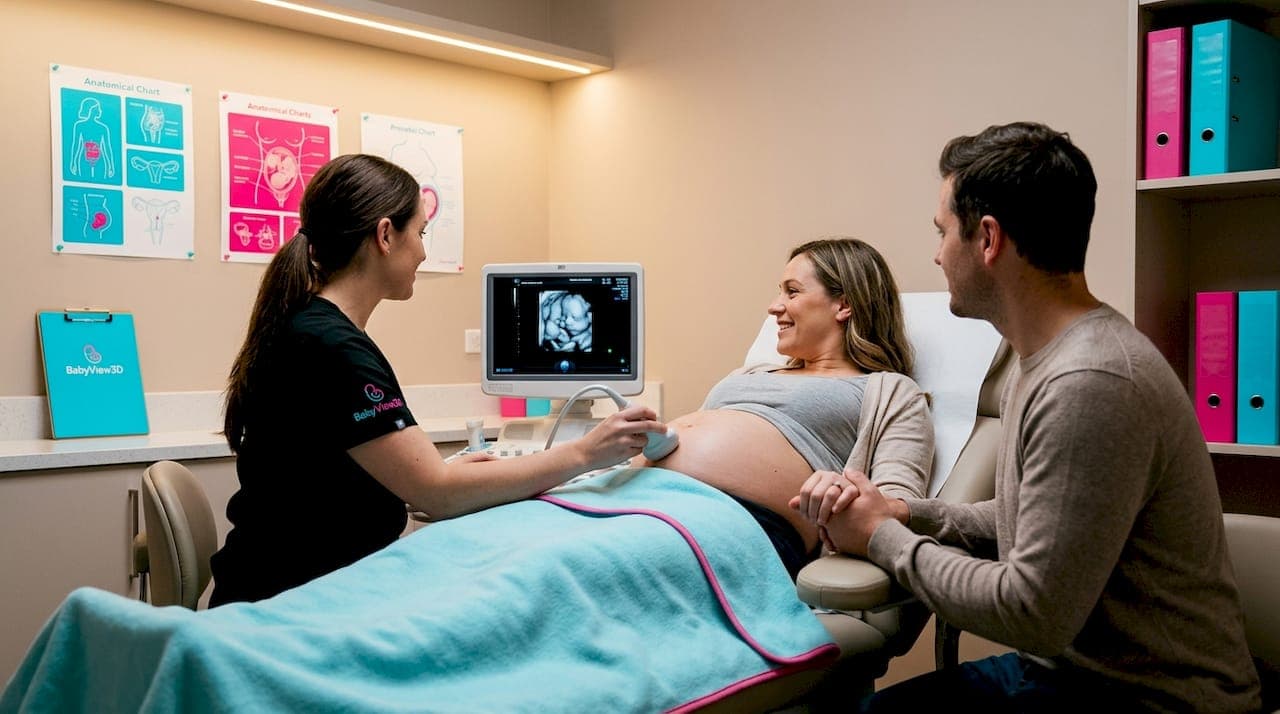
Prenatal ultrasound innovation is defined as the advancement of imaging technology that transforms fetal monitoring from brief, operator-dependent snapshots into continuous, automated, and quantifiable assessments of fetal health. Traditional ultrasounds give your care team a single moment in time. Today's breakthroughs, including wearable ultrasound patches developed at UC San Diego and AI-driven image analysis platforms like those receiving FDA clearance through Butterfly Network and UNC, give clinicians hours of data and standardized measurements that no longer depend on a specialist being in the room. For expectant parents, this shift means earlier detection of complications, broader access to care, and a richer window into your baby's development.
What is prenatal ultrasound innovation and what drives it?
Prenatal ultrasound innovation refers to three converging technology categories: wearable continuous monitoring, AI-enabled image interpretation, and contrast-enhanced perfusion imaging. Each one addresses a specific limitation of conventional ultrasound. Standard prenatal scans last minutes, require a trained sonographer, and produce static measurements that may miss complications developing between appointments.
The core goal, as researchers frame it, is to make fetal monitoring continuous, automated, and quantifiable rather than episodic. That distinction matters enormously for high-risk pregnancies, where conditions like preeclampsia or intrauterine growth restriction can progress rapidly between scheduled visits.
Three specific breakthroughs define the current wave of advancements in prenatal ultrasound:
- Wearable ultrasound patches: The UC San Diego prototype continuously monitors fetal anatomy and blood flow, autonomously tracking the umbilical cord despite fetal and maternal movement. Tested across 62 pregnancies with complications, it produced hours of continuous data closely matching handheld ultrasound results.
- AI-enabled gestational dating: Technology developed at UNC decouples image acquisition from interpretation, allowing pregnancy dating through standardized "blind sweep" videos without requiring an expert sonographer on site. This tool has FDA clearance and is now in research use across 12 countries.
- AI-assisted image analysis: Deep learning models automate fetal image recognition, segmentation, and clinical decision support, achieving diagnostic performance comparable to trained sonographers for biometric measurements and anomaly detection.
Pro Tip: If you are in a high-risk pregnancy, ask your OB or maternal-fetal medicine specialist whether continuous monitoring devices or AI-assisted scan review are available at your facility. These tools are moving from research settings into clinical practice in 2026.
How does AI improve prenatal ultrasound imaging and clinical workflow?
AI's role in prenatal imaging goes well beyond making pictures look sharper. The more significant contribution is standardizing how images are acquired and interpreted, which reduces the variability that has always made ultrasound results dependent on who is holding the probe.
Here is how AI transforms the clinical workflow step by step:
- Automated plane detection: AI locates standard fetal imaging planes, such as the four-chamber heart view or the transthalamic head plane, without requiring the sonographer to manually search and confirm each one.
- Biometric measurement automation: Once the correct plane is identified, AI measures head circumference, femur length, and abdominal circumference automatically. These measurements feed directly into growth charts and gestational age calculations.
- Anomaly flagging: Deep learning models trained on large datasets flag structural findings that warrant specialist review, functioning as a second reader on every scan.
- Standardized acquisition via blind sweeps: The AI blind-sweep approach guides non-specialist operators through a consistent scanning motion, then extracts the relevant frames automatically. This lowers the skill threshold for accurate gestational age measurement significantly.
"AI innovation aims more at streamlining workflow and standardizing image acquisition than just improving image quality." — Research insight from UNC's FDA-cleared AI ultrasound program
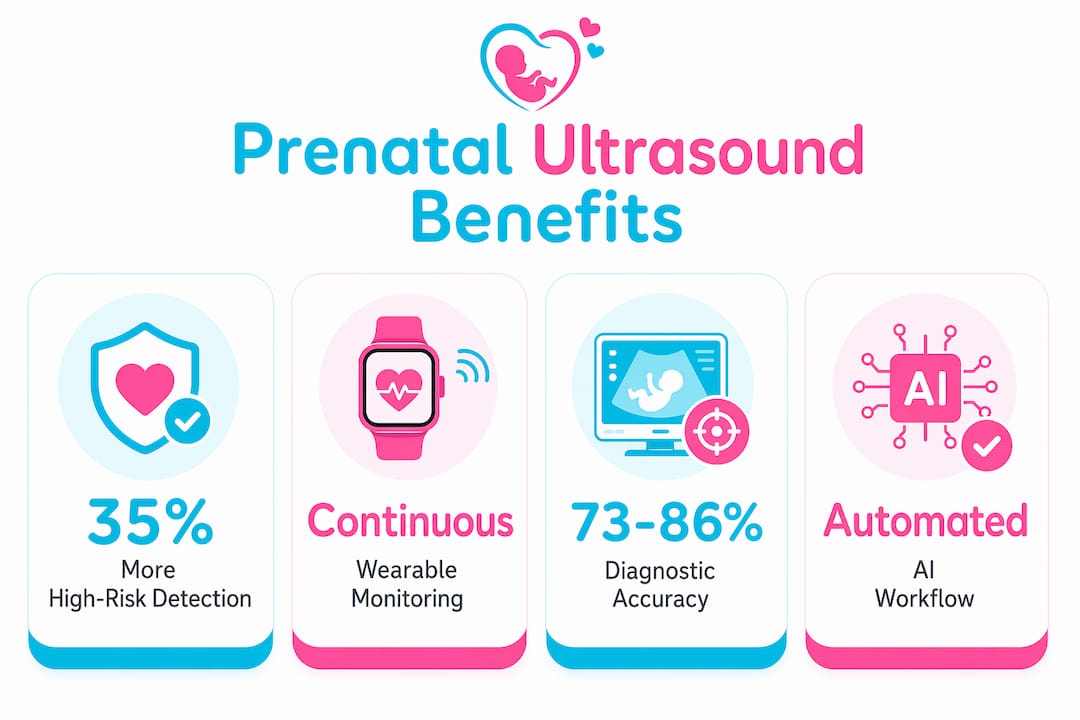
The clinical impact is measurable. AI analysis of ultrasound scans detects up to 35% more high-risk pregnancies than scans reviewed without AI decision support. That figure comes from Danish AI company Prenaital, which generates risk-oriented reports by comparing scan patterns against a library of normal learned values. A 35% improvement in risk detection is not a marginal gain. It represents pregnancies where complications might otherwise have gone unnoticed until they became emergencies.
Challenges remain. Researchers consistently note that larger multicenter prospective studies are needed to prove that AI-assisted scanning translates into better maternal and neonatal outcomes, not just better images. Data generalizability across different populations and imaging platforms is an active area of concern.
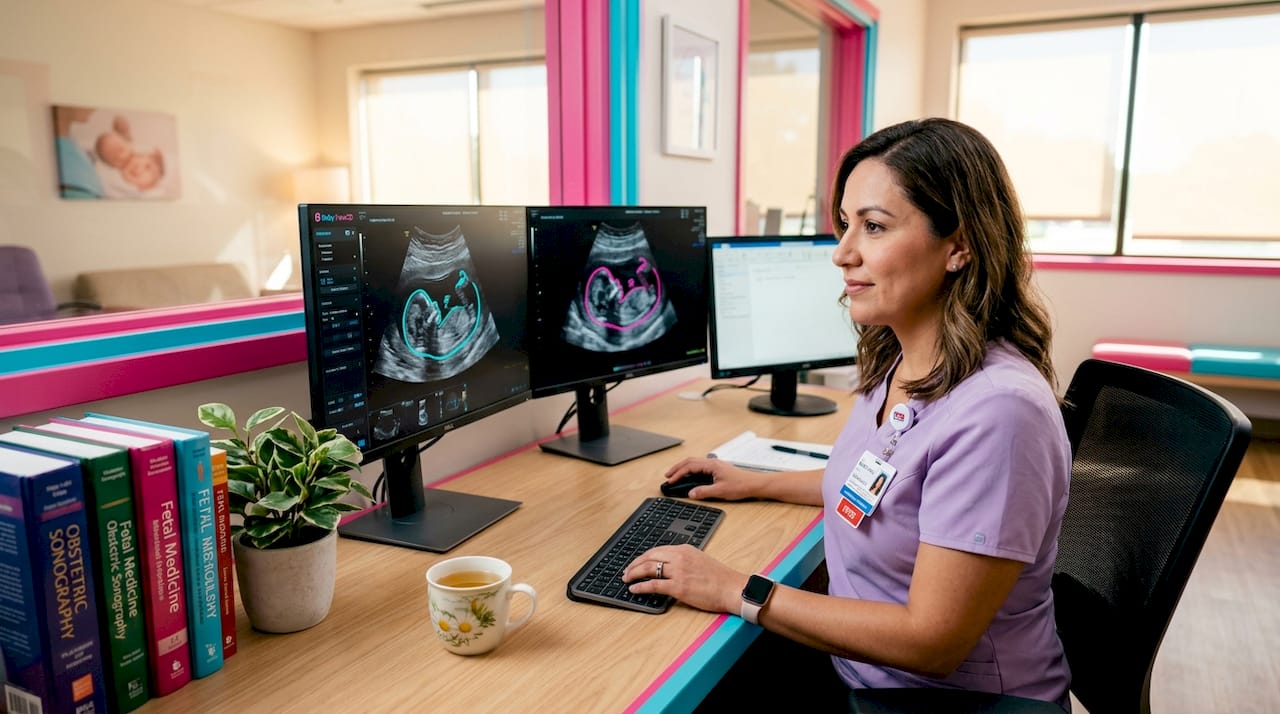
What are the emerging advances in fetal and placental perfusion assessment?
Placental health is one of the most critical and historically underexamined factors in pregnancy outcomes. Contrast-enhanced ultrasound, known as CEUS, is changing that by giving clinicians an objective, quantifiable view of blood flow through the placenta.
CEUS uses microbubble contrast agents, tiny gas-filled spheres smaller than red blood cells, injected into the maternal bloodstream to make blood flow visible on ultrasound. The safety profile is well-established. More than 99% of microbubbles remain in maternal circulation and clear within approximately 15 minutes, with negligible placental transfer. That pharmacokinetic profile makes CEUS a viable option for prenatal use, though clinical protocols for dosing and monitoring are still being refined.
| Aspect | Detail |
|---|---|
| Contrast agent type | Microbubble agents injected into maternal bloodstream |
| Placental transfer rate | Less than 1% crosses into fetal circulation |
| Clearance time | Approximately 15 minutes from maternal circulation |
| AI diagnostic accuracy | 73% to 86% for identifying placental pathologies |
| Validation status | Ongoing multicenter studies required across populations |
AI analysis applied to CEUS data pushes diagnostic accuracy for placental pathologies into the 73% to 86% range, a meaningful improvement over visual interpretation alone. This shift from subjective visual reading to objective, quantified perfusion data represents a genuine leap in prenatal diagnostics. Conditions like placenta accreta spectrum, placental insufficiency, and preeclampsia-related vascular changes become detectable earlier and with greater precision.
Pro Tip: CEUS is not yet standard practice in most prenatal clinics. If you have a high-risk pregnancy involving placental concerns, ask your maternal-fetal medicine specialist whether CEUS evaluation is available at a tertiary care center near you.
For a deeper look at how contrast imaging fits into the broader picture of ultrasound image enhancement, the science behind these advances is more accessible than most parents expect.
How do these advances impact expectant parents and prenatal care?
The practical benefits of these technologies reach well beyond hospital research labs. For you as an expectant parent, the implications are direct and meaningful.
- Earlier detection of serious complications: Continuous wearable monitoring can identify signs of preeclampsia, fetal distress, or growth restriction hours or days before a scheduled clinic visit would catch them. For high-risk pregnancies, that time advantage is clinically significant.
- Monitoring outside the clinic: Wearable patches designed for home or remote use mean that families in rural areas, or those with limited access to maternal-fetal medicine specialists, can receive a level of surveillance previously available only in academic medical centers.
- Reduced dependence on specialist availability: AI-guided blind sweeps allow community health workers or general practitioners to perform gestational dating scans that previously required a trained sonographer. This expands access in underserved areas across the 12 countries where the technology is currently deployed.
- Stronger parent engagement: Real-time, detailed imaging gives you a more complete picture of your baby's health at every stage. Parents who understand what they are seeing, and why it matters, tend to engage more actively with their prenatal care.
The reasons families value ultrasound have always combined medical reassurance with emotional connection. These new technologies strengthen both dimensions. You get more accurate clinical data and a more detailed, ongoing view of your developing baby. Understanding the full range of ultrasound trends in 2026 helps you ask better questions at your next appointment and make more informed decisions about your care options.
Key takeaways
Prenatal ultrasound innovation in 2026 is defined by continuous wearable monitoring, AI-driven workflow standardization, and contrast-enhanced perfusion imaging, each addressing a specific gap that traditional snapshot ultrasounds cannot fill.
| Point | Details |
|---|---|
| Core innovation shift | Fetal monitoring moves from episodic snapshots to continuous, automated data collection. |
| AI's primary role | Standardizes image acquisition and automates biometric measurements, reducing operator variability. |
| CEUS safety profile | Over 99% of microbubbles stay in maternal circulation and clear within 15 minutes. |
| Risk detection improvement | AI-assisted scans identify up to 35% more high-risk pregnancies than unaided review. |
| Access expansion | FDA-cleared AI blind-sweep tools now operate in research settings across 12 countries. |
Why I think the hype around prenatal ultrasound innovation is mostly justified
The conversation around AI in medicine tends to swing between breathless optimism and reflexive skepticism. Having followed prenatal imaging advances closely, I find myself landing somewhere specific: the technology is genuinely transformative, but the clinical evidence still needs to catch up with the engineering.
Wearable fetal monitoring fills a gap that has frustrated clinicians for decades. A 20-minute weekly scan tells you almost nothing about what happens during the other 10,000 minutes of that week. Continuous monitoring changes the fundamental question from "how does the baby look today?" to "how has the baby been doing?" That is a more useful question, and the UC San Diego and Stanford research teams have demonstrated it is now answerable.
What I would caution expectant parents about is treating AI-assisted scans as infallible. The 35% improvement in risk detection from Prenaital's system is impressive, but it also means the AI misses cases too. Clinical validation across diverse populations, not just the datasets these models were trained on, is the work that still needs to happen. The researchers behind these tools say as much themselves.
My practical advice: stay informed, ask your provider directly whether any of these tools are available at your facility, and do not wait for perfection before engaging with what is already accessible. The technology is good enough to matter now, even if it is not finished yet.
— LENIER
See your baby in stunning detail with Bbview3d
Bbview3d brings over 15 years of prenatal imaging experience to families across the United States, combining certified sonographers with HD Live, 3D, 4D, and 8K resolution technology. While clinical AI tools focus on diagnostics, Bbview3d focuses on the experience of seeing your baby clearly and memorably before birth. Every session is designed to give you the detail and emotional connection that standard clinical scans rarely provide. Explore the full range of prenatal imaging services available at Bbview3d, including package options with visual keepsakes, and book your first appointment with a limited-time discount for new families.
FAQ
What is prenatal ultrasound innovation in simple terms?
Prenatal ultrasound innovation refers to new technologies that make fetal monitoring continuous, automated, and more accurate than traditional brief scans. Key examples include wearable ultrasound patches and AI-powered image analysis tools.
How does AI help during a prenatal ultrasound?
AI automates the identification of standard fetal imaging planes, measures biometric data like head circumference and femur length, and flags potential anomalies for specialist review. Studies show AI-assisted scans detect up to 35% more high-risk pregnancies than unassisted review.
Is contrast-enhanced ultrasound safe during pregnancy?
CEUS using microbubble agents has a strong safety profile in prenatal use. Over 99% of the contrast agent remains in maternal circulation and clears within approximately 15 minutes, with less than 1% crossing into fetal circulation.
What is a wearable ultrasound patch?
A wearable ultrasound patch is a soft device worn on the abdomen that continuously monitors fetal anatomy and blood flow over hours. The UC San Diego prototype was tested on 62 high-risk pregnancies and produced results closely matching handheld ultrasound exams.
Can these innovations replace my regular prenatal appointments?
No. These technologies are designed to supplement, not replace, scheduled prenatal care. They extend monitoring between visits and improve the accuracy of clinical assessments, but they work best alongside your existing care team.