
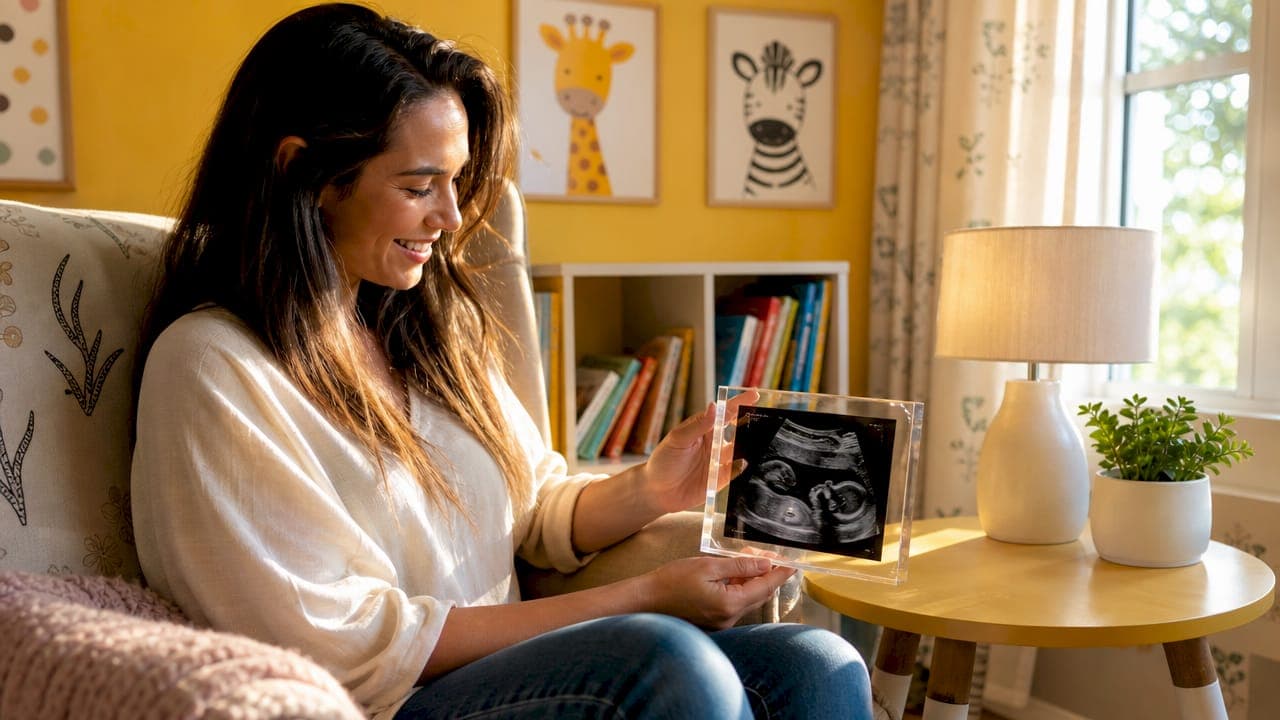
Ultrasound art display options are defined as the methods families use to transform prenatal scan images into permanent, decorative keepsakes for the home. The best approaches go well beyond a simple photo frame. Custom engraved wooden frames, acrylic plaques, 3D relief sculptures, and heartbeat soundwave prints each offer a distinct way to honor a pregnancy. Families increasingly seek displays that fit naturally into living spaces rather than sitting in a drawer, reflecting a clear shift from clinical keepsakes to meaningful wall art. Bbview3d has spent over 15 years helping expectant parents capture the images that make these displays possible.
1. Top ultrasound art display options for personalized keepsakes
The widest range of creative ultrasound art starts with physical, personalized formats. These are the most accessible options for families who want something tangible on day one.
Custom engraved wooden frames are the most traditional choice, but modern versions go far beyond a plain border. Laser engraving adds the baby's name, due date, or a short message directly into the wood grain. Natural finishes like walnut or maple give the piece warmth that suits a nursery or living room equally well.
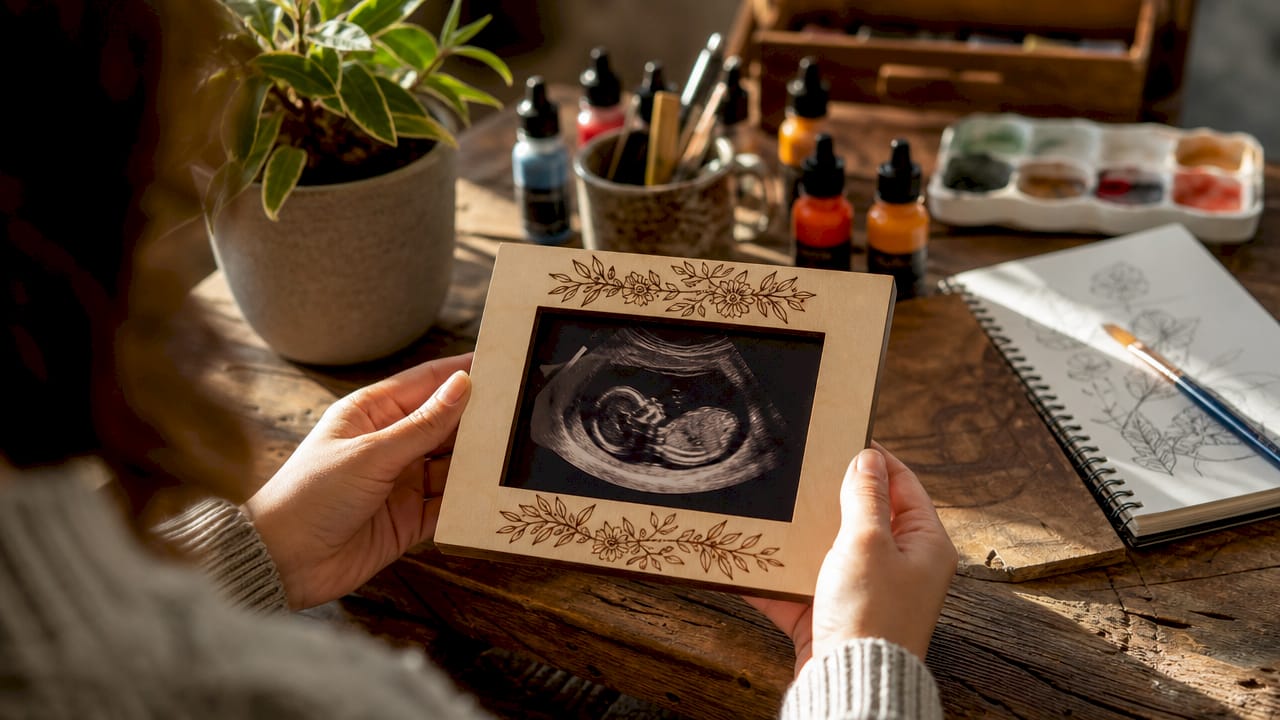
Acrylic and metal plaques deliver a sharper, more contemporary look. Acrylic art starts around $23, with sizes commonly available at 5x5, 8x10, and A4. Metal prints use dye infusion directly into aluminum, which produces vivid contrast and resists moisture better than paper.
Eco-friendly wood and bamboo panels appeal to families who prioritize sustainable materials. These panels accept high-resolution photo transfers and pair well with neutral nursery palettes. The texture of natural wood adds a handcrafted quality that mass-produced prints cannot replicate.
Pro Tip: When ordering a personalized plaque, request a digital proof before production. Small font errors or cropping issues are far easier to fix before the piece is cut or printed.
Pricing for personalized ultrasound keepsakes ranges from $20 to well over $100 depending on material and size. That range gives families real flexibility whether they want a small shelf piece or a large statement print for the nursery wall.
2. How 3D relief sculptures turn 2D scans into tactile art
A 3D relief sculpture is the most technically impressive of all ultrasound display alternatives. The process converts a standard 2D obstetric scan into an STL file, which a 3D printer then builds into a physical, raised sculpture of the baby's face and features.
3D relief conversion uses proprietary image enhancement and depth-map generation to translate flat grayscale data into a three-dimensional form. The result highlights facial features with anatomical accuracy that a flat print simply cannot achieve. Some services offer a free initial STL file so families can preview the result before committing to a full print.
The emotional impact of holding a sculpted likeness of your baby before birth is significant. 3D spatial context helps non-experts understand and connect with what they are seeing in ways that 2D images do not. Research from MIT's AR-VIU project confirms that spatial rendering allows novices to identify fetal structures nearly as well as trained professionals.
Families can choose between home printing, local print services, or professional sculpture studios. Home printing is the most affordable route if you already own or have access to a quality 3D printer. Professional services produce smoother finishes and better material options, including resin and plaster composites.
Pro Tip: Always request the highest-resolution digital file directly from your medical provider before submitting it for 3D conversion. Poor image quality leads to flat or distorted prints that miss the fine detail that makes these sculptures special.
The emotional benefits of 3D imaging for prenatal bonding are well documented. A sculpture that parents can touch creates a connection that a framed print alone rarely achieves.
3. Using heartbeat soundwave art for multisensory nursery décor
Heartbeat soundwave art captures the audio recording of a baby's heartbeat and converts it into a visual waveform printed on canvas, paper, or metal. The result is a piece of art that tells two stories at once: what the nursery looks like and what it sounded like before the baby arrived.
Soundwave art with QR codes embeds a scannable link directly into the print. Visitors or family members can hold a phone over the code and hear the original heartbeat audio play back instantly. That interactive layer transforms a static wall piece into a living memory.
Canvas prints work well for nurseries with soft, warm color palettes. Metal prints suit modern or minimalist spaces where clean lines and high contrast are the priority. Paper prints on archival stock offer the most affordable entry point while still delivering sharp waveform detail.
Pro Tip: Record the heartbeat audio at your prenatal appointment on a phone or dedicated recorder. Most ultrasound studios, including Bbview3d, can assist with capturing a clean audio file that translates well into a printed waveform.
Multisensory nursery décor that combines visual and audio elements creates what designers call a narrative sanctuary. The space tells the full story of the pregnancy, not just a single frozen moment. Coordinating the waveform color with the nursery's existing palette ties the piece into the room rather than making it feel like an afterthought.
4. Durability and preservation for long-lasting ultrasound displays
The single biggest mistake families make with ultrasound art is trusting the original thermal paper print to last. Standard thermal paper degrades quickly when exposed to sunlight, heat, or even lamination, often fading to black or becoming illegible within months. The image you treasure today can disappear faster than you expect.
Archival-grade formats solve this problem permanently. The three most durable options are:
- Giclée prints on acid-free cotton rag paper, which resist fading for decades under normal indoor light conditions.
- Metal prints using dye-infused aluminum, which offer UV resistance and are impervious to moisture and oxidation.
- Acrylic face-mount prints, which protect the image behind a UV-filtering acrylic layer while delivering exceptional color depth.
Archival ultrasound art requires UV light resistance and oxidation protection to prevent degradation. Modern metal and acrylic prints provide both properties, making them far superior to traditional paper or laminated photos for long-term display.
Digitizing the original scan is the most important preservation step. Ask your provider for a digital copy of the image file at the highest resolution available. Store that file in at least two locations, such as a cloud service and an external hard drive, before ordering any physical art.
| Format | UV Resistance | Moisture Resistance | Estimated Lifespan |
|---|---|---|---|
| Thermal paper | None | Poor | Months |
| Standard photo print | Low | Low | 5–10 years |
| Giclée on archival paper | Moderate | Moderate | 50+ years |
| Metal print | High | Excellent | 75+ years |
| Acrylic face-mount | High | Good | 50+ years |
Sizing and mounting hardware add to the total footprint of any display. A piece listed as 8x10 inches may require a stand or wall bracket that adds two or more inches in every direction. Measure your actual shelf or wall space before ordering, not just the art dimensions.
5. Choosing the right display for your home and family
The best ultrasound display method depends on three factors: the room it will live in, the image quality you have, and how much interaction you want the piece to invite.
For nurseries, warm materials like wood and canvas create a soft, welcoming atmosphere. For living rooms or entryways, acrylic and metal prints hold their own alongside other framed art without looking out of place. A 3D sculpture works well on a bookshelf or mantle where guests can see and touch it.
Framing ultrasound images correctly means choosing materials that are health-safe and durable, not just attractive. Acid-free mats and UV-filtering glass protect the image from the inside out, even for prints that are already archival quality.
Pro Tip: Order one small test print before committing to a large format. Color rendering and contrast can shift between screen and print, and a small proof costs far less than reprinting a large canvas.
Think about how the display will age with your family. A heartbeat soundwave print will mean as much to a ten-year-old child as it does to a newborn's parents. A 3D sculpture becomes a conversation piece for years. The displays that last are the ones that carry meaning beyond the first few months.
Key takeaways
The most effective ultrasound art display options combine archival materials, high-resolution source images, and a format that fits naturally into the family's living space for lasting emotional value.
| Point | Details |
|---|---|
| Digitize first | Always secure a high-resolution digital file before ordering any physical art. |
| Choose archival materials | Metal, acrylic, and giclée prints outlast thermal paper by decades. |
| Match format to room | Wood and canvas suit nurseries; metal and acrylic work in living spaces. |
| Add interactivity | QR-enabled soundwave art lets family members hear the heartbeat on demand. |
| Measure total footprint | Account for stands and mounting hardware, not just the printed art dimensions. |
What I've learned about choosing ultrasound art that actually lasts
After years of watching families navigate this decision, the pattern I see most often is this: parents focus entirely on how the piece looks in the product photo and almost never think about where it will live five years from now.
The families who are happiest with their choices picked displays that fit into a real room, not an idealized nursery. A large metal print looks stunning on a gallery wall. That same print looks wrong on a small apartment shelf. Scale and context matter as much as the image itself.
The rise of 3D relief sculptures and soundwave art is not a passing trend. These formats give ultrasound images a second dimension of meaning, one that a flat print cannot replicate. A sculpture invites touch. A soundwave print invites a story. Both of those qualities make a piece feel like art rather than a medical document.
My honest advice: invest in the source image first. The quality of your display is limited by the quality of the scan. A high-resolution 3D or 4D session produces the kind of image detail that makes every display format look its best. Everything else is secondary.
— LENIER
Bbview3d imaging: where your display art begins
Great ultrasound art starts with a great image. Bbview3d offers advanced 3D, 4D, and 8K HD Live imaging sessions at centers across the United States, with certified sonographers who have over 15 years of experience capturing the detail that display art demands.
Every session at Bbview3d produces the high-resolution digital files that archival prints, 3D relief sculptures, and soundwave art all require. Packages include visual summaries and keepsake options designed to give families everything they need to create a display that lasts. First-time appointments include a limited-time discount. Visit Bbview3d's services page to see current packages and book your session.
FAQ
What are the most durable ultrasound art display options?
Metal prints and acrylic face-mount prints are the most durable choices. Both resist UV light and moisture, giving them an estimated lifespan of 50–75 years under normal indoor conditions.
Can I make 3D ultrasound art from a standard 2D scan?
Yes. Specialized services convert 2D obstetric scans into STL files for 3D printing. Image quality is critical, so always provide the highest-resolution digital file available from your provider.
How does heartbeat soundwave art work?
A recording of the baby's heartbeat is converted into a visual waveform and printed on canvas, paper, or metal. Many versions include an embedded QR code that plays the original audio when scanned.
How do I preserve my original ultrasound image?
Digitize the original scan immediately and store the file in at least two locations. Avoid laminating thermal paper prints, as lamination accelerates fading rather than preventing it.
What size should I order for a nursery wall?
Common sizes range from 5x5 to 12x18 inches. Measure your wall space and account for any stand or mounting hardware before ordering, since the total footprint is always larger than the printed art dimensions alone.