

Framing ultrasound images is the practice of turning a prenatal scan into a permanent, displayed keepsake that marks a baby's earliest existence. 62% of new parents frame ultrasound images within the first month after receiving them, driven primarily by emotional connection rather than decoration. This guide explains why families frame ultrasound images, how to preserve them correctly, and which display options create the most lasting keepsakes. Whether you are expecting your first child or welcoming another, understanding this practice helps you make choices you will not regret twenty years from now.
Why families frame ultrasound images: the emotional core
Framing an ultrasound photo is less about home decor and more about acknowledging the baby as an individual before birth. That single act shifts the pregnancy from an abstract medical event into something visible, personal, and real. Parents who display the image report feeling a stronger sense of connection to their unborn child during the weeks between appointments.
Grandparents experience this shift just as powerfully. A framed ultrasound creates a tangible connection for grandparents who cannot feel the baby move or attend every appointment. Seeing a recognizable face, even in grayscale, turns "the baby" into their grandchild. That emotional leap matters enormously for building multigenerational bonds before the birth.
The emotional benefits of prenatal imaging extend beyond the parents themselves. Siblings, close friends, and extended family all respond differently to a framed image than to a verbal announcement. A photo on the wall says the baby is already here in a way that words cannot match.
"The first time I saw our scan in a frame on the wall, the pregnancy became completely real to me. It stopped being a doctor's appointment and started being our child." — A common sentiment shared by parents who display ultrasound images at home.
The survey data backs this up. Of the parents who frame ultrasound images, 74% cite emotional connection as their primary reason, while 51% also mention home decor. Those two motivations are not in conflict. A beautifully framed scan serves both purposes at once.
Key emotional benefits parents report:
- Feeling more bonded to the baby during the second and third trimesters
- Having a focal point for conversations with older siblings about the new baby
- Giving grandparents a personal keepsake they can display in their own homes
- Creating a visual anchor for the pregnancy that supports emotional preparation for parenthood
Pro Tip: Order a second print of your ultrasound image specifically for grandparents. A framed copy in their home builds anticipation and gives them something to show friends and neighbors before the birth.
How to preserve ultrasound photos for long-term display
Standard thermal ultrasound prints degrade faster than most parents expect. Thermal paper reacts to light, heat, and humidity, causing the image to fade or darken within months if left unprotected. Digitizing thermal prints immediately after receiving them is the single most effective preservation step you can take.
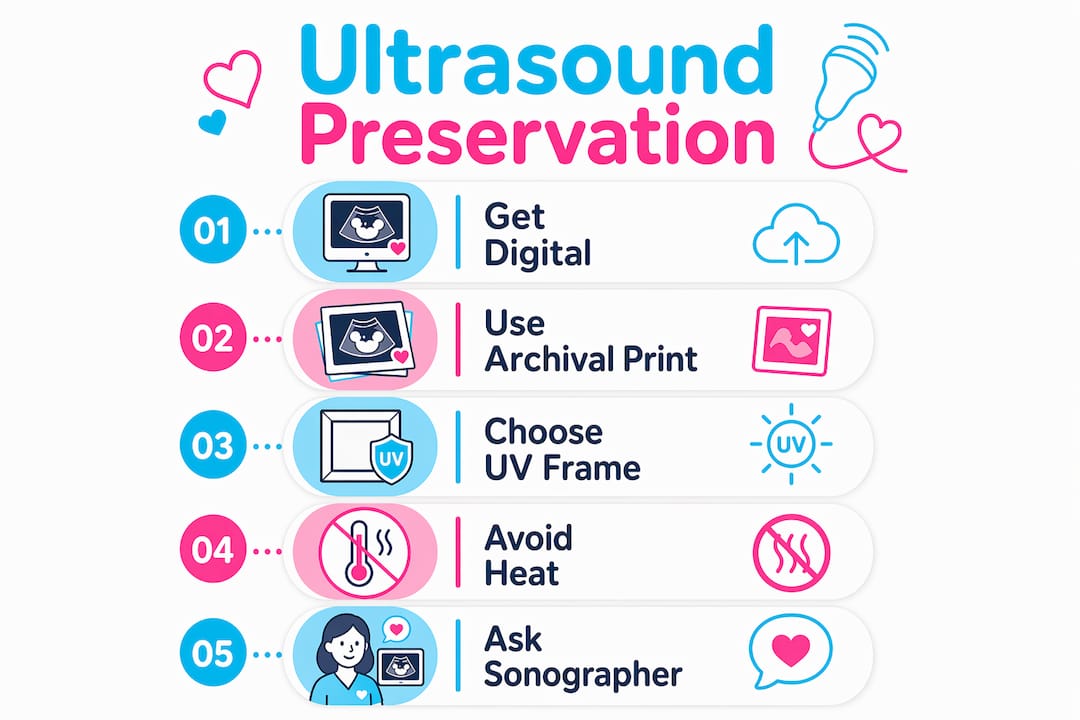
Once digitized, you have two strong options. You can print the image using archival pigment inks on acid-free photo paper, or you can order a professional reprint from a specialty lab. Archival pigment inks and acid-free mats are definitively superior to standard printing for preventing long-term degradation. Standard inkjet prints on regular paper will not survive a decade in a nursery.
The frame itself matters as much as the print. UV-protective glazing reduces image fading by up to 70% compared to ordinary glass. That difference is visible within five years. Frames sold specifically for baby scan photos often include this glazing, but you should confirm it before purchasing any generic frame.
Steps for preserving your ultrasound image correctly:
- Scan or photograph the thermal print within 48 hours of receiving it.
- Save the digital file in at least two locations, such as cloud storage and an external drive.
- Order a reprint using archival pigment inks on acid-free photo paper.
- Choose a frame with UV-protective glazing and an acid-free mat.
- Hang the frame away from direct sunlight and heat sources like radiators or vents.
| Material | Preservation quality | Estimated lifespan |
|---|---|---|
| Standard thermal print, no frame | Poor | 1–3 years |
| Thermal print in standard glass frame | Fair | 3–5 years |
| Archival reprint in UV-glazed frame | Excellent | 20+ years |
| Digital file (cloud + external drive) | Best | Indefinite |
Pro Tip: Ask your sonographer or ultrasound provider for a digital file of the scan at the time of your appointment. Many providers offer this as a standard part of their package, and it eliminates the digitizing step entirely.
What display styles work best for ultrasound keepsakes?
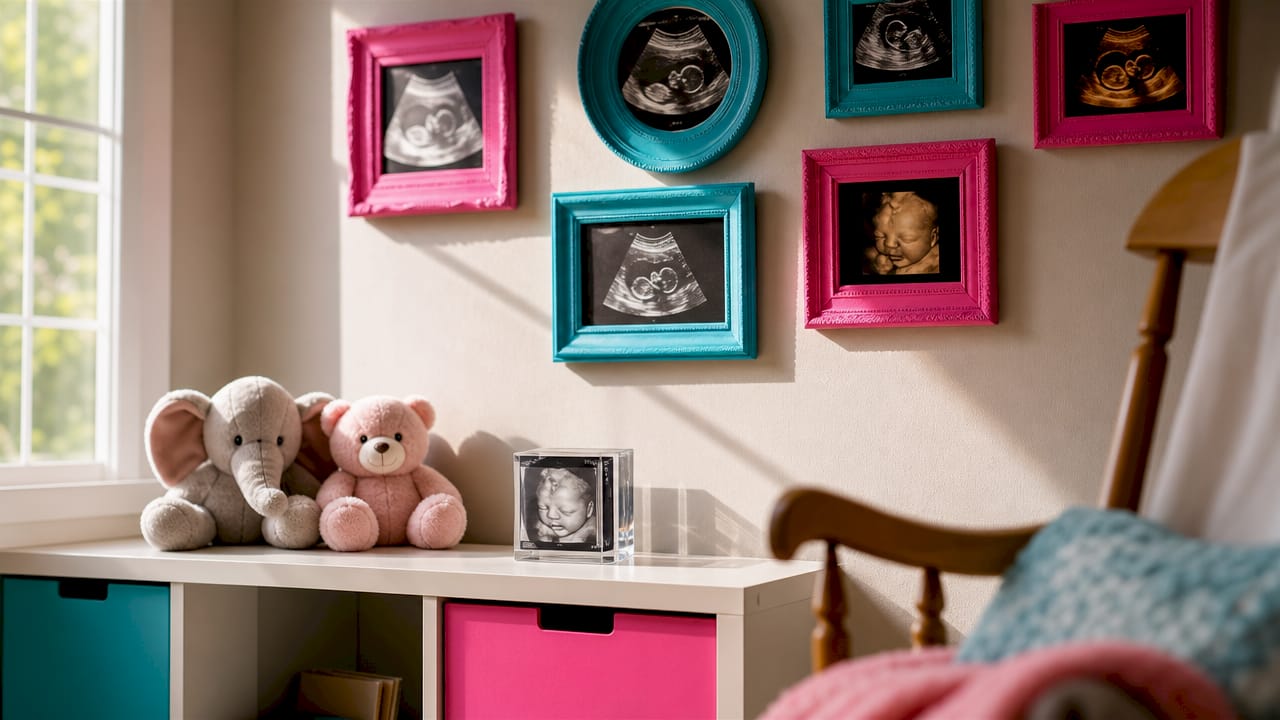
Different framing styles range from simple single-photo frames to elaborate multi-aperture displays and three-dimensional crystal keepsakes. The right choice depends on how you want to use the image and where you plan to display it.
Single-aperture frames
A single-aperture frame focuses entirely on one scan, typically the earliest clear image showing the baby's profile or face. This style works well as a standalone piece in a nursery or on a bedside table. It keeps the focus simple and personal.
Multi-aperture and timeline frames
Multi-aperture frames hold multiple images side by side, making them ideal for showing the pregnancy timeline from the first scan through to a newborn photo. This format tells a visual story. Parents who document their pregnancy with multiple ultrasound sessions often find this style the most meaningful long-term display.
3D crystal and engraved glass keepsakes
3D laser-engraved crystal keepsakes preserve ultrasound images inside optical glass by capturing tonal contrasts in three dimensions. The result looks nothing like a standard print. These pieces work as display objects on shelves or mantels rather than wall-hung frames, and they hold up exceptionally well over time because the image is embedded in the glass rather than printed on paper.
Popular display options at a glance:
- Single-aperture frame: clean, focused, ideal for nurseries
- Multi-aperture timeline frame: shows pregnancy progression, great for living rooms
- Shadow box with ultrasound plus mementos: combines the scan with hospital bracelets or birth announcement cards
- 3D crystal keepsake: shelf display, no fading risk, distinctive gift option
- Canvas print: large format, works well as nursery wall art when printed from a high-resolution digital file
Incorporating the ultrasound image into broader nursery design is a growing trend. Parents pair framed scans with name prints, birth stat posters, and family photos to create a cohesive gallery wall. The ultrasound image anchors the display as the earliest evidence of the child's existence.
Are keepsake ultrasounds safe to obtain?
The American Pregnancy Association recommends that all ultrasounds, including those intended for keepsake purposes, be performed by licensed professionals. This recommendation exists because ultrasound involves sound wave energy directed at developing tissue, and unregulated exposure carries potential risks that are not fully quantified.
The distinction between diagnostic and elective ultrasounds matters here. Diagnostic ultrasounds are ordered by a physician for medical reasons and performed in a clinical setting. Elective keepsake ultrasounds are scheduled by parents for the purpose of obtaining images and are not medically required. Both can produce high-quality images, but the safety profile depends entirely on who performs the scan and how it is conducted.
What to look for when choosing an ultrasound provider for keepsake images:
- Certified sonographers with documented training and credentials
- Equipment that meets current safety standards for prenatal imaging
- A clear policy on scan duration and energy exposure limits
- Transparent communication about the difference between elective and diagnostic imaging
- High-resolution output options, including digital files suitable for printing
Parents benefit most when providers balance clinical safety with image quality, producing images that are both safe and worth framing. A rushed or poorly composed scan produces images that are difficult to frame well regardless of the equipment used.
Intentional image composition starts during the scan itself. Sonographers who center the baby's face and capture clean profiles produce images that translate directly into better keepsakes. This is not a minor detail. A blurry or poorly framed scan cannot be fixed after the fact, no matter how good the frame is.
Key Takeaways
Families frame ultrasound images because the practice transforms a medical scan into a lasting emotional keepsake that builds connection across generations, and preserving that image correctly determines whether it survives for decades or fades within years.
| Point | Details |
|---|---|
| Emotional connection drives framing | 74% of parents who frame ultrasound images cite emotional bonding as their primary reason. |
| Thermal prints degrade fast | Digitize your thermal print within 48 hours and reprint using archival pigment inks. |
| UV glazing extends image life | Frames with UV-protective glazing reduce fading by up to 70% compared to standard glass. |
| Display style shapes the story | Multi-aperture and timeline frames tell a richer story than single-photo options. |
| Safety depends on the provider | Choose certified sonographers who balance image quality with proper exposure limits. |
What I've learned from watching families frame these images
I have seen a lot of framed ultrasound images over the years, and the ones that hold up, emotionally and physically, share two things in common. The image was captured well during the scan, and the family treated it as a document worth protecting rather than a piece of paper to stick on the fridge.
The families who regret their choices almost always made the same mistake. They left the thermal print in a drawer or taped it to a wall without any protection, and within two or three years the image had faded to the point where the baby's features were barely visible. That loss is genuinely painful, and it is entirely preventable.
What surprises most parents is how much the framing decision affects the emotional weight of the image. A thermal print in a cheap plastic sleeve reads as temporary. The same image, reprinted on archival paper and placed in a UV-glazed frame with an acid-free mat, reads as permanent. The physical presentation signals to everyone in the room that this image matters.
My honest recommendation is to treat the ultrasound image with the same care you would give a wedding photo. You would not tape your wedding photo to the refrigerator. The ultrasound milestones guide from Bbview3d is a useful starting point for parents who want to think about this more intentionally from the beginning of the pregnancy. The earlier you start thinking about preservation, the better the outcome.
— LENIER
Bbview3d: where keepsake-quality imaging begins
Bbview3d has spent more than 15 years helping families see their babies before birth with 3D, 4D, and HD Live imaging technology. Every session is conducted by certified sonographers at centers across the United States, with packages designed to produce images worth framing from the moment you leave the appointment.

The Bbview3d imaging services include digital file delivery as a standard part of most packages, which means you walk out with an archival-ready file rather than a thermal print that starts fading the same day. The Bbview3d Store also carries framing options and keepsake products designed specifically for prenatal images. First-time appointment discounts are available for parents who want to experience the difference that high-resolution imaging makes before committing to a full package.
FAQ
Why do parents frame ultrasound images instead of just storing them?
Framing transforms the image from a medical document into a displayed keepsake that builds emotional connection daily. Stored images are rarely seen; displayed images become part of the family's visual environment.
How long do framed ultrasound images last?
A thermal print in a UV-glazed frame with an acid-free mat can last 20 or more years. An unprotected thermal print typically fades within 1–3 years due to light and heat exposure.
Is it safe to get an ultrasound specifically for keepsake photos?
The American Pregnancy Association states that keepsake ultrasounds are safest when performed by licensed professionals using proper equipment and controlled exposure times. Elective scans from uncertified providers carry higher risk.
What is the best frame for an ultrasound image?
The best frame includes UV-protective glazing and holds an archival reprint rather than the original thermal paper. Acid-free mats prevent chemical degradation from the mat material itself.
Can I include ultrasound images in a nursery gallery wall?
Yes. High-resolution digital reprints on archival paper work well as nursery wall art and pair naturally with name prints, birth stat posters, and family photos to create a cohesive display.