

3D prenatal ultrasound is defined as a volumetric imaging technique that reconstructs fetal anatomy into lifelike, three-dimensional views parents can immediately recognize and connect with emotionally. This is the core reason why families prefer 3D imaging over traditional 2D scans. Where a 2D ultrasound produces flat, grayscale cross-sections that require a trained eye to interpret, a 3D image shows a baby's nose, lips, and fingers in a way that feels personal and real. Providers like Bbview3d have built entire service models around this emotional clarity, offering HD Live technology and 8K resolution sessions that turn a prenatal appointment into a family memory.
Why families prefer 3D imaging for prenatal bonding
3D prenatal imaging transforms pregnancy from a medical process into a personal experience. The technology captures surface-rendered images of the fetus, giving parents a recognizable face to connect with months before birth. Kristina Svirskaite, a prenatal imaging specialist, notes that seeing detailed fetal features helps parents shift pregnancy from an abstract medical event into something deeply personal. That shift is the foundation of why so many families now seek out elective 3D sessions alongside their routine prenatal care.
The difference between 2D and 3D imaging is not just visual. It is psychological. A 2D scan tells you the baby is healthy. A 3D scan shows you the baby is yours. For partners who cannot feel fetal movement and for siblings who have no frame of reference for pregnancy, a lifelike image creates instant, tangible connection. Bbview3d's sessions are designed specifically for this inclusive family experience, with viewing areas and digital sharing options that bring grandparents and extended family into the moment.

Elective 3D imaging is not a replacement for diagnostic 2D scans. It is a complement. Medical ultrasounds monitor fetal health, measure growth, and screen for abnormalities. 3D sessions serve a different purpose: they create emotional engagement and lasting keepsakes. Understanding this distinction helps families use both types of imaging effectively and without confusion.
How 3D imaging deepens emotional connection
The emotional impact of 3D imaging is immediate and well-documented. Parents who see their baby's face in three dimensions report a faster and stronger sense of attachment than those who only view 2D scans. The humanizing effect of 3D imaging is particularly significant for fathers and partners, who often describe the 3D session as the moment pregnancy became real for them.
Here is what families consistently report seeing and responding to during a 3D session:
- Facial expressions: Yawning, smiling, and frowning are visible in real time during 4D sessions.
- Fine details: Fingers, toes, and ear shape become recognizable features, not just measurements.
- Movement: Watching a baby stretch or suck a thumb creates an immediate sense of personality.
- Family resemblance: Parents and grandparents frequently identify familiar features, strengthening generational bonds.
- Sibling engagement: Older children who see the baby's face become active participants in the pregnancy rather than passive bystanders.
Research supports the idea that 3D views increase family engagement by lowering the barrier to anatomical understanding for non-medical family members. When a grandparent can look at a screen and immediately recognize their grandchild's nose, the pregnancy stops being abstract. That recognition is powerful.
Pro Tip: Bring your partner, a sibling, or a grandparent to the 3D session. The shared experience of seeing the baby together creates a memory that photos alone cannot replicate.
The emotional connection built through ultrasound during pregnancy also has practical benefits. Parents who feel a stronger prenatal bond tend to engage more actively in prenatal care, attend more appointments, and report lower anxiety levels as the due date approaches. The 3D session is not just a nice moment. It is a meaningful step in the transition to parenthood.
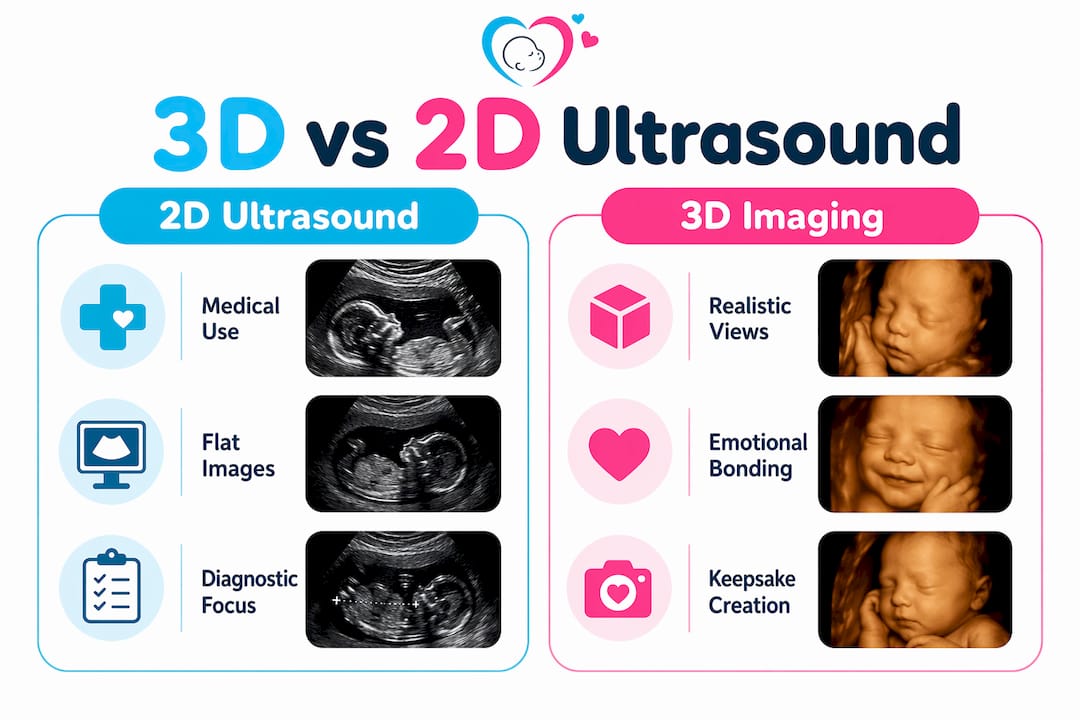
What unique benefits 3D imaging offers beyond bonding
The benefits of 3D imaging for families extend well past the emotional experience of the session itself. One of the most underappreciated advantages is improved parental comprehension of fetal anatomy. When a sonographer points to a structure on a 2D scan, most parents nod politely without fully understanding what they are seeing. A 3D image removes that ambiguity entirely.
"3D models substantially improve communication and decision-making, with patients and families reporting increased confidence and reduced anxiety after viewing them." — Use of patient-specific 3D models in paediatric surgery
This principle applies directly to prenatal contexts. When parents can see a clear, surface-rendered image of their baby's anatomy, conversations with their OB or midwife become more productive. They ask better questions. They understand explanations more quickly. In pediatric surgical planning, 3D imaging improves communication with effect sizes up to 2.80 (Cohen's d), a finding that reflects how profoundly visual clarity changes comprehension. For expecting parents, the same logic holds: seeing is understanding.
Keepsake creation is another major driver of the 3D imaging preference. 100% of elective ultrasound providers cite keepsake services as a primary value add compared to clinical scans. Bbview3d offers printed photos, digital albums, and shareable media packages that families use to announce pregnancies, create nursery art, and build memory collections that span from pregnancy through early childhood.
| Feature | 2D ultrasound | 3D imaging |
|---|---|---|
| Primary purpose | Medical diagnosis and monitoring | Emotional bonding and visualization |
| Image type | Flat, grayscale cross-section | Surface-rendered, lifelike view |
| Family comprehension | Requires interpretation | Immediately recognizable |
| Keepsake value | Limited | High: prints, digital albums, shareable media |
| Partner and sibling engagement | Low | High |
| Replaces diagnostic scan | Yes (it is the diagnostic scan) | No, complements it |
The facial detail visible in 3D scans also helps families prepare emotionally for birth. Parents who have seen their baby's face report feeling less shock and more immediate recognition in the delivery room. That psychological preparation is a genuine, measurable benefit that goes beyond sentiment.
How to get the best results from your 3D imaging session
Timing is the single most controllable factor in 3D image quality. The optimal window for 3D sessions is between 26 and 32 weeks of pregnancy. Before 26 weeks, the baby has not yet developed enough subcutaneous fat for the skin surface to render clearly. After 32 weeks, the baby is larger and often positioned lower in the pelvis, which limits the sonographer's ability to capture clear facial views.
Follow these steps to prepare for the best possible session:
- Schedule between weeks 26 and 32. This window balances fetal size, fat development, and amniotic fluid volume for optimal image clarity.
- Stay well-hydrated in the days before your appointment. Amniotic fluid is a key factor in image quality. Higher fluid levels create a clearer acoustic window for the ultrasound waves.
- Eat a light snack 30 to 60 minutes before the session. A small amount of sugar or food can encourage fetal movement and wakefulness, which improves the chances of capturing facial expressions and active poses.
- Wear comfortable, two-piece clothing. Sonographers need easy access to the abdomen without the disruption of repositioning.
- Arrive with realistic expectations. Fetal position, placenta location, and maternal body composition all affect results. Some babies face away from the transducer or keep their hands over their faces.
Image quality in 3D ultrasounds depends heavily on factors outside anyone's control. Bbview3d's certified sonographers are trained to work with fetal position and adjust technique to maximize results, but some sessions may require rescheduling. This is normal and not a reflection of the provider's skill.
Pro Tip: Ask about the step-by-step session process before you book. Knowing what to expect reduces anxiety and helps you focus on enjoying the experience rather than worrying about logistics.
The distinction between a keepsake session and a medical diagnostic scan matters here. A 3D elective session at a provider like Bbview3d is not a substitute for your scheduled anatomy scan or growth ultrasounds. Think of it as a separate, family-centered experience that runs parallel to your medical care, not in place of it.
3D imaging vs traditional 2D ultrasound: what families need to know
2D ultrasound is the clinical standard for prenatal diagnosis. It measures fetal growth, checks placental position, evaluates amniotic fluid levels, and screens for structural abnormalities. Every pregnant person receives multiple 2D scans as part of routine care, and these scans are irreplaceable for medical monitoring.
3D imaging serves a different role. 3D ultrasound is valued for clearer visualization and emotional connection, functioning as a supplement rather than a replacement for diagnostic scans. The key distinctions families should understand:
- Diagnostic accuracy: 2D ultrasound remains superior for detecting internal structural issues because it shows cross-sectional anatomy that 3D surface rendering does not capture.
- Emotional engagement: 3D imaging produces images that parents, partners, and extended family can immediately understand and connect with, without any medical training.
- Timing flexibility: 2D scans are performed throughout pregnancy at clinically defined intervals. 3D sessions are elective and timed for optimal visual results.
- Technology: Bbview3d uses HD Live and 8K resolution technology that produces image quality far beyond standard clinical 3D ultrasound equipment, creating a noticeably different visual experience.
The reasons families choose ultrasound sessions beyond their medical appointments come down to one consistent theme: they want to see their baby as a person, not a measurement. 3D imaging delivers that experience in a way that 2D simply cannot.
Key takeaways
3D prenatal imaging is the most effective tool for transforming pregnancy into a personal, emotionally engaging experience that the entire family can share and remember.
| Point | Details |
|---|---|
| Emotional bonding advantage | 3D imaging makes the baby immediately recognizable, strengthening attachment for parents, partners, and siblings. |
| Optimal timing window | Schedule between 26 and 32 weeks for the clearest facial features and best image quality. |
| Keepsake and sharing value | Digital albums and printed photos from 3D sessions create lasting family memories beyond the appointment itself. |
| Complement, not replacement | 3D elective sessions work alongside medical 2D scans and do not replace diagnostic prenatal care. |
| Preparation matters | Hydration, timing, and fetal position all affect results; certified sonographers adjust technique to maximize clarity. |
What 15 years of watching families react to 3D images has taught me
I have watched hundreds of families walk into a 3D imaging session with nervous energy and walk out with tears on their faces and phones full of photos they cannot stop sharing. The reaction is almost always the same: the moment the baby's face appears on screen, the room changes. Partners who have been supportive but emotionally distant from the pregnancy suddenly lean forward. Siblings who were indifferent become excited. Grandparents who traveled hours to be there go quiet in the best possible way.
What I find most interesting is that the families who benefit most from 3D imaging are not always the ones who expected to. I have seen fathers who described themselves as "not really a baby person" become completely absorbed the moment they saw their child's profile. The image does something that words and 2D scans cannot: it makes the baby undeniably real.
The technology has changed dramatically over the past decade. HD Live and 8K resolution have replaced the waxy, low-contrast images that early 3D ultrasound produced. Today's images look like photographs. That quality shift matters because it closes the gap between what parents imagine and what they actually see. The closer that gap, the stronger the emotional response.
My honest advice: do not treat the 3D session as optional or as a luxury. Treat it as an intentional step in your prenatal experience. Book it at the right time, bring the people who matter, and let yourself be present for it. The medical appointments are necessary. This one is meaningful.
— LENIER
See your baby in stunning detail with Bbview3d
Bbview3d has spent over 15 years helping expecting families experience pregnancy in a way that goes far beyond a clinical appointment. With HD Live technology, 8K resolution imaging, and certified sonographers at multiple locations across the United States, every session is designed to give you the clearest, most emotionally resonant view of your baby possible.
From printed keepsakes and digital albums to shareable media packages your whole family can enjoy, Bbview3d builds the experience around your memories, not just your measurements. First-time visitors can access a limited-time discount on their first session. Explore the full range of prenatal imaging services and find the package that fits your family's needs.
FAQ
What is the best time to schedule a 3D imaging session?
The ideal window is between 26 and 32 weeks of pregnancy. During this period, the baby has developed enough facial fat for clear surface rendering, and amniotic fluid levels are typically sufficient for good image quality.
Does 3D imaging replace my regular prenatal ultrasounds?
No. Elective 3D imaging is a complement to, not a replacement for, diagnostic 2D ultrasounds. Your medical scans monitor fetal health and development; 3D sessions are designed for bonding and keepsake creation.
Why do families prefer 3D imaging over standard 2D scans for bonding?
3D imaging produces lifelike, surface-rendered images that parents, partners, and extended family can immediately recognize without medical training. This visual clarity creates a stronger emotional connection than the cross-sectional views produced by 2D ultrasound.
What factors affect 3D image quality?
Fetal position, amniotic fluid levels, and maternal body composition all influence results. Babies who face away from the transducer or cover their faces with their hands may require session rescheduling for better images.
Can partners and siblings attend a 3D imaging session?
Yes, and bringing them is strongly encouraged. The shared experience of seeing the baby together is one of the primary reasons families choose 3D imaging, and providers like Bbview3d design their sessions specifically for group viewing and family participation.