

A group ultrasound viewing is a specially arranged elective prenatal session where expectant parents invite family and friends to watch real-time ultrasound images of their unborn baby together. The industry term for this experience is an elective prenatal ultrasound, and it differs fundamentally from the diagnostic scans ordered by your OB-GYN. These sessions use 3D, 4D, or 5D HD Live imaging technology to produce detailed, lifelike visuals of your baby's face, hands, and movements. The result is a shared emotional event, not a medical appointment, and that distinction shapes everything about how the session works.
What is a group ultrasound viewing, and how does it work?
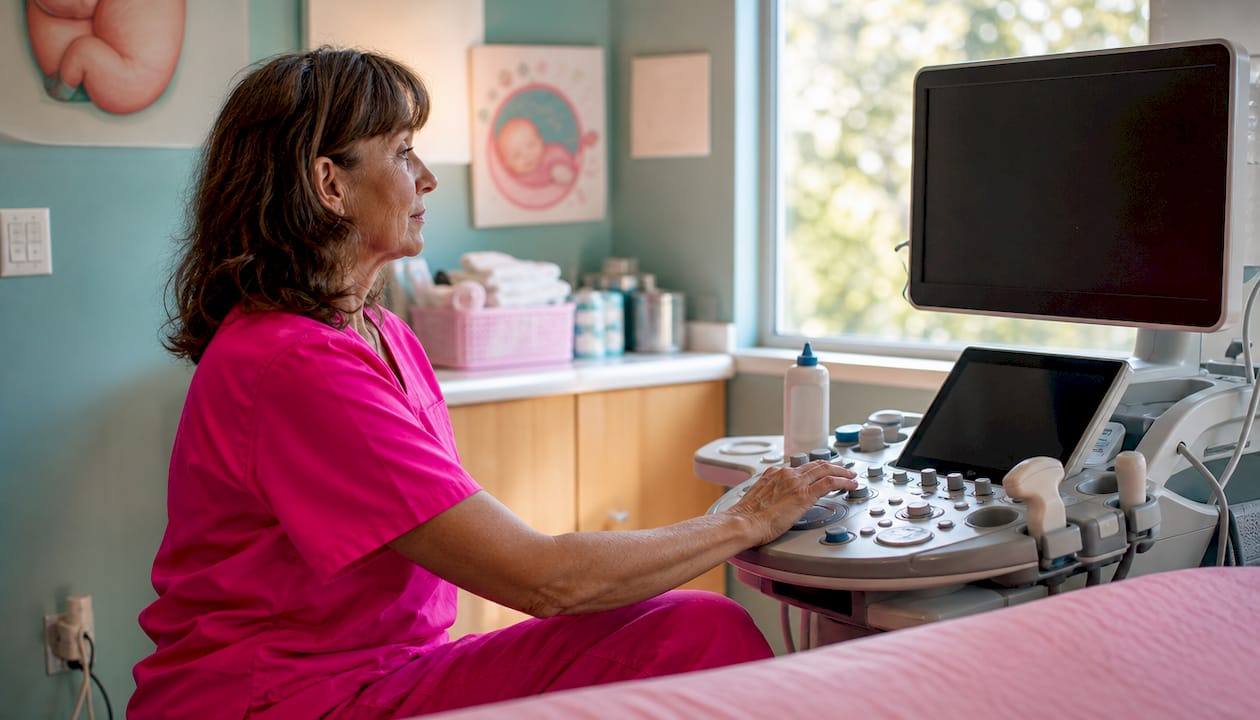
A group ultrasound session is a scheduled appointment at an elective imaging center where multiple guests join the expectant parent to view the baby live on screen. The sonographer operates the ultrasound equipment while everyone in the room watches the images displayed on a large monitor. Sessions typically last 20–45 minutes depending on the imaging package selected. That window gives the whole group time to settle in, watch the baby move, and absorb the experience without feeling rushed.
Here is what a standard session includes:
- Heartbeat confirmation: The sonographer locates and amplifies the baby's heartbeat so everyone in the room can hear it clearly.
- Live movement viewing: Guests watch the baby yawn, stretch, suck a thumb, or wiggle fingers in real time.
- Gender reveal option: Many centers offer gender confirmation as part of the session, making it a natural reveal moment for the whole group.
- Large-screen display: Images are projected on a monitor visible to all attendees, not just the parent on the table.
- Keepsake media: Printed photos and digital video clips are typically included or available as add-ons.
Attendance at these sessions is generally limited to around 8 people, including the expectant mother and any children present. That cap exists for practical reasons: room size, the comfort of the parent, and, in some locations, ongoing health protocols. Booking in advance and confirming the guest limit with your center avoids disappointment on the day.
Pro Tip: Call your center at least two weeks ahead to confirm the current attendance policy. Guest limits can change based on location capacity or local health guidelines.
How do 3D, 4D, and 5D ultrasound technologies differ in group viewings?
The technology behind your session determines what the group actually sees on screen, and the differences are more significant than most families expect. All three formats use the same underlying sound wave data. The distinction lies entirely in how that data is rendered into an image.
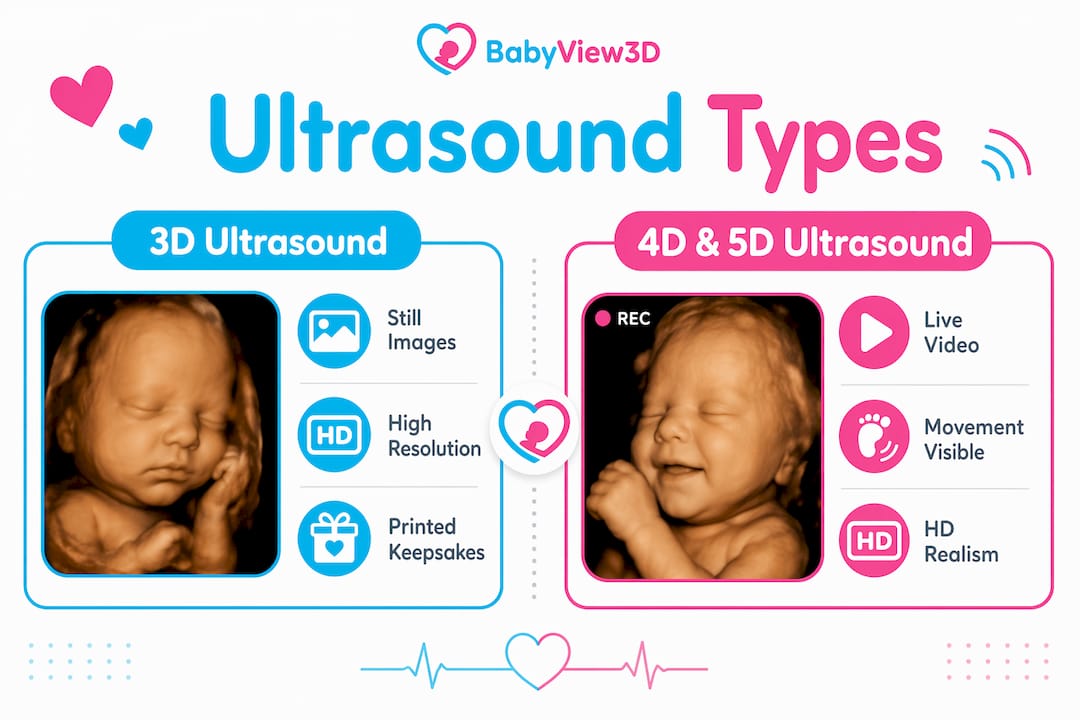
3D ultrasound produces still images. You get high-resolution photographs of the baby's face and body, ideal for framing or adding to a digital album. 4D ultrasound adds the dimension of time, meaning the group watches a live video feed of the baby moving in the womb. 5D, also marketed as HD Live, layers cinematic lighting effects over the 4D video to create a more lifelike, almost photographic quality image.
| Format | What you see | Best for |
|---|---|---|
| 3D | Still high-resolution photos | Printed keepsakes, nursery art |
| 4D | Live video of baby moving | Watching real-time expressions |
| 5D / HD Live | 4D video with cinematic lighting | Most detailed, lifelike visuals |
Standard pricing for 3D/4D sessions ranges from $99 to $149. Upgrading to 5D or HD Live technology adds $30 to $50 on top of that base price. For a group experience, the HD Live format tends to generate the strongest reactions from guests because the images look closest to a real photograph of the baby's face.
Safety is a common question at this stage. Elective ultrasounds use the same diagnostic-grade equipment as medical scans. Reputable centers follow established guidelines on exposure time and output levels. These sessions are not diagnostic, meaning they do not replace the anatomical scans your doctor orders. They exist purely for the bonding experience.
Pro Tip: If your budget allows only one upgrade, choose 4D over 3D for a group session. Watching the baby move in real time creates a far more engaging shared experience than still images alone.
What are the benefits of a group ultrasound viewing for families?
The core benefit of a group prenatal ultrasound is that it transforms a private medical milestone into a shared family memory. Seeing the baby's face together, in real time, creates an emotional connection that photographs or secondhand descriptions simply cannot replicate.
Elective 3D/4D sessions provide a bonding experience centered on seeing the baby's movements, thumb sucking, lip smacking, and wiggling fingers and toes. That level of detail makes the pregnancy feel real and immediate to grandparents, siblings, and close friends who otherwise experience the pregnancy from a distance. Research on prenatal bonding consistently links early visual connection to stronger emotional investment in the baby's arrival.
The benefits extend beyond the obvious emotional uplift:
- Sibling preparation: Young children who see the baby moving on screen adjust more easily to the idea of a new sibling. The abstract concept becomes a real, visible person.
- Grandparent inclusion: Extended family members who live far away or feel peripheral to the pregnancy gain a direct, meaningful role in the experience.
- Stress relief for parents: Sharing the moment with loved ones shifts the focus from anxiety to celebration. Parents consistently report feeling more supported after a group session.
- Stronger prenatal bond: Seeing the baby's real movements and facial expressions deepens the parent's own connection to the pregnancy, not just the guests' connection.
- Lasting keepsakes: Printed images and digital video clips from the session give the whole group something tangible to keep, share, and revisit.
One point that families often overlook: the group ultrasound viewing experience is distinct from a medical diagnostic ultrasound in both purpose and atmosphere. The room is warmer, the lighting is softer, and the focus is entirely on joy. That intentional environment is part of what makes the session worth doing. You can read more about why families choose ultrasound experiences like this one to understand the full emotional picture.
How to prepare for a group ultrasound session
Timing is the single most important preparation decision. The optimal window for a group prenatal ultrasound is between 26 and 32 weeks of pregnancy. Before 26 weeks, the baby has less fat under the skin, which makes the 3D/4D rendering look less defined. After 32 weeks, the baby is often too large and positioned too low for clear facial imaging.
Follow these steps to prepare for the best possible session:
- Schedule within the optimal window. Book your appointment between weeks 26 and 32 for the clearest images of the baby's face and features.
- Bring proof of prenatal care. Elective sessions require that you are already receiving prenatal care from a doctor, including diagnostic ultrasound results. Bring documentation to your appointment.
- Drink water in the days before. Hydration improves amniotic fluid clarity, which directly affects image quality. Aim for at least 64 ounces of water daily in the week before your session.
- Confirm your guest list. Notify your center of the number of attendees in advance. Groups are typically capped at around 8 people, so plan accordingly.
- Prepare questions for the sonographer. Write down anything you want to know about what you are seeing. Sonographers at elective centers are experienced at explaining images to non-medical audiences.
- Plan for keepsakes. Decide in advance whether you want printed photos, digital video, or both. Some packages include these; others charge separately.
Image quality depends heavily on the baby's position during the session. If the baby faces away from the transducer, the sonographer may ask the parent to walk around, drink cold water, or return for a brief follow-up scan. Managing this expectation with your guests ahead of time prevents disappointment if the baby is uncooperative on the day.
Pro Tip: Eat a light snack about 30 minutes before your session. A small amount of sugar can encourage the baby to move and face the transducer, improving the chances of clear facial images.
After the session, share your digital keepsakes with family members who could not attend. Many centers now offer digital delivery of video clips that you can send directly from your phone. Continue attending all scheduled medical ultrasounds with your OB-GYN. The elective session does not replace diagnostic care.
Key Takeaways
A group ultrasound viewing is an elective prenatal session that uses 3D, 4D, or 5D HD Live imaging to create a shared bonding experience for expectant parents and their loved ones, distinct in purpose and atmosphere from any medical diagnostic scan.
| Point | Details |
|---|---|
| Elective, not medical | Group sessions are bonding experiences and do not replace diagnostic ultrasounds ordered by your doctor. |
| Optimal timing | Schedule between weeks 26 and 32 for the clearest 3D/4D images of the baby's face. |
| Technology matters | 4D and 5D HD Live formats create the strongest group reactions by showing live movement and lifelike detail. |
| Attendance limits | Most centers cap group size at around 8 people; confirm the limit when you book. |
| Keepsakes extend the moment | Printed photos and digital video clips let family members who could not attend share in the experience afterward. |
What I've learned from watching families experience this together
I have seen a lot of families walk into a group ultrasound session with high expectations and walk out with something they did not expect: a shared memory that changes how the whole group relates to the pregnancy. Grandparents who felt disconnected suddenly have a face to attach to the name they have been hearing for months. Siblings who were indifferent or anxious become genuinely excited. That shift is real, and it happens fast.
The part families underestimate is how much the baby's position on that particular day affects the experience. I always tell parents to prepare their guests for the possibility that the session might not produce a perfect face shot. The baby controls the outcome, not the sonographer. When families go in with that mindset, they enjoy the session regardless of what the screen shows, because the experience itself is the point.
One thing I feel strongly about: keep your elective session completely separate from your medical care in your own mind. Do not skip a diagnostic scan because you had a group viewing last week. The two serve entirely different purposes. The elective session is for your heart. The medical scan is for your health. Both matter, and neither replaces the other.
The families who get the most out of group ultrasound viewings are the ones who treat it as a celebration rather than a checkup. Bring the people who matter most, lower your expectations about image perfection, and let the experience be what it is: one of the few chances you get to introduce your baby to the people who will love them before they are even born.
— LENIER
Bbview3d's group ultrasound viewing services
Bbview3d has offered elective prenatal ultrasound experiences for over 15 years, with certified sonographers and centers across the United States. The team specializes in 3D, 4D, and HD Live imaging, giving families the clearest possible view of their baby before birth.
Bbview3d's group ultrasound packages are designed for families who want a welcoming, comfortable environment where everyone in the room feels included. First-time visitors can take advantage of a limited introductory offer on their first appointment. Browse the full range of session options, pricing, and available locations at Bbview3d to find the package that fits your family and your timeline.
FAQ
What is a group ultrasound viewing?
A group ultrasound viewing is an elective prenatal session where expectant parents invite family and friends to watch real-time 3D, 4D, or 5D ultrasound images of their unborn baby together. It is a bonding experience, not a medical diagnostic appointment.
How many people can attend a group ultrasound session?
Most centers limit attendance to around 8 people, including the expectant mother and any children present. Confirm the exact limit with your center when you book.
When is the best time to schedule a group prenatal ultrasound?
The optimal window is between 26 and 32 weeks of pregnancy. During this period, the baby has enough fat under the skin for clear 3D/4D facial imaging, and there is still enough amniotic fluid for good visibility.
How long does a group ultrasound session last?
Sessions last between 20 and 45 minutes depending on the imaging package. Packages that include 5D or HD Live rendering typically run longer than basic 3D still-image sessions.
Do I need a doctor's referral for a group ultrasound viewing?
No referral is required, but you must already be receiving prenatal care. Most centers require proof of prenatal care and confirmation that you have had a diagnostic ultrasound with your OB-GYN before attending an elective session.