

Involving family in ultrasound appointments transforms a routine prenatal scan into a shared emotional milestone. Family participation in ultrasound is defined as the intentional inclusion of partners, siblings, grandparents, or other loved ones during prenatal imaging sessions to strengthen bonds and reduce maternal anxiety. Research confirms that family presence during ultrasound provides reassurance and emotional support, turning a clinical procedure into a meaningful shared experience. With the right preparation and communication, you can make every scan a memory your whole family carries forward.
How to involve family in ultrasound: who to invite and why
The first decision is choosing which family members to include. Partners are the most common guests, but grandparents and older siblings also bring real emotional value to the room. Engaging siblings in ultrasound helps them bond with the new baby and feel like active participants in the family's growth, not bystanders to it.
Space and clinic policy shape your guest list more than anything else. Most clinics allow a support person during ultrasounds but limit the total number of guests due to room size and confidentiality requirements. Call your provider before the appointment to confirm exactly how many people are welcome and whether children are permitted.
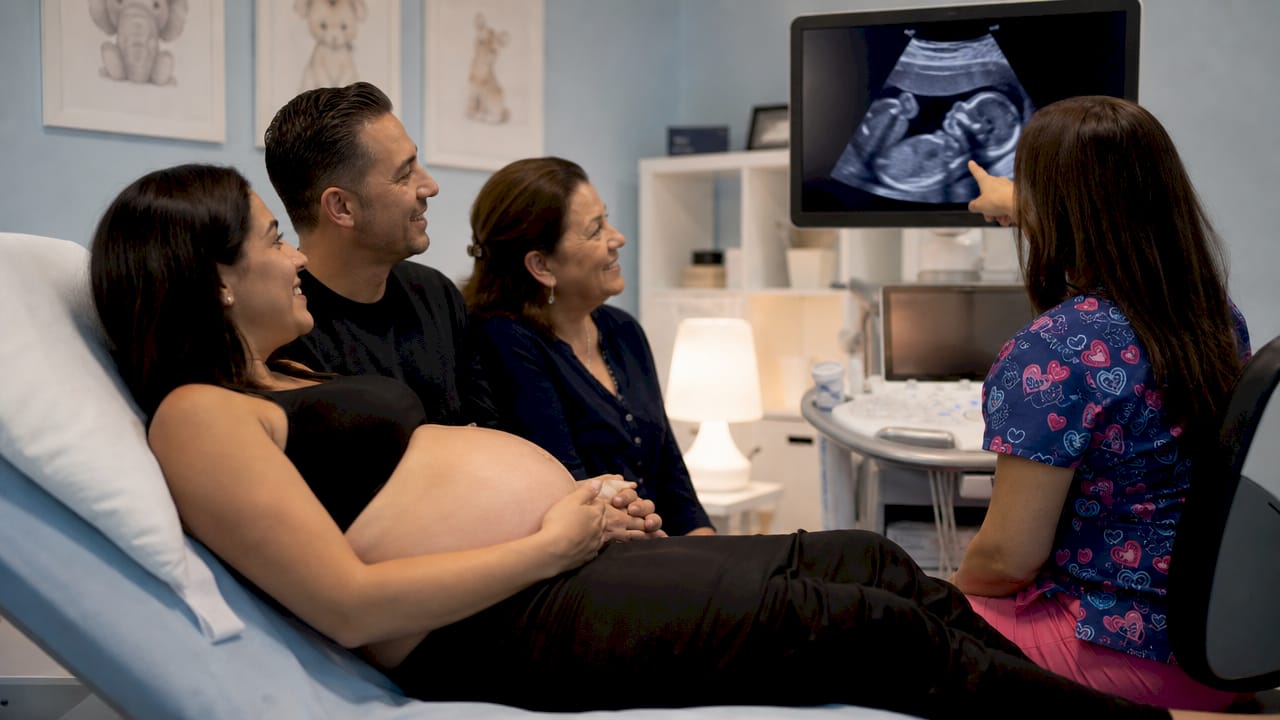
For relatives who cannot attend in person, digital tools close the gap effectively. Between 30% and 34% of parents in the U.S. now routinely share ultrasound images online to include distant family and celebrate milestones. That number reflects how normalized digital inclusion has become, and it gives you a clear, low-effort path to involving grandparents across the country.
Here are the most common participants and the best way to include each one:
- Partner: Invite them to every scan. Their presence directly reduces your anxiety and deepens their own bond with the baby.
- Grandparents: Ideal for milestone scans like the anatomy scan or a 3D session. If they live far away, a live video call works well.
- Older siblings: Bring children who are old enough to understand what they are seeing, typically age 3 and up. Prepare them in advance with simple explanations.
- Close friends or extended family: Best included through a private digital album or a video recording shared after the appointment.
How to prepare for a family-inclusive ultrasound appointment
Preparation separates a chaotic appointment from a genuinely moving one. Start by contacting your healthcare provider at least one week before the scan to confirm guest policies, ask about photography rules, and flag any specific needs your guests may have. Clear communication with your provider is the single most important step for a positive family-inclusive experience.
Once logistics are confirmed, prepare your guests emotionally and practically. Children especially benefit from knowing what to expect. Age-appropriate explanations before the visit reduce anxiety in young family members and increase their engagement during the scan. A simple explanation like "We're going to see the baby on a screen using sound waves" works for most kids ages 3 through 7.
Follow these steps to get everyone ready:
- Confirm clinic policy. Call ahead and ask how many guests are allowed, whether video recording is permitted, and if there is a waiting area for overflow guests.
- Brief your guests. Tell them what the scan involves, how long it takes, and what they will see on the monitor. Set the expectation that the sonographer's focus is on the baby's health first.
- Prepare children with a story or video. Short, age-appropriate videos about ultrasound are widely available and take the mystery out of the experience.
- Bring a printed ultrasound diary or photo album. Sharing previous scan images before the appointment builds excitement and gives context for what the new images will show.
- Assign a "keeper of the phone." Designate one person to handle recording or photography so the moment stays focused rather than chaotic.
Pro Tip: Ask your sonographer at the start of the session if they can narrate what they see in real time. A running commentary makes the experience far more engaging for family members who may not know what they are looking at on the screen.
Step-by-step guide to sharing the ultrasound experience with family
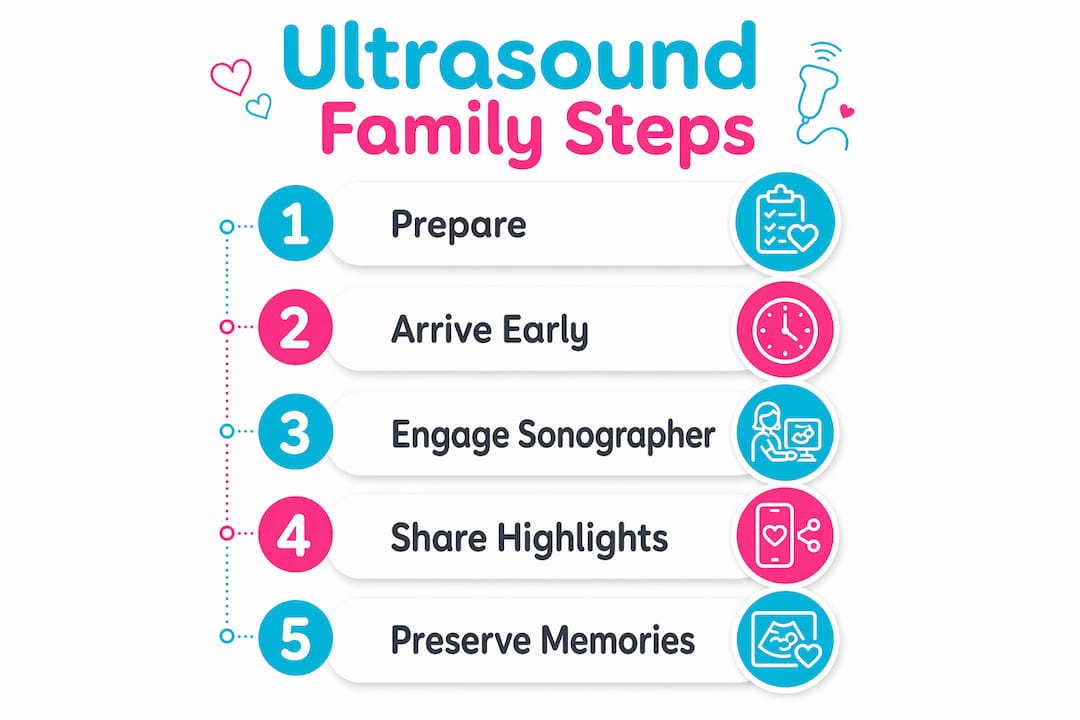
A shared ultrasound experience works best when it follows a clear sequence. Arriving together, staying engaged during the scan, and extending the memory afterward all matter equally.
Before the scan begins
Arrive 10 to 15 minutes early so your guests can settle in without rushing. Introduce family members to the sonographer by name. A brief, warm introduction sets a respectful tone and signals to the clinical team that your guests are prepared and considerate.
During the scan
Ask the sonographer to point out key features as they appear, such as the heartbeat, facial profile, and hands. Advanced 3D and 4D imaging enhances parental and family recognition of fetal features, making the experience more personal and memorable. When the image is clear, give family members a moment to simply watch without talking. Silence during those first seconds of seeing the baby is often the most powerful part.
After the appointment
The experience does not end when you leave the clinic. Post-appointment activities extend the shared memory and give everyone something tangible to hold onto.
| Activity | Who it involves | Why it works |
|---|---|---|
| Frame a favorite ultrasound image | Whole family | Creates a lasting keepsake displayed in the home |
| Build a shared digital photo album | Remote relatives | Includes everyone regardless of location |
| Host a "reveal" viewing at home | Extended family | Turns the scan into a celebration event |
| Create a pregnancy journal entry together | Partner and siblings | Documents the emotional experience in writing |
Framing ultrasound images is one of the most common ways families preserve these moments, and it gives the experience a physical presence in your home long after the appointment ends.
What challenges come up with family involvement, and how do you handle them?
Family involvement adds warmth, but it also adds complexity. Knowing the most common obstacles in advance lets you handle them without stress.
Space and policy restrictions are the most frequent issue. If your clinic limits guests to one person, prioritize your partner and share the experience with others digitally. A live video call on a phone propped against a stable surface works well in many exam rooms, though you should always ask the sonographer's permission first.
Emotional reactions can catch everyone off guard. Seeing a baby on screen for the first time triggers strong feelings, including tears, laughter, and sometimes fear if something unexpected appears. Prepare your guests by reminding them that the sonographer's job is to assess health, and that some findings require follow-up without being cause for alarm.
"Ultrasound involves emotional vulnerability and needs sensitive handling, informed consent, and respectful communication to reduce distress for everyone in the room."
Balancing privacy with inclusion is another real consideration. When sharing images digitally, choose methods that match your comfort level, whether that is a private album shared with a select group or a public post. Not every family agrees on digital footprint boundaries, so discuss this with your partner before the appointment.
Here are etiquette tips every family member should follow:
- Stay quiet when the sonographer is measuring. Measurements require concentration, and background noise is distracting.
- Ask before recording. Some clinics have strict rules about video. Always get explicit permission.
- Keep phones on silent. A ringing phone during a scan breaks the moment for everyone.
- Follow the expectant parent's lead. If they want a quiet, private moment, respect it without question.
Pro Tip: If a family member tends toward anxiety, brief them privately before the appointment. Let them know what a normal scan looks like so they do not misread routine sonographer focus as a sign of a problem.
Key Takeaways
Involving family in prenatal ultrasound appointments strengthens emotional bonds, reduces maternal anxiety, and creates lasting shared memories when parents prepare in advance and communicate clearly with their care team.
| Point | Details |
|---|---|
| Confirm clinic policy first | Call ahead to learn guest limits, photography rules, and whether children are allowed. |
| Prepare guests before the appointment | Brief family members on what the scan involves to reduce anxiety and increase engagement. |
| Use technology for distant relatives | Live video calls and private digital albums include loved ones who cannot attend in person. |
| Extend the experience afterward | Framing images, shared albums, and journal entries turn one appointment into a lasting memory. |
| Set clear etiquette expectations | Quiet behavior, permission before recording, and following the parent's lead keep the experience positive. |
Why shared ultrasound moments matter more than most parents expect
I have seen a lot of families walk into an ultrasound room treating it like a medical errand. They walk out having experienced something they did not anticipate. The moment a grandparent sees their grandchild's face on a 3D scan for the first time, something shifts. That is not a small thing.
What surprises me most is how much the preparation shapes the outcome. Families who brief their guests, set expectations, and designate roles have a fundamentally different experience than those who show up and wing it. The scan itself is the same. The memory is not.
The research on prenatal bonding and emotional well-being confirms what most parents already feel: seeing the baby together builds connection faster than almost anything else during pregnancy. That connection extends to siblings who feel less displaced, to partners who feel more involved, and to grandparents who feel genuinely part of the story.
My honest view is that the medical system has been slow to recognize ultrasound as a psychosocial event, not just a diagnostic one. The good news is that specialized prenatal imaging studios have filled that gap. They are designed around the family experience, not just the clinical outcome. If your standard clinic limits guests or rushes the session, a dedicated prenatal imaging appointment gives your family the time and space the moment deserves.
— LENIER
Bbview3d: a family-centered ultrasound experience worth knowing about
Bbview3d has spent more than 15 years creating prenatal imaging experiences built around family connection, not just clinical imaging. Their certified sonographers use 3D, 4D, and HD Live technology to produce images detailed enough that grandparents, siblings, and partners can clearly recognize the baby's features in real time. Sessions are designed with family participation in mind, giving everyone in the room a role in the experience rather than a seat in the corner.
If you want an appointment where family involvement is the point, Bbview3d offers packages that include visual summaries and keepsakes you can share with relatives near and far. First-time appointments include a limited discount, making it a practical starting point for expectant parents who want the full experience. Visit Bbview3d to find a center near you and book your session.
FAQ
How many family members can attend an ultrasound?
Most clinics allow one support person and sometimes one additional guest, depending on room size and facility policy. Always call ahead to confirm the specific limit at your provider's location.
Can siblings attend an ultrasound appointment?
Yes, older siblings can attend when the clinic permits it and when they are prepared in advance. Age-appropriate explanations before the visit reduce fear and help children engage positively with the experience.
How can I include family members who live far away?
Between 30% and 34% of parents in the U.S. share ultrasound images online to include distant relatives. A live video call during the scan or a private digital album shared afterward are both effective options.
Does having family present actually reduce pregnancy anxiety?
Yes. Family presence during ultrasound provides emotional support and reassurance that measurably reduces patient distress. Parents also report feeling more confident after shared ultrasound viewing.
What is the best type of ultrasound for a family-inclusive experience?
3D and 4D ultrasound sessions work best for family involvement because the images are detailed enough for everyone to recognize the baby's features clearly. Advanced imaging deepens emotional connection and makes the experience more memorable for all participants.