

Ultrasound is defined as the primary imaging method that transforms a routine prenatal scan into a tangible, emotionally charged keepsake for expectant parents. The role of ultrasound in birth announcements has grown far beyond clinical monitoring. What once lived in a manila folder at your OB's office now appears on Instagram reels, printed on celebration cakes, and framed in nurseries. Bbview3d, with over 15 years of experience in prenatal imaging, sits at the center of this shift, offering 3D, 4D, and HD Live technology that turns medical imagery into lasting memories.
What is the role of ultrasound in birth announcements?
Obstetric ultrasonography is the clinical term for the imaging technique most parents know simply as "the ultrasound." Most pregnant individuals receive two routine scans: a first trimester nuchal scan and an anatomy scan between 18–24 weeks. These appointments confirm the due date, monitor fetal growth, and screen for abnormalities. That clinical purpose is non-negotiable.
The types of scans used during pregnancy include:
- Transvaginal ultrasound: Used in early pregnancy for clearer images when the uterus sits low in the pelvis.
- Abdominal ultrasound: The standard scan most parents picture, using a transducer on the belly.
- Doppler ultrasound: Measures blood flow through the umbilical cord and fetal heart.
- 3D and 4D ultrasound: Produces still or moving surface images of the baby, used in both clinical and keepsake settings.
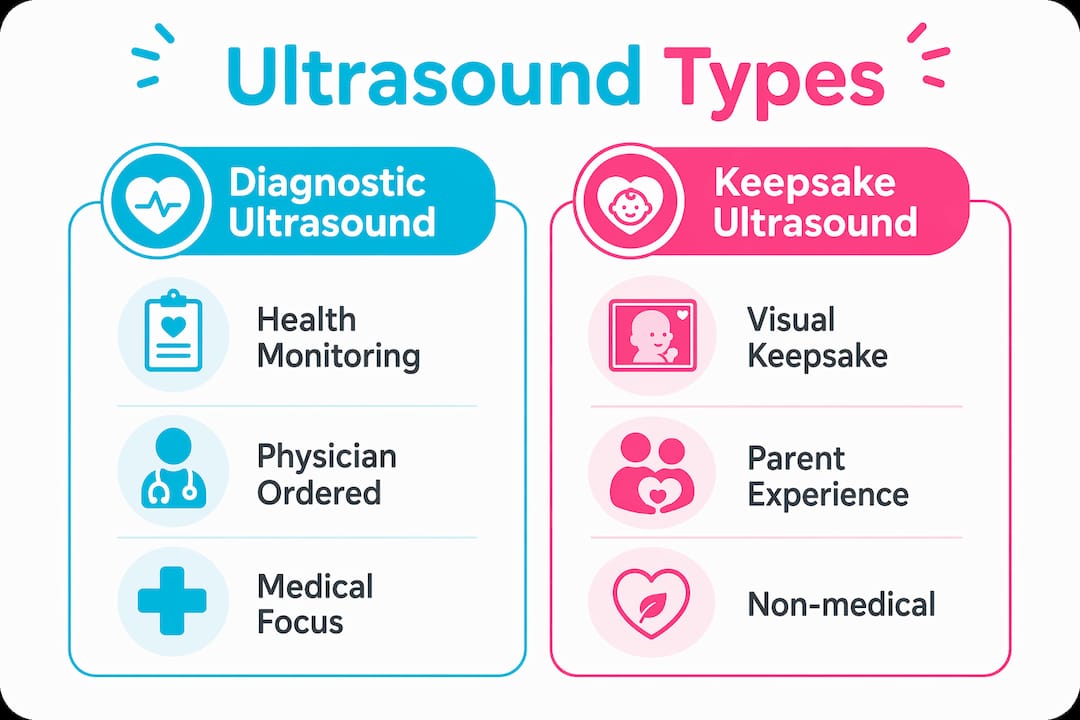
The critical distinction is between diagnostic and keepsake ultrasounds. Diagnostic scans are ordered by a physician and interpreted by a credentialed sonographer or radiologist. Keepsake sessions, offered by boutique studios like Bbview3d, are elective and focused on bonding imagery rather than health assessment.
Pro Tip: Always complete your scheduled clinical ultrasounds before booking a keepsake session. The two serve different purposes and one cannot replace the other.

How have ultrasound images become central to modern birth announcements?
Ultrasound imagery has become a ritual element in pregnancy celebrations, woven into gender reveals, baby showers, and social media announcements. The shift happened gradually, then all at once. Parents began sharing grainy 2D scan photos on Facebook in the early 2010s. By 2026, 4D ultrasound social reels, ultrasound-printed cakes, and diagnostic-style digital templates have become the norm for creative birth announcements.
The most popular formats for sharing ultrasound images include:
- Social media reels: Short video clips of 4D or 5D ultrasound footage shared on Instagram or TikTok, often set to music.
- Ultrasound cakes: Edible prints of the scan image placed on celebration cakes, a trend that has overtaken traditional gender reveal formats in some communities.
- Digital announcement cards: Templates designed to mimic the look of a clinical scan screen, complete with measurements and a due date.
- Nursery art: Framed prints of high-resolution 3D images displayed as wall décor before the baby arrives.
Boutique keepsake studios have grown to meet this demand directly. Some locations average about 80 clients monthly, a figure that reflects how deeply parents want visual access to their baby beyond what standard clinical care provides. That number also signals a cultural shift: the ultrasound image is no longer just a medical record. It is the first photograph.
Pro Tip: When planning your birth announcement ideas, request a high-resolution export of your keepsake session images. Low-resolution files print poorly on cards and cakes.
Why does ultrasound imagery have such a strong emotional impact?
Parents view the first ultrasound scan as one of the most emotional and memorable pregnancy milestones, and that response is not accidental. Seeing a baby's face, hands, or heartbeat in real time creates a psychological bond that abstract knowledge of pregnancy cannot replicate. Research on prenatal bonding consistently links early visual contact with increased parental attachment.
"The ultrasound image gives families something concrete to hold onto. It makes the pregnancy real in a way that a positive test or a growing belly simply cannot. That moment of seeing the baby move, yawn, or stretch is when many parents say the experience truly begins."
Families use that imagery to extend the emotional experience outward, sharing it with grandparents, siblings, and friends who cannot be present at the appointment. The emotional connection ultrasound fosters is not limited to the parents in the room. A shared scan image on a family group chat or a printed card mailed to a grandparent creates a circle of connection around the baby before birth.
The benefits of early visual bonding through prenatal imaging include:
- Reduced pregnancy anxiety for parents who can see fetal movement and development.
- Stronger sense of identity for the baby as a person rather than an abstract concept.
- Greater involvement from partners and extended family who see the imagery.
- A documented visual record of the pregnancy that becomes part of the family's story.
How is technology changing ultrasound imagery for announcements?
Artificial intelligence is now improving obstetric ultrasound in ways that affect both clinical accuracy and the quality of keepsake images. AI advances obstetric ultrasound by improving image clarity and standardizing fetal measurements, which reduces the variability that comes from different operators and equipment. That improvement matters for diagnostics. It also matters for the parent who wants a clear, detailed image of their baby's face to share with the world.
The practical steps in how technology improves announcement imagery are straightforward:
- Higher resolution capture: HD Live and 8K imaging technology, used by studios like Bbview3d, produces surface images with enough detail to show individual facial features.
- AI-assisted image processing: Algorithms reduce noise and enhance contrast in real time, producing cleaner images without additional post-processing.
- Standardized framing: AI tools help sonographers position the transducer consistently, reducing the chance of a blurry or poorly angled image.
- Video compilation: Advanced systems allow studios to compile session footage into short highlight reels, ready for social sharing.
Trained professionals remain the non-negotiable element in this equation. Technology improves what a skilled sonographer can capture, but it does not replace the expertise required to operate the equipment safely and interpret what appears on screen. Bbview3d employs certified sonographers at each of its locations across the United States, which is the standard parents should expect from any prenatal ultrasound innovation studio.
Pro Tip: Ask any boutique studio about their sonographers' credentials before booking. Certification from a recognized body like ARDMS (American Registry for Diagnostic Medical Sonography) is the benchmark.
Practical tips for using ultrasound images in birth announcements
Using ultrasound imagery creatively and responsibly requires knowing the difference between what a keepsake session offers and what a clinical exam provides. Standard clinical care does not always include third-trimester ultrasounds for uncomplicated pregnancies. Boutique studios fill that gap for parents who want to see their baby again before delivery. That is a legitimate and emotionally valuable reason to book a session, as long as parents understand the limits.
The following comparison covers the key differences between clinical and keepsake sessions:
| Feature | Clinical ultrasound | Keepsake ultrasound |
|---|---|---|
| Purpose | Health monitoring and diagnosis | Bonding imagery and keepsakes |
| Ordered by | Physician or midwife | Parent (elective) |
| Operator | Credentialed diagnostic sonographer | Trained studio sonographer |
| Insurance coverage | Typically covered | Not covered |
| Image format | Standard 2D diagnostic | 3D, 4D, HD Live, or 8K |
| Replaces clinical care | Yes | No |
Creative ideas for incorporating ultrasound images into announcements include:
- Printing the image on a card with the due date and mailing it to family members.
- Using a 4D video clip as the centerpiece of a social media pregnancy reveal.
- Ordering a custom cake with an edible ultrasound print for a baby shower.
- Framing a high-resolution 3D image for the nursery wall.
- Creating a short highlight reel from a keepsake session to share with close friends.
Keepsake ultrasounds are not diagnostic and should never replace scheduled clinical appointments. Parents should also consider privacy before posting scan images publicly, since the images contain identifying health information about both parent and child.
Pro Tip: Plan your maternity photo session around weeks 28–32 to combine a keepsake ultrasound with professional photography. The baby's features are well-developed and the session images will be at their most detailed.
Key Takeaways
Ultrasound imagery is the most emotionally powerful tool expectant parents have for turning a pregnancy into a shared, visual story that connects family and friends before birth.
| Point | Details |
|---|---|
| Two types of ultrasound exist | Clinical scans monitor health; keepsake sessions create bonding imagery and announcement materials. |
| Boutique demand is real | Some studios serve around 80 clients monthly, reflecting how much parents want imagery beyond standard care. |
| AI improves image quality | AI-assisted processing produces clearer, more detailed images that work better for both diagnostics and announcements. |
| Keepsakes do not replace clinical care | Elective sessions are emotionally valuable but cannot substitute for physician-ordered diagnostic exams. |
| Timing matters for announcements | Weeks 28–32 produce the most detailed keepsake images, ideal for announcement cards, reels, and nursery art. |
What I've learned about ultrasound and birth announcements after years of watching families use them
The parents who get the most out of keepsake ultrasound sessions are the ones who come in knowing exactly what they want. They have thought about who they are sharing the image with, what format works best, and how the session fits into the larger story of their pregnancy. The ones who struggle are the ones who treat a boutique session like a clinical appointment, expecting a health report along with the photos.
The cultural shift around ultrasound imagery is real and worth celebrating. Seeing your baby's face before birth is a genuinely extraordinary experience, and the technology that makes it possible has improved dramatically. What concerns me is the occasional confusion between emotional value and medical value. A beautiful 4D image does not tell you whether your baby's organs are developing correctly. Only a diagnostic scan, read by a qualified professional, does that.
My honest advice: book the keepsake session, enjoy every second of it, and use those images to create something meaningful. Then show up to every single clinical appointment your provider schedules. Both experiences matter. Neither replaces the other.
— LENIER
Bbview3d brings your baby's first images to life
Bbview3d has spent over 15 years helping families across the United States see their babies in extraordinary detail before birth. With HD Live, 3D, 4D, and 8K imaging technology, every session produces images clear enough to frame, share, and remember for a lifetime.
Certified sonographers staff every Bbview3d location, so parents get both the emotional experience and the professional expertise behind it. Whether you are planning a social media reveal, a baby shower surprise, or a keepsake for the nursery wall, the ultrasound imaging services at Bbview3d are built for exactly that moment. First-time appointment discounts are available, and the full range of keepsake options is listed in the Bbview3d store.
FAQ
What is the role of ultrasound in birth announcements?
Ultrasound provides expectant parents with high-quality visual imagery of their baby before birth, which families use to create announcement cards, social media posts, cakes, and nursery art. It transforms a medical scan into the first photograph of a new life.
Are keepsake ultrasounds safe?
Keepsake ultrasounds use the same sound wave technology as clinical scans and are generally considered safe when performed by trained operators. The FDA advises against non-medical ultrasound use without clinical oversight, so choosing a studio with certified sonographers is the responsible standard.
How do 3D and 4D ultrasounds differ from standard scans?
Standard 2D scans produce flat cross-sectional images used for diagnostic measurement. 3D and 4D ultrasounds produce surface images and real-time video of the baby's face and movements, which are far more suitable for keepsakes and birth announcements.
When is the best time to book a keepsake ultrasound session?
Weeks 28–32 of pregnancy produce the clearest and most detailed keepsake images because the baby's facial features are fully formed and there is still enough amniotic fluid for good image quality.
Can a keepsake ultrasound replace my clinical prenatal appointments?
No. Keepsake sessions are elective and do not provide diagnostic information about fetal health. All scheduled clinical ultrasounds ordered by your provider remain necessary throughout pregnancy.